Love it or hate it, brostep is making a comeback.
The disdain from the UK underground scene towards the now mainstream, big room sound of the genre brought the rise of the term “brostep”. The coined term acted as a differentiator between the UK’s minimal, sub heavy sound which still held its dub roots, to the more mainstream electro-synth infused anthemic sound which emphasised big build ups and even bigger drops. made popular by the now legendary producer Skrillex in the 2010’s.
Some fans of the newer sounding dubstep see the term as derogatory due to its implication that the fan base of the more US sound is more for “bros”, as in “frat bros” or in other words, young drunk college kids who are more interested in getting wasted and partying than into the music itself. Others are indifferent to the term as it is a handy way to discern from two genres that are sonically miles apart, but also have two very different cultures and fanbases, similar to punk and rock. Regardless of how people use the term, or don’t use it, the term exists and when it’s used, people tend to know what they mean by it; a style of EDM that sounds like a Transformer doing chin ups.
Dubstep went from being the freshest sound from the UK underground scenes to the forefront of American dance music, to being relegated to the room 2’s of most clubs, all in the space of a decade. While many UK acts like Flux Pavilion, Doctor P, Zomboy, Modestep and many others maintained touring careers in the US and other parts of the world, the UK seemed to have lost interest in the big room sounding style. Flux Pavilion lamented in his interview with UKF celebrating the 15th year anniversary of his label with Doctor P, Circus Recordings, that while he was headline shows around the world, he hadn’t played a show in his hometown of London in years.
Over the past ten years, younger UK audiences have gravitated towards techno, UK garage and especially jump up drum and bass which filled the gap of “big drop” sounds that dubstep left in the clubs nicely. This has led to scenes, independent movements and collectives in those respective genres to flourish. Even though brostep still remains a staple in EDM culture in the states, in the UK, the genre hasn’t had much of a chance to recruit those younger audiences. There hasn’t been an avenue to give up and coming producers and DJs a chance to establish themselves and make them household names like their influences did before them.
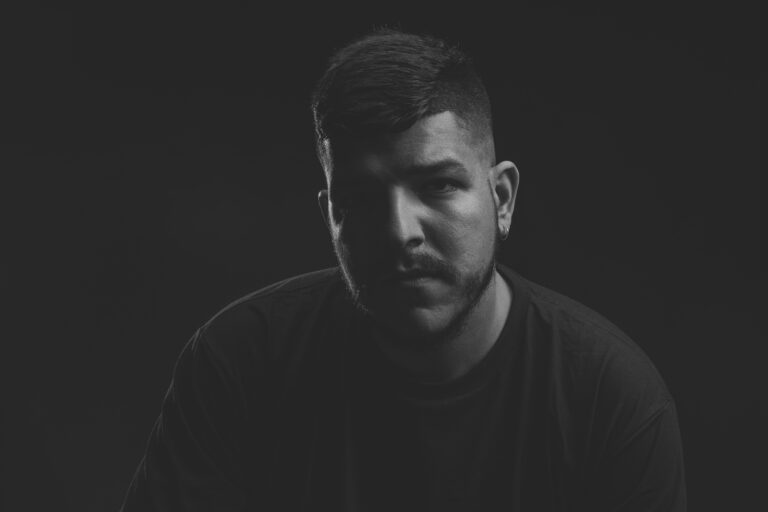
This seemed to be the case for the UK club scene until very recently. More acts from the 2010’s scene have popped up as headliners again across the UK and Europe. The question has to be asked; is this a nostalgia phase giving the brostep sound a rosy retrospection? Or is brostep actually back? To answer this, UKF sat down with SIKORA, the founder of SYN, a club night dedicated to showcasing the best in brostep, dubstep and drum and bass. We discussed the SYN club nights, the community surrounding it and the skill involved in trying to revitalise a genre in London, a city that turned its back on brostep.
First off, what does the term brostep mean to you?
To me it refers to a particular style which became popular with Skrillex in 201, with his Scary Monsters and Nice Sprites and Bangarang EPs especially. That’s when you saw a lot of English producers creating a lot of great dubstep sounding stuff but were not considered to be a part of the “dubstep” scene. UK acts like Flux Pavilion, Modetsep, Doctor P, Virtual Riot and Zomboy, who were putting out bigger sounding tunes just a bit before that. Tracks like ‘Sunlight’ by Modestep, ‘Innocence’ by Nero really brought dubstep to the forefront for young people in the UK. Then brostep kind of evolved after Skrillex. Never Say Die started introducing riddim through the black label in 2014 which is what a lot of people call brostep now. Now a lot of it is tearout and riddim, and even briddim, which Whooly was known for, a 4×4 consistent sound. Basically, for me it is the sound of 150bpm dubstep from 2012 to around 2018 that is more popular in the states.
When did you start SYN?
Previously it started under the banner Relentless which was a dubstep, drum & bass and bass house brand. Essentially, the same brand but with a different name. It started in October 2019 and ended in March 2020, not due to Covid, but due to the Relentless energy drink shutting us down. I changed to the name SYN because I was going to call it Synergy London as I liked the idea of people working together after Covid. Synergy as in; working collectively creates a better outcome than working individually. Then I thought it was too long, so I shortened it SYN so it can be whatever it wants to whoever reads it, sinful or synergy.
What was the first night you put on under the SYN branding?
First show as SYN was with Spag Heddy in June 2022. The night was “brostep” through and through. He’s one of the big names on Never Say Die, essentially one of the biggest. It shut down a few years ago but Spag Heddy was one of the forefront producers there.
So you went straight to booking international acts? Why was that?
There wasn’t that much appetite around then, both pre and post covid. I’d say there were just one or two dubstep gigs in the year. A lot of the scenes felt quite isolated. You see the same people every time you go on a night out, there wasn’t really a community base to talk to each other. If you wanted to put on a night, you really needed to get a big act that everyone wanted to see. I managed to start getting international acts that could bring all of these people together was because I was good mates with the directing manager of MBArtists. He understood the scene at the time in the UK and he gave me a lot of good acts to put on. It takes someone to take a chance on you and if you do a good job, then you’re in.
What’s it like putting on brostep events in the UK compared to the US?
The main difficulty with brostep or with this type of music is that in the US it was very much the mainstream. The difference in popularity between the US and the rest of the world is astronomical. This meant that in the US, some of those acts were getting around 10-50k per booking at that time around 2017 to 2020. For a lot of acts, it’s just not worth coming over to Europe or the UK as the support isn’t as big and a lot of the promoters couldn’t afford it. I do think that there were a lot of artists who were stranded in Europe during Covid and who hadn’t renewed their visas so that meant it was a good opportunity to get these artists back out in the UK scene.
When we book these acts, compared to the states, we would be offering a far less booking fee. The reality is it comes down to the crowd. In the US, it’s almost like your standard club music there so you get a lot of walk-ins in club nights for dubstep events. Don’t get me wrong, yes there are some artists who attract a crowd of 10 to 20 thousand people in the US because of their act but you can still attract randomers on a night out. The difference is in London you go out specifically to see that act play, they want to go with all their heart because it’s a rare event to see some of these artists where they might only see that act play in their local area maybe once every 5 to 6 years in the UK, and their playing in venues that are 5 to 10 times smaller than in the US.
How did the scene react during the lockdowns? Was there much of an impact?
Dubstep, particularly brostep, took a massive hit over Covid. It’s meant to be watched and experienced live. It’s not really listening to that type of music compared to other genres, it’s something you go out and rage on the weekend to. Over Covid, I think there was a particular surge in house, techno and drum and bass because people couldn’t go out as much to experience dubstep. I think people lost interest because they couldn’t experience it live. You have to remember as well that a lot of the brostep folks just got older. They settled down and had kids. Some of us still pushed through.
Deep dubstep, particularly the 140bpm, think Coki and Joker style very much survived because, again, it’s a lot more accommodating for listening to. Deep dubstep is very much an underground sound but it’s always appreciated in London. It still does well, those acts can sell out your huge venues across the UK. But brostep in particular took a hit. Acts pre-covid did well. For example, the Relentless Never Say Die show in 2019 sold out Electric Brixton. There’s not a chance now, even with the exact same line up could you sell out a thousand cap venue. That’s the kind of difference that we’re talking about. It wouldn’t happen again these days. Not yet. It’s coming back.
Why did you decide to put on brostep nights in the first place? Was it not too risky?
This is a passion project for me, I’ve spent far too much on these acts, but the fan in me wants to see the DJ! It’s my biggest problem. I spent a lot of money building this brand. We had to spend a lot to attract acts to a city who hasn’t shown love to the brostep scene is a risk. We put a lot of passion, money and effort into making the show as good as possible for the headline.
SYN has built quite a big following in the last 3 years, can you tell me a little bit about how the community came together?
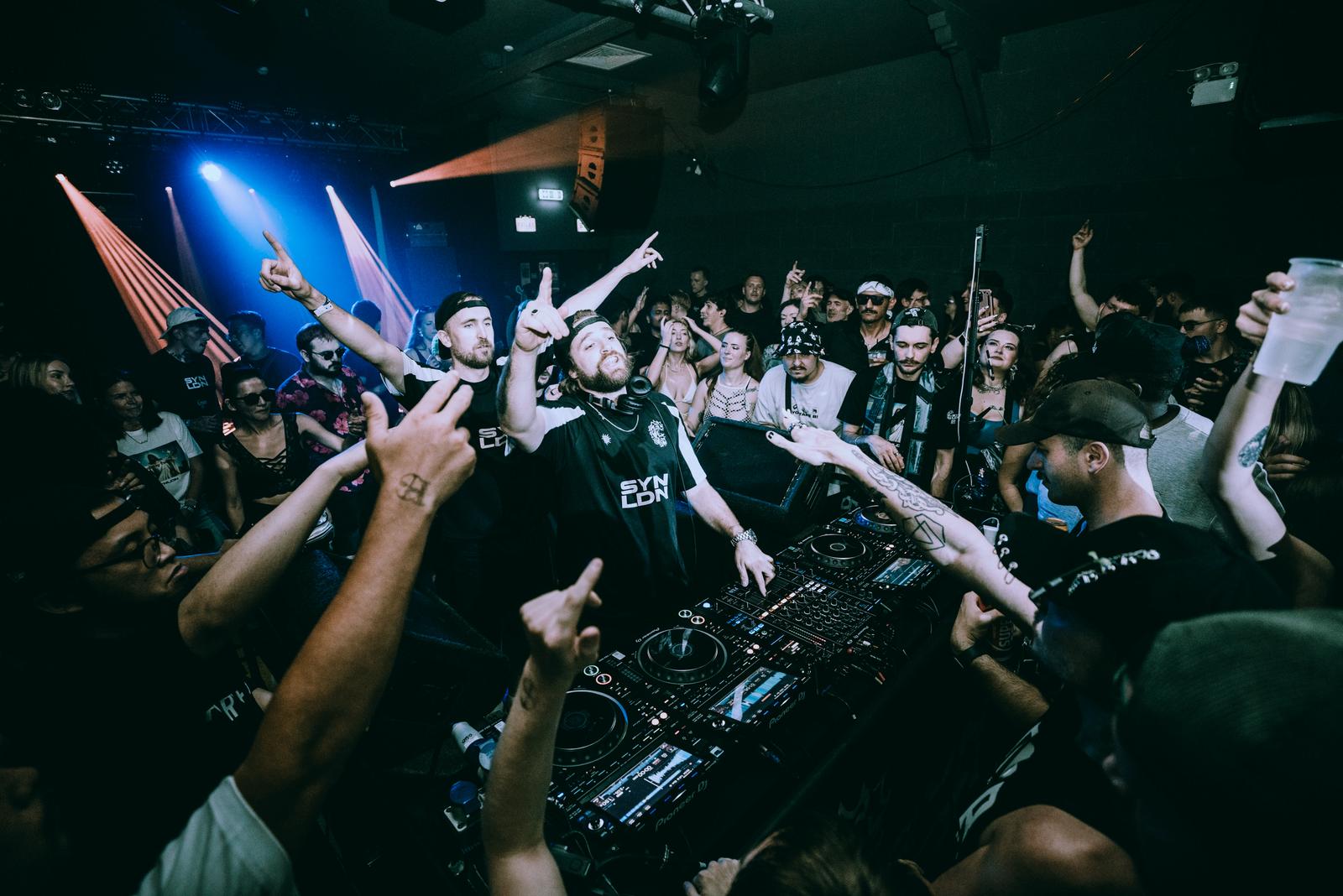
The community came very naturally from the beginning. I think fans of this music all felt very isolated, and it was good to find other people who want to headbang and mosh at club nights. Classic dubstep fans, in London especially, don’t really want to do that at 140bpm UK sounding gigs. They don’t want to take their tops off and get hot and sweaty in a mosh pit where we very much do want to do that. It’s a very different experience. When the gigs started running and people started coming in, It was good to know who were similar and so the community just blossomed naturally. Especially meeting as many people who are passionate about this kind of music too.
It’s crazy to think that now there isn’t a dubstep gig in the UK where I could go and not know anyone there. We just got involved with everyone at the gigs at a local level. Couples have gotten together at SYN events. We’ve had people from Scotland, America, all over Europe to see these gigs because they are fanatics of the music. We have a WhatsApp community if anyone wants to join they can. It’s a great way to get involved. We need people’s opinions so it’s good to have access to what people want. Don’t be a silent face. Show that you’re involved. As a promoter you’ve got to remember; You don’t know better than them, you’re one of them.
It’s just about wanting people to generally understand that people are welcome here. It’s such a core part of what we do at SYN. It’s so much more than just making a booking. London has been barren for this kind of music for so long so it’s nice to finally have that community back.
It sounds like your nights are more like live metal or punk shows than a traditional dubstep show.
A lot of that live sound crosses over. We brought over a lot of acts who fuse metal with dubstep, those are my favourites. Acts like Modestep and Dirtyphonics who incorporated live band sounds into their electronic music. That Dirtyphonics show was one of my favourite shows we’ve put on. I spent most of the time in the mosh pit the entire time. For Modestep, It was a full circle moment when I was 16, I went to Redding Festival. My mate took me to see some band called Modestep and I got the ass kicked out of me for a whole hour. It was the best time of my life. Skip to 11 years later and I’m booking them for my night. We also did a show with SVDDEN Death and If you saw the show you would have thought it was a straight up metal gig. He literally opened the show doing screamo on the mic. He got off the stage and created the mosh pit himself. He got in the middle of the pit and was doing screamo before the drop. If you watch the video the crowd just engulfed him. Three people broke their noses. None of them went to hospital. He was supposed to play the main stage at Rampage with Marshmallow to 15 thousand people the next day, and the night before I thought we’d killed him in a sweat club in Hoxton with 300 people.
You were the first UK night to book Svdden Death, he’s a global talent, why do you think he hadn’t played in the UK before then?
Svdden Death said he felt rejected because he thought London hated him. We were his first booking in the UK. He is so big in the US that I don’t think anyone was entirely sure how it would translate to the UK. Being in that community though, I knew it would do well. It was a Thursday night too, and it did exactly as we thought it would have. Nobody in the UK took that chance before and he was not comfortable to take that chance himself.
He did four sets that night, he opened as Deadroom, he did Svdden Death b2b with MARAUDA, then solo, then he did b2b everyone in the room. He was in the crowd for most of that too. It’s got a lot of appeal to play in London because that’s where dubstep was born. That’s a guy who loves what he’s doing and what he does. It was great that we got him over. He knew full well what we could do as a brand and as a community. It’s these DJs that really will do it to push the culture. They’re not greedy, just passionate. It’s really mad to see a humble side from these artists. You see these acts play to 30,000 people in the US and even still they are gassed to play our show.
What’s the craziest SYN night you guys have had?
Caiso was booked at a big London venue with Luude and Eptic on the lineup. We were putting on a show the same night, PhaseOne’s UK debut. It was a terrible clash to have because our community would obviously want to see those acts. On the night, Eptic put on his story, and he was moved at 3am and he couldn’t do it as he had a flight at 7am. While I was rocking to PhaseOne’s, everyone was talking about how Eptic had to cancel his set. So, I took out my phone and hit him up saying that we have a full venue waiting for him. He said, “I don’t want to step on any toes” and I said “Mate, you can stomp on them.” It ended up where PhaseOne just ended and then Eptic came on. Everybody on the night couldn’t believe it. The whole time we were just shouting “History! We’re making History!”.
How do you navigate what acts people are interested in?
It’s a minefield to be honest. It’s still a lot of trial and error. I think after Covid, people don’t have the same natural inclination to go out anymore. Regular people who went out every week before just stopped. The community plays a big part in trying to figure out who to book next. As long as we don’t oversaturate the nights, I think we’re in a good direction. We’re aware it’s in a niche crowd and so we have to be realistic that if you don’t live in London, it’s going to cost you at least 200 quid to come and stay the night. Considering we’re catering for the entire UK we know you can’t be doing it every week, let alone every month. It’s not like drum and bass where it’s non-stop every weekend.
What is in store for the future of dubstep?
Tearout is so big in the US. MARAUDA really took it globally. Nimda and Stvg too. Those things have kicked off in London. There’s a hunger for the old school pre-brostep sound, like Doctor P, Flux Pavilion. It was great to connect with those guys and do a show with them to celebrate their new album.
What’s in store for SYN? For the remainder of the year?
We’re hosting Modestep’s Give Us the Ghost tour in Manchester and London. That’s his first live one with the band in ten years which is going to be another full circle moment for me.
Tickets are on sale now for all of our upcoming shows.
Follow SYN: Instagram