Blossoming from a life of dancefloor underground’s best-kept secret into one of the most played-out artists of this last festival season, with an extensive tour through some of Europe’s biggest festivals and grimiest clubs behind them, and a wholly bespoke audiovisual show of their own imminent – it’s safe to say we have surpassed a mere need to finally talk about the unmatched rise to notoriety of New Zealand’s very own Pirapus.
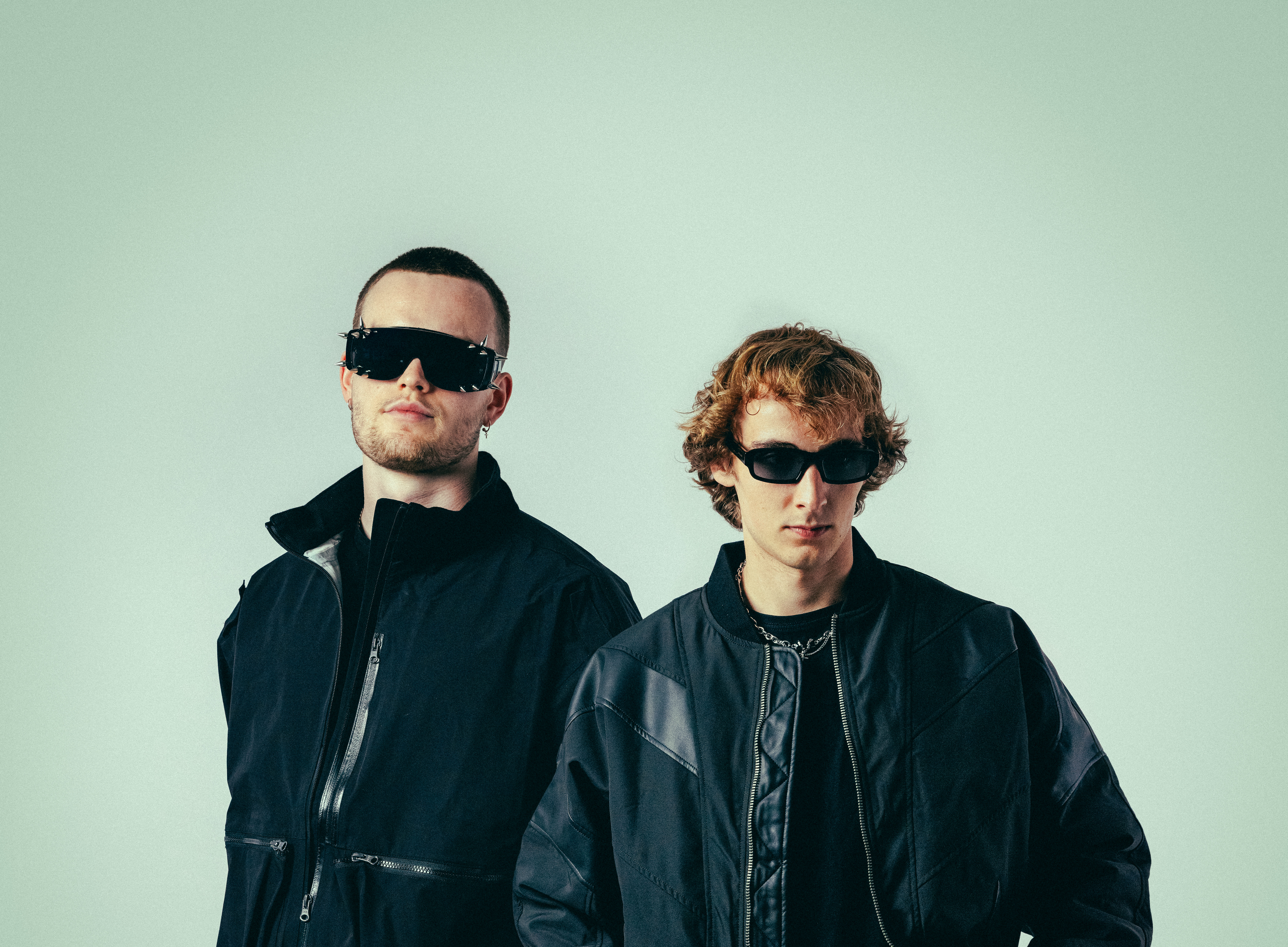
Made up of Kiwi-native, former Indie Rock band keyboardist turned professional knob twister George Murray and Houston-born but now long Aotearoa-hailing, begrudging Hip-Hop beatsmith turned electronic studio wizard Ben “Tex” Hollamby, it was the creative shift away from band life inspired acoustic fusions and into the hyper modern, hyper focused genre amalgamation of their now trademark FUTURE sound that catapulted them from the study halls of Canterbury and local legend status to stages all over Oceania and Europe, towards the very top of the Beatport charts, and into sets by Andy C, Sub Focus, and even Tiësto.
In the relative downtime between their first of surely many European excursions and what is bound to be another highlight of a an Aussie-Kiwi festival summer, we sat down with George and Tex to discuss the past couple of months, how we got here in the first place, and what the FUTURE might hold for the two of them.
Thanks for being here. How are you guys?
Tex: Good. Back at home from being overseas, George was gone for four months, I was gone for three, so just coming back to earth.
George: Yeah I’ve been getting back into the usual daily routine in New Zealand, nice to be back in my home city.
Tex: We got to skip Winter, which was dope! Perpetual summer.
George: Yeah, that made me realize that I don’t like Winter. The only thing about it I like is skiing – and that’s kind of it!
I wanted to talk to you about the 2025 you’ve been having. Not only have you been playing Rampage, Beats For Love, and Tomorrowland even, all of your tunes, especially ‘Ultrasound’, have also been some of the most played tunes during the festival summer – at least from my experience. Have you accepted all of this as reality yet?
Tex: I hear about it more than I actually see it, because I guess we’re just not in Europe that much. So we get tagged and stuff, but obviously, being captured on Instagram is not always the 100% exact picture of what’s going down. You’re not the first person to say that ‘Ultrasound’ is so, so overplayed, which sucks because the tune’s epic!
Not overplayed in a bad way though, it’s still great!
Tex: Yeah, going to some of the locations, we would hear one of our songs through the wall or from around the corner, saying “oh, that’s that song!”, so that was pretty cool. It’s nice to see the physical manifestation of all the lonely studio hours putting the tunes together.
Yeah, it must be a completely different experience when you actually go to a place like Rampage Open Air and then suddenly hear one of your own tunes being played out. “I didn’t even know they like my stuff!”
Tex: Yeah! Camo & Krooked played ‘No Surrender, No Retreat’ at Beats for Love, and when they dropped it, I, fully no shame, bass-faced to our own song, because I hadn’t heard it on a big rig yet.
George: It’s sick to see the reaction of people overseas to our music, because we’ve just never seen that before. Live it’s such a different thing than just seeing the clip!
Tex: I feel like they appreciate way heavier stuff over in Europe. They’ve got a bigger bandwidth for heavy drops. So the stuff that I feel might be a little bit too crazy for New Zealand, it’s cool to see it have a home.
Have you noticed much of a difference between the different European scenes and your home of New Zealand?
George: I think in New Zealand, we play a few more sing-alongs. In contrast, when we played Beats For Love, the Czech crowd just wanted drop after drop after drop! Same with Rampage, we were thinking after we played our set, we can actually go through tunes a bit quicker, and play a little bit heavier than we usually would.
Tex: I think Europeans are more elegant dancers as well. We need to up our game a little bit!
George: In saying that, the New Zealand drum & bass scene is obviously amazing.
Tex: Yeah, you can’t beat the enthusiasm!
George: People absolutely love it here. It’s such a cool scene. It’s just interesting seeing how people react to different types of subgenres across different countries.
100%! What would you say was your stand-out, favourite memory of the time over here?
Tex: Probably playing Tomorrowland! Because we obviously strive for quite a festival-oriented sound, everyone at Tomorrowland was ready for some melody and big synths – it just felt like we really connected with our niche a hundred percent there. Everyone watching the set there was deep in our pockets, and we probably haven’t had that before, when we’ve played, anywhere!
George: Yeah I’d agree, Tomorrowland was crazy. One of my best mates Rob, from my hometown in Christchurch but currently working in France, got to come backstage with us and spend the day. Our agent was there as well. It was just an amazing day! Also Beats for Love, just because you couldn’t see the end of the crowd and they were all really passionate – they were getting down to everything. It’s such a crazy setting as well! We did a TikTok how much the festival looks like the map Rust from Call Of Duty Modern Warfare 2.
Tex: The official Call of Duty account commented on it!
George: That thing’s got almost got a million views now, which is funny.
Fun! Speaking of your sound: How did you come up with FUTURE, and what do you want to express with it?
Tex: Some people would probably say FUTURE sounds largely like dancefloor drum & bass, but a lot of our influences come from outside of the genre, like trap, dubstep and especially EDM. Because dancefloor drum & bass as a subgenre has quite an established framework in our eyes, so we felt it was fitting to give a forward-thinking name to whatever we’re doing, this crazy bass EDM smoothie of all the genres we’re pulling from, that also felt right to us. It resonated with our approach, you know, taking sounds from other places that haven’t appeared in drum & bass before, and integrating them to the best of our ability.
I guess Smoothie drum & bass doesn’t sound as appealing.
Tex: Exactly! It’s kinda what future bass was to trap music, and what some people call future house, which never really stuck, but that was also basically people taking from bass house, and other house related genres and bringing it to the traditional sounds – kind of the same thing.
I was gonna ask if there was any correlation!
Tex: Yeah, we didn’t actually coin that term, it was just a label A&R’s passing comment. For our song ‘LOST WITH U’ they said “Oh, it’s like future bass, but drum & bass, it’s future drum & bass”, and we said “that’s copyrighted now”!
Ha! You had a different description for your sound previously, you called it Stadium D&B – right?
Tex: Yeah, that was just built off the festival mindset. The biggest festival over here in New Zealand is Rhythm & Vines, and that was our first festival experience. It was a massive stage, big outside vibes, lots of grass and greenery, and everyone’s on a super positive vibes. So that was our apex place to present the music. We want something really uplifting, but it’s still got some grit, big sounds. We also came from bands, George was a pianist in an Indie band and I was a rock guitarist in a band in high school. George went quite a bit farther with his band, but we were both bringing acoustic elements to it, so “Stadium” fit the vibe because it was quite band-ish at times. But as we played more sets, we got a little bit tired of the acoustic-oriented stuff – not that it was super acoustic to begin with! So we got a little more cutting-edge with the sound design. We still have some rock and indie elements in some of the songs, but we felt the term didn’t identify with our music anymore. So, yeah, we upgraded!
George: I think we also just learned what works live, the more shows we played. Beforehand we’d come from our band backgrounds and whatnot, we didn’t really know what hit on big speaker systems. So we went from the instrument, band sorts of influences to more electronic music.
Rewinding the clock a little bit. ‘GO BACK (We Can)’!
George, you’ve already mentioned the piano. From what I’ve read, you’ve been doing it since age 4 and sang in college and chapel choirs – and so much more! What was early stuff in the Murray household like? Did your family infuse all of that musicality into you, or is it something you grew into by yourself?
George: Yeah, definitely, on both sides of my family, there’s a lot of music! On my mum’s side, her mum was a piano teacher and her sister toured around the world playing cello and orchestras, and then my dad loves singing, he played in a band as well – not professionally, but just for fun. So from a young age, I was always into music. Started getting piano lessons from my grandma when I was four or five, kept on pursuing classical music and got my grades there, started then looking outside classical music into jazz, and played in some jazz bands for a while in high school. Then found some of my best mates in a rock band called Run77! That was so sick, for the first time trying to create an actual artist project and actually writing original music and performing for, you know, people our age. It felt a bit more authentic than when you’re playing classical jazz and you’re really just trying to train yourself in music. The band’s essentially the reason why I stayed in my home town, Christchurch, and went to uni there, so I could pursue developing my band, while also studying for a degree. We’re still really good friends, some of my best actually, but we weren’t really pushing it as a band. I actually met Ben my first year at uni. We both loved electronic music and DJing, and went from there!
We’ll get to him in a second! Are you still drawn to all of these other musical influences or has electronic music taken over?
George: I think it’s still part of me. If I see a piano, I’ll go play it! But I don’t do it regularly. These days, it’s more that I’m trying to pay attention to all types of electronic music. I listen to a bit of rap, but mainly electronic music, yeah.
Fair enough! That brings me to Tex. You’ve got your own, long, wide history with music as well. From videos of your class mates being remixed into EDM bangers, to electro house to hip-hop – but, as you already mentioned, you were in a band as well, right?
Tex: Yeah, in high school! I played guitar for 10 or so years, and I was in a rock band for fun, but I had a friend who was messing around with this free, online DAW. It was called Soundation – it was really mid. But I jumped onto it as well, because I was very much into EDM, talking Martin Garrix and the Spinning Records era European EDM. So I hopped onto Soundation and tried to make some DJ-able big room house tracks, and started to get really into it. But there wasn’t any EDM scene in Houston, so I was getting into hip-hop, because that was the thing at the time. It was a cool way to record singers and get used to collaborating and recording and mixing stuff. I would quite often do too much on the beat and piss off the rapper, they’ll say “there’s no space for me to rap”, and I was like, “oh okay” – I just wanted to do my own instrumental stuff. That’s crazy that you found those remixes, because that was one way I could share stuff and connect with people at school! Finding clips of people they found were funny, and then I would turn it into some sort of corny EDM remix.
At that point, I was moving away to university in New Zealand, and honestly had never heard drum & bass, ever. Not even a single song. Maybe there was one in Hot Wheels or something I saw as a kid that had an Amen break in it.
That’s a new one!
Tex: There’s Jungle in Hot Wheels bro! But yeah, I heard one Netsky song before I came to New Zealand. It was a remix of a Madeon song, that was the only time I heard D&B! Then I came to New Zealand and everyone was repping Sub Focus and Macky Gee, the two dons in that time. Had a crack at making it, realised I was massively underskilled, and then I met George, who was picking up DJing – and we just locked in from there! Pretty authentic project formation. And here we are, five-six years later!
How big of an adjustment was the move from the US to New Zealand?
Tex: I think I had a bit of a hazing and adjustment period when I first came here. The humour is very different. A lot of my jokes and ways of interacting with people didn’t really land. So I had to retrain. Kiwis are also pretty straight-forward and have a very sarcastic type of humour as well, which I was pretty new to. Had a training montage and came out a New Zealander! I am a Kiwi. I’m not American at all. I just have an accent and spent a lot of important years in Houston – a Kiwi would probably still think I’m a Yank, just from how I talk. It’s great, because even before we started going overseas, people would be like, “Oh, wow, an international is here”, when I actually live down the street!
Looking through your discography, you had quite a few big collaborations: Andromedik, SOTA, REAPER, and I’ve heard there’s more coming as well. How did these come together?
Tex: Probably a combination of just meeting them and appreciating their music from afar. We’d link on Instagram, exchange our music, and then they would either come through to New Zealand, because lots of UK or European artists travel there, or we would be in their territory like as of late, and we would just hit them up, get in the studio and make stuff work. I love working on other people’s projects and working off stems and stuff, so the actual studio sessions themselves are usually quite fruitful. We normally get the idea down first try, in most cases!
George: I think we just pick people who we also feel are on that cutting edge, you know, like they’re pushing the sound forward within drum and bass.
From the outside, it’s always wild to see two artists I love suddenly collaborating. Like I didn’t know you were friends like that!
Tex: Yeah the scene is small, I feel like we’re all low-key nerds, so you’re pretty aware of who’s putting out music that you like.
George: Everyone’s really friendly as well!
Tex: I guess that’s unique about the scene, right? Everyone who comes up earns their stripes in most cases in a very “honuorable” way, and I guess that breeds good character. I’m glad we’re part of a scene like that.
Yeah, once you get to the point where your tunes are sounding that good, you probably had to spend years on end.
Tex: Exactly. You’ve been humbled by the 10,000 hour rule already.
George: You also get these big DJs reaching out to smaller people, they do really know what’s going on in the scene. Like Tiësto!
Tex: He played ‘GO BACK (We Can’t) VIP’ at EDC Orlando!
George: It’s like the most heavy, niche drum & bass thing. He saw it on a reel, and was like “yo guys, can I have that?”, so we sent it and a couple other tunes to him since then.
Oh wow! Andy C was also pretty early with your heavier stuff as well, right?
George: Yeah Andy C, Sub Focus. A year, one and a half years ago, we had some good drum & bass going, but then we realised that nobody was really playing our tracks live?
Tex: We hadn’t been over and watched any DJ sets, so our point of reference was our own shows, and what we heard around New Zealand. We were like, you know what, we got all of these unfinished, really gritty project ideas lying around, and I want to finish them. The first one was ‘GO BACK’, which was the song that put us on the map for DJs, like a year or two ago. Very trap-inspired banger, and it was picked up by everyone at the same time, but yeah Andy was one of the very first guys! He is really sick in that he’s got his ears to the street with a lot of the music. He’s playing stuff from basically any producer who has top shelf stuff, which is dope! Honestly it’s the best discovery platform for like basically every upcoming artist, because, you know, streaming is pretty bloated with tracks. It’s like a cool little curated presentation of new stuff every time! I guess that’s why he’s the best DJ.
George: The DJ’s DJ!
Shout-out Andy! Aside from this whirlwind life as Pirapus you also got day jobs, right? George is a Performance Engineer, and Tex, you’re doing production for other people, like PONZ.
George: Yep!
Tex: Yeah! I also do a lot of behind the scenes production stuff, like mentoring, alongside that. That takes up half of my week.
How do you juggle all of it?
Tex: I think when it started I felt I was using up my creative juice at times, but then you enter the pain zone, and you level up – you just have to be better to keep up. Not saying I don’t have bad patches, everyone does! But once you cross that pain, you feel you have unlimited creative gas, and you’re becoming very efficient with getting songs finished. It was literally like a training montage at times – but really lame, because I’m just sitting in front of a screen for every scene.
Ha! And George, how did you make the tour work with your job? Did you go on a whole sabbatical?
George: I had saved up leave for the last two years! Hadn’t taken any holidays, because I was hoping something like this tour would happen. So then I took a lot of that holiday, and for a bit of the tour I actually was working Monday to Wednesday at my tech job – I work for a FinTech company – and then touring Thursday to Sunday, so it was pretty non-stop! It’s definitely a busy lifestyle, but we manage. I’d say the FinTech job takes uphalf my week, so on paper there’s only half left for Pirapus, but I always try to find extra time to push the project forward, to get it up to 60%. Obviously, the goal is for us to go fully into Pirapus, when it’s realistic, or appropriate.
So if you had to save up two years to go on this tour, does that mean the next tour is going to be in 2027? Please no!
Tex: No, he’s going to get in the hurt locker and he’s going to make it happen.
George: That’s what we do at Pirapus, we make it happen!
More seriously though, we never really change because of constraints, we’re always pushing where the growth is taking us. If we got opportunities to tour, we’ve got opportunities to grow our project – because we want to be one of the biggest acts in drum & bass. For that, you can’t really slow down, ever. So we make it work!.
So, finally, what’s next for Pirapus?
George: ‘Pirapus presents FUTURE’. That’s our next big thing! We’ve got a show at the end of the year, at New Zealand’s premier festival, Rhythm & Vines, and we’re putting everything we’ve got into that really. We can’t say a lot about it at the moment, but just know we’re putting in a ton of time and effort into developing a great visual show, lights, all that. I don’t know how much money we’ll make from it, will probably be in the red, but it’ll be worth it, just to be able to present something we can be incredibly proud of – and hopefully bring outside of New Zealand as well!
Tex: Dot, dot, dot!
European promoters, please!
George: We talked about “Stadium Sound” before, and what the FUTURE sound is – this is where you’re really going to see it, both in an audio and a visual form. The music and the experience you’ll get at those shows will be exclusive to the FUTURE show, so it’s a really special, one-off show. We’re taking the previous visuals up10 different levels. Got a lot of people working behind the scenes to make it something crazy. It’s an actual show as opposed to just a DJ set.
Exciting times! Any final shout-outs?
George: Shout-out our manager Dom! He’s an absolute G, he’s been with us from the start. And shout-out our agents Declan and Alex, who’ve taken us to Europe and the UK, and allow us to what we are now.