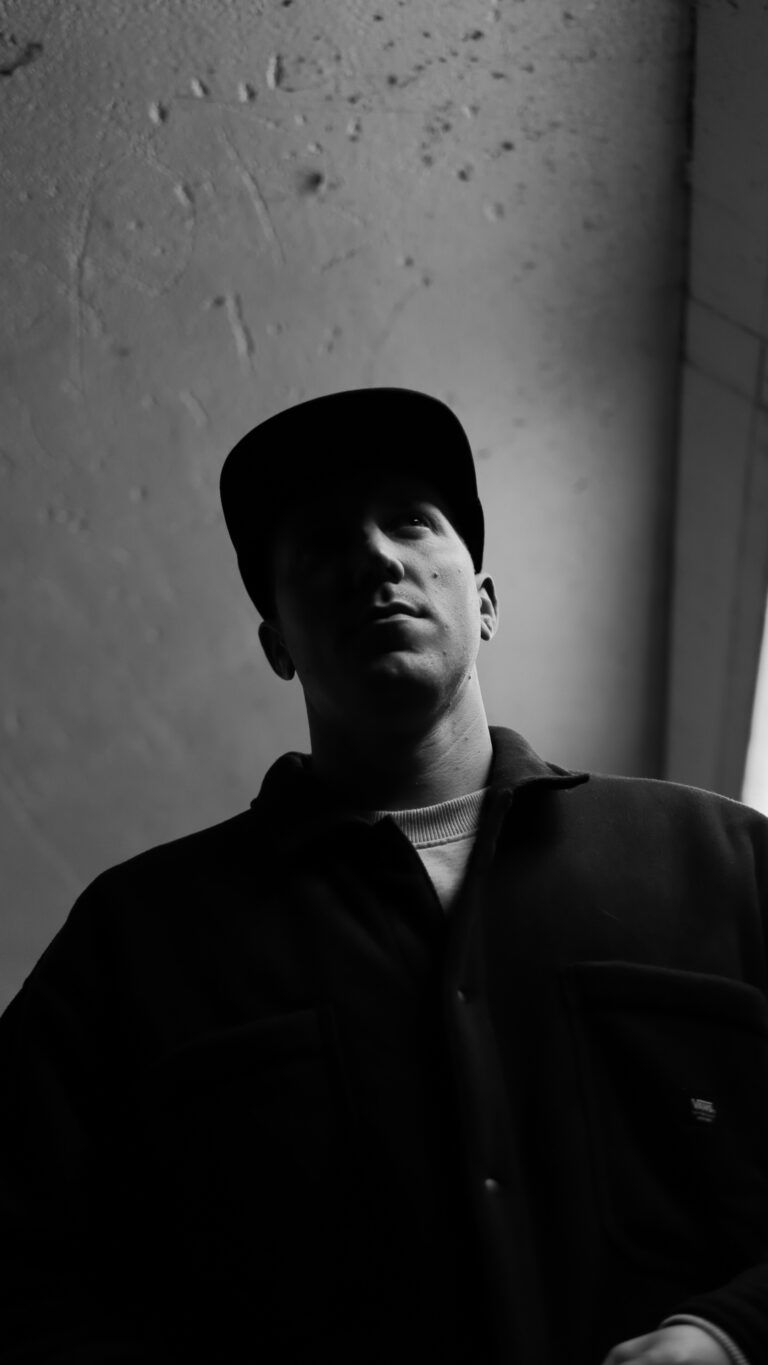

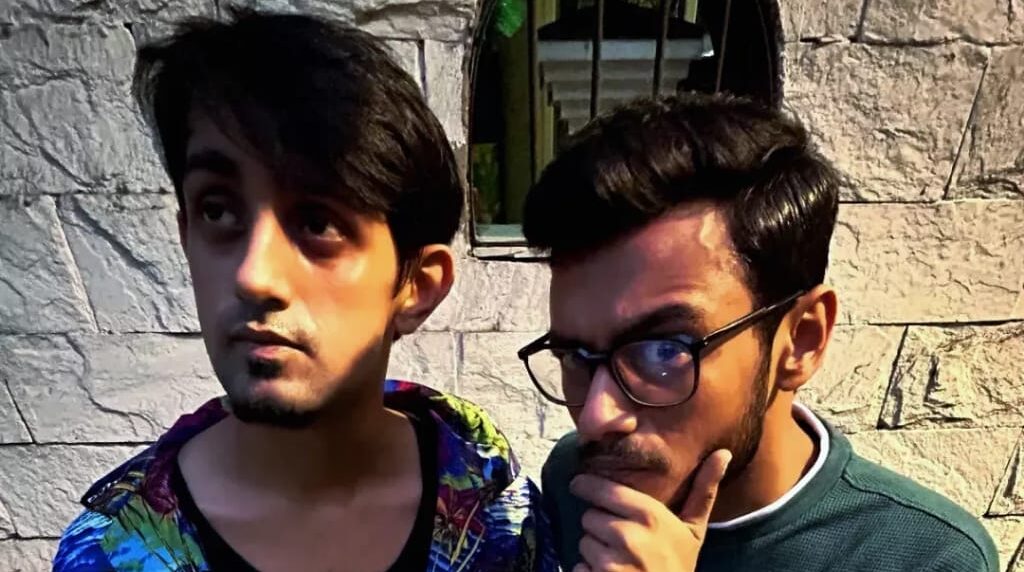
Flying the flag for the electronic music scene in Mumbai, India, Decoupe is the joint production-project of drummer and music producer from Guwahati, Deborshi, and media lawyer turned producer, Aditya Paul.
After meeting as bright-eyed bushy-tailed teenagers in college, their mutual interests exceeded original expectations as they pivoted from building things for the moon, into the art of music production.
Using live instruments and their experience in metal bands to create an interesting array of sounds, Decoupe’s output is unique and refreshing. With tracks ranging from atmospheric drum & bass to dreamy, ambient, Fred again-esque electronic flavours.
Deborshi and Aditya Paul align musically, energetically and with their second-to-none positive attitude towards life. As the world continues to show its dark side, Decoupe’s mission is to bring joy and love into the world. If it doesn’t match up with their ethical stand point of – well – just being a nice person, they’re not into it.
Their journey is one of a kind tale, and yet, the similar sounding story of so many young creatives searching for their people and purpose. Zooming in from Mumbai, the duo radiate nothing but great energy, a genuine passion for music and an eagerness to share their music with the world.
Decoupe! How did your journey as a duo begin?
Aditya: We have made music together since we were in college. We were bandmates. That’s how we met. A guitarist we knew introduced us and almost instantly we hit it off. We were kids back then, 18 years olds. I was a law student and Deborshi was a civil engineering student. We actually met because we wanted to build things for the moon. Then we realised that musically we are both aligned because we both come from metal backgrounds. I used to be a metal guitarist when I first started in Kolkata. Deborshi is from Guwahati in Assam while I am from Kolkata, West Bengal. Both on the eastern side of the country.
We started playing gigs right after we formed a band called Schadenfreude. We played the typical college circuit. College then ended quickly and everyone went their own way. Deborshi moved to Bombay and I was supposed to go to Boston for an acceleration programme, but COVID happened and all of that dried up. While COVID was happening, the world was on shutdown and courts were not open, so I called Deborshi…
Deborshi: My dad had a house in Calcutta and we basically ended up making our first studio there. There was a photo studio and a recording studio and we got all our bandmates to join us for a writing camp. The road did not even have a name and there were two lakes in front of us. You would wake up and there was water all around. It was in the middle of the city but it felt offbeat.
Aditya: That is how our journey started. We quickly built a team and started collaborating. The one thing at the top of the board was that we wanted to be authentic and do things our way rather than following the usual route of getting a manager.
Do it your own way! Amazing. Was there a time where doing it your own way became a challenge?
Aditya: Well, eventually we made our first demo and it got published by Rolling Stones. We had sent a private link to the editor for review and feedback and he ended up publishing it. It was very unprecedented for us. The song was called ‘Almighty Gecko’. But after that, we hit a slump. The world started opening up and people wanted real jobs. Some people got married and moved on. One day I called Deborshi and said, have we hit a slump? Should I just go ahead with a law career and not give it any more thought?
He said the best thing we could do was make something together again. So I went to his place and we made something and it was awesome. Within a month we packed everything and moved to Bombay without any security or a job. We had some savings and I was doing freelancing.
Deborshi: That was the real start of our journey from the production angle. The first few songs we made got picked up by licensing agencies and were licensed out to MG Motor India and others. It was a sitar hip hop kind of track called ‘Trinity’. That was the start.
You incorporate your live instruments into your tracks… How does this add to or enhance your sound?
Aditya: It is rare that people use live instruments these days….I believe it comes down to natural frequencies that resonate with us. Even when we are performing a consistent set, we focus on adding a distinct flavor to each rendition; that creative freedom to improvise ensures the performance stays organic and evolves with the audience and our mood.
What is the music industry/community like in Bombay?
Aditya: There is a big metal community here. Slowly we started seeing hip hop grow with the Gully Gang movement too. The major shift happened around COVID. Priorities got realigned and a lot of people took up music and started community building. Back when the scene was first starting to take off, people like Schubert Fernandes and academies like Lost Stories were instrumental to make sure that the scene had a place to grow. One of the communities we are part of is called Tilt Fam. They started karaoke jams but it is actually a live band setup where you sing your own songs and promote your music.
Deborshi: Kaelyn D’Souza has spent eight years building that community and it now has five to eight thousand people in Bombay engaged. It is still growing too. People’s interest in music has improved and there are more regular gigs, particularly among young people.
Tell us about your latest track ‘in my dreams i hold your hand in eternity’ and the story behind it.
Deborshi: Ok so this is a funny story, and one I can’t believe I’m sharing! Like many great songs, it is about a girl. I attended a Bryan Adams concert in Shillong, India. It was a crowded night with thirty to forty thousand people there. One of my friends came with this girl and we ended up watching the concert together. It was a great night. While watching the band play in the middle of the crowd, I came up with the name of the song.
Very honestly, it comes from a place of longing. Wanting to reach somewhere and be a particular type of human being for myself, my friends and my family. Always keeping them around me no matter where they are. Everybody has a particular frequency. It was deeply motivated by a moment.
Amazing! What else are you working on right now?
Aditya: Last year we went into a new phase. I took a sabbatical from work for a year and we travelled to different parts of the country. After a lot of chaos we decided to make a full set based on the concept of entropy and representing chaos in the most sincere way possible. It is a twenty five minute set made entirely of original music. We never released it because it is just the bare backbone. It includes live instrumental elements we would perform on stage like a big gong and other unusual instruments.
Deborshi: We do not DJ. We are a drummer and a guitarist and we chose not to perform as DJs. We want to use live instruments even when the music is electronic. The structure is similar to a DJ set where songs flow into each other, but instead of mixing tracks we perform elements live.
Aditya: We also have another release called ‘How to Explode with Joy and Other Questionable Life Choices’. It is a bit of Indian classical and D&B. Everything we do is homegrown. We have never spent money on promotions. Even the video was shot on my Google Pixel and we edited it ourselves. The artwork is also made by us.
Making the most of your shared creative skills! What is the mission behind everything you do?
Aditya: It is fairly simple. We want to make ten thousand records and have the highest number of records out there, starting with ten thousand and then seeing where it goes.
More importantly, whatever we do we do not deviate from ideas of goodness, love and respect. Whenever we feel an association is not based on those things, we walk away even if it costs us opportunities. At some point somebody will see it and the story will be heard. We depend on organic growth and we make decisions based on ideas rather than what the industry expects. If something does not fit with our ideology of being a nice person at the core of it, we do not do it. The world needs more love and respect right now.
Deborshi: Most of the producers we work with are friends who started that journey with us at the lake house on that unnamed road. We have always supported each other. A lot of people – especially both of our families – have been part of this journey and we have a lot to thank them for. It is not a one man job and we are very grateful to be doing what we love.
Follow Decoupe: Instagram / Linktree / YouTube / SoundCloud