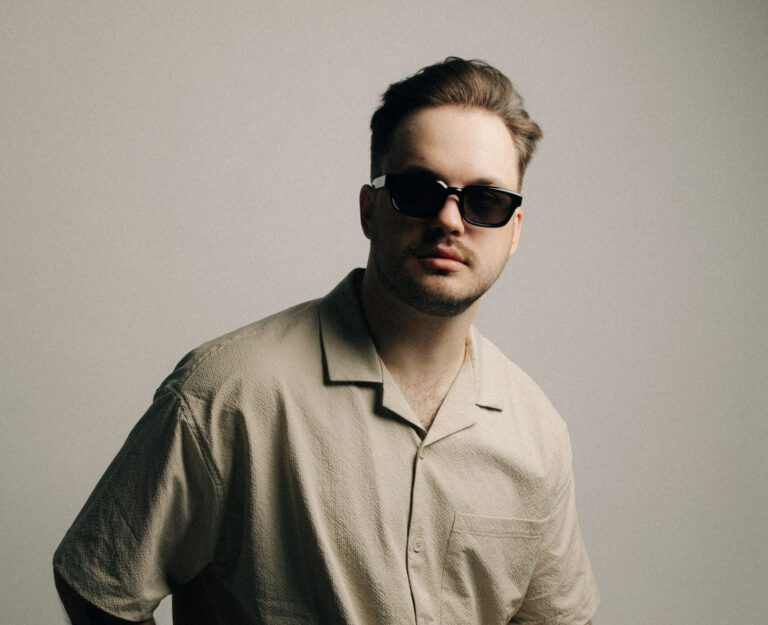

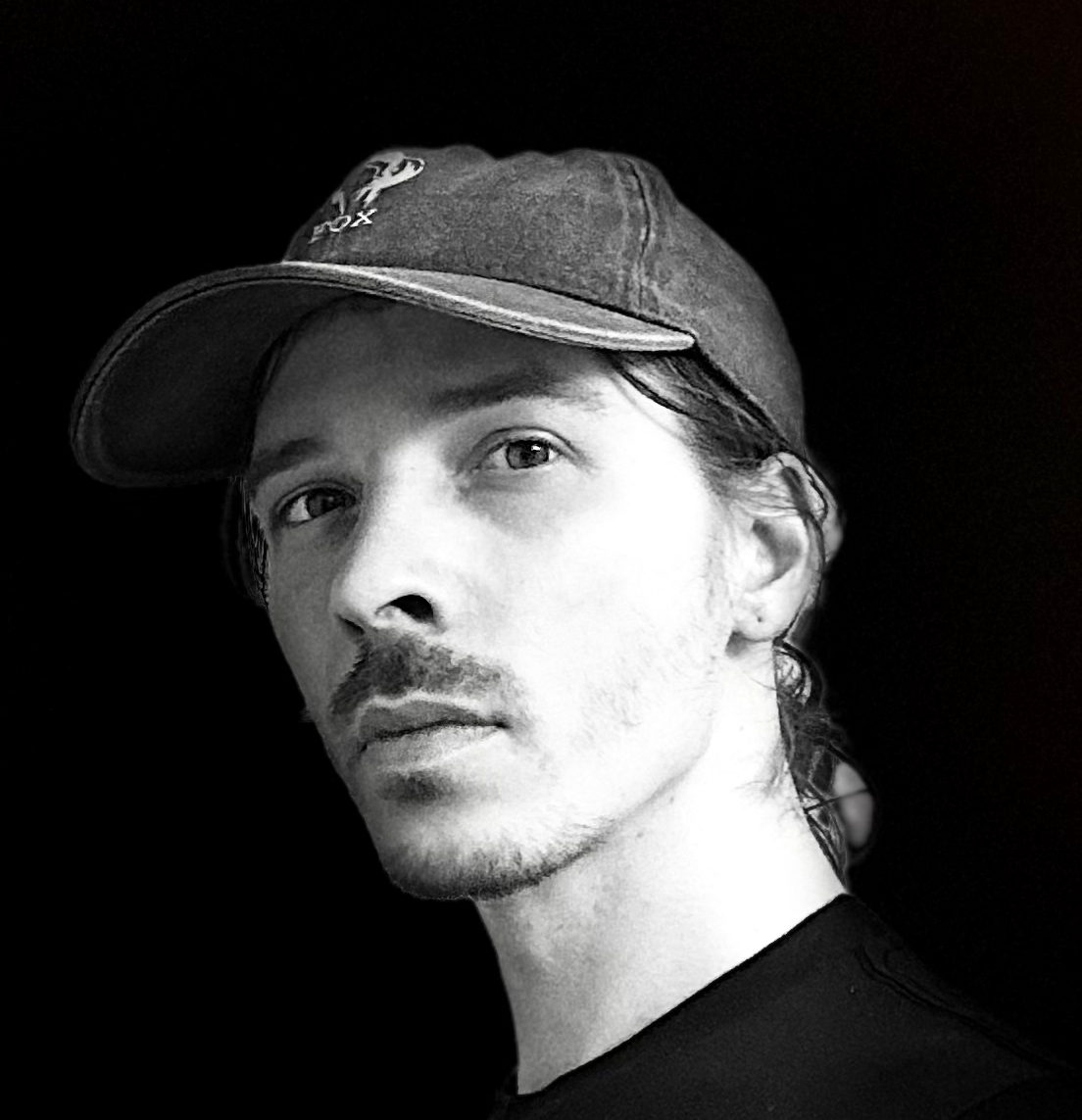
Based in Las Vegas, Ian Baggett, better known as Alckemy, first caught the attention of the global bass music community through a steady stream of content, from sample creation to deep dives into engineering and sound design, going on to create his own suite of sample packs and presets.
For Alckemy, it all started with streams, sample making, and technical explorations that quickly positioned him as a figurehead within the production community.
Right now, however, the focus is on Alckemy’s productions, simultaneously mind-bending and bass heavy concoctions that flex the producer’s versatility. His music operates as a kaleidoscope of halftime beats, sound design, textures and bass-heavy concepts, spanning left-field bass to immersive tech-driven audio palettes.
We caught up with Alckemy to discuss how he crash-landed into the global bass music scene, his impressive involvement with Martial Arts and the philosophy behind his approach to sound design and artistic identities.
When did you first start getting into music?
201. I’m in my thirties now, and I didn’t really start music production until I was 23. Just to quickly summarise how that came about, I do what’s called tricking, it’s like acrobatic martial arts. I got hurt at a competition, and I couldn’t even walk, so I was like, “What am I going to do with my life?”
I don’t know if you recall or not, but 2013 was such a crazy, pinnacle era for music. Seven Lions was dropping stuff, neurohop was coming around, and that just really pushed me over the edge to start doing that.
Are you still involved with martial arts and tricking?
Yes. I went to the gym yesterday. I used to run a martial arts school under his name, Joel Ledlow. We are of the Jeet Kune Do lineage. His instructor is Jerry Poteet, and he was under Bruce Lee.
I’m a third-generation instructor from under Bruce Lee. I guess you could say my whole thing is the preservation of history. It’s a means of educating people on things that will empower them and help them better themselves with art, expression, movement, or really anything that you feel like putting time into.
So while I’m not necessarily teaching, I’m still very active under my instructor. I have a trip planned to Canada in the future. Pretty soon, he’s opening up a new school, and I’ll train and stay active and fit, as a responsibility and as an obligation to somebody who holds a piece of that history.
That’s respectable. And once you’re a martial artist, that mindset never really leaves you.
Yeah, it’s the same with music or anything. It’s what I’ve learned over time. Sorry, not trying to dive too deep into things. First, you learn an ecosystem, or a system in general, about how things work or a problem-solving approach.
But as you get older and become more experienced, you start to see that in other things, and you start to apply a lot of your problem-solving skills to new things that have a new coat of paint. It’s just that the context is different.
Did you have a certain sound that you started out with when it came to production?
I really wanted to learn dubstep at the time. Other labels like Monstercat were getting big. Noisia was dropping stuff, KOAN Sound had just started blowing up, and I was enamoured with the cool bass sounds.
But I had to start humble, so it was all with hip-hop, knowing that was fundamental. So that would bleed into all the other stuff that I wanted to learn.
It seems like you have a wide array of genres that you’re exploring. Where are you going with ‘Coward’?
I sent it to Tomppu. He’s pretty much my main label point of contact, and I feel like their label has shifted a little bit from the halftime realm of super swanky beats with crazy neuro-basses that are blasting to a lot more of the almost trap side of things.
Tomppu from SATURATE!? What’s your relationship with the brand?
We do a lot of stuff together. I got entangled with them because I primarily have a YouTube channel, that’s how I’m actually known. People don’t really know me for my music; they know me for the material that I make for the community.
I got so lucky to come in contact with some of their guys, like Zane, K A G E and Chee and I actually started out by just taking lessons from them. They brought me on as a collaborator at first to promote some of their stuff, to do interviews, kind of like what you’re doing here.
That’s really just been the relationship, and it’s always been a community-first kind of thing.
How long have you been running the channel?
Eight years now. It’s definitely had its ups and downs. When I first started getting into producing, the only information out there was Dogs on Acid.
I was very lucky to get in contact with COPYCATT. He gave me his blessing to teach a lot of the stuff that he had shown me. My responsibility with it was to put it out there in a way that wasn’t just a copy-paste job. It was a means and a challenge for myself to be like, “Do I understand this information? How can I give it to people in a way that they’re going to understand?” But it’s through my own words.
I noticed that with your uploads and tutorials. I think it’s for Phase Plant?
That’s correct. Phase Plant from Kilohearts is something that I found in 2019. I don’t work for them, but they’re people that I work closely with, and I gladly do content with them, but they’ve really opened up a gateway to a particular approach to sound design.
Regarding your presets, could you speak to how they compare to what you might design in Serum?
The main difference between the two is that Serum 2 is a little bit different. But with Phase Plant, it’s a semi-modular synthesiser that essentially has limitless effects, modulators, and racks. The main draw point to it is its flexibility. But you can also build effect racks, save them, and pull them up in other presets or use them as their own standalone plugin.
What I do is I take one preset, and I’ll make something with one single source that creates drums, percussion, generative bass, plucks, pads, all within a single ecosystem.
But the kicker is that, because these are all saved as racks that can be modulated and automated and stuff, you can actually swap out the presets for those racks of different flavours of the drums or the basses or whatever. It’s an incredible system.
It looks like you have quite a few presets. Which one’s your most popular?
I would say probably Æturnum 6 For Phase Plant, although I will say that every preset bank that I release has purposely been made to outdo the previous one. Even though the most popular one is Eternum Six, I would say the Alckemy’s Bass Monsters, which is a lot more designed around functionality.
Because I understand that sometimes the philosophy of “experiment, resample, and apply” doesn’t work for everyone. That has the most streamlined use case, where you do not have to make many changes to it, just pull it up and be like, “Okay, this is going to sound really good already.”
Do you have any projects coming up you can talk about?
To be honest with you, most of my stuff has just been about growing the channel. I am working on a new preset bank, but I’m always working on a new preset bank. In regards to music right now, I have a lot of stuff that’s done.
It’s more about just trying to send it out to people and see if anybody’s interested in it. But I have so many different genres and different things that I’ve even considered creating new aliases or whatever just to try to diversify and maintain a single brand identity.
But for the most part, it’s always been about the music for me. As long as I’m making music, communicating, and being a part of the community, I think that I’m pretty satisfied.