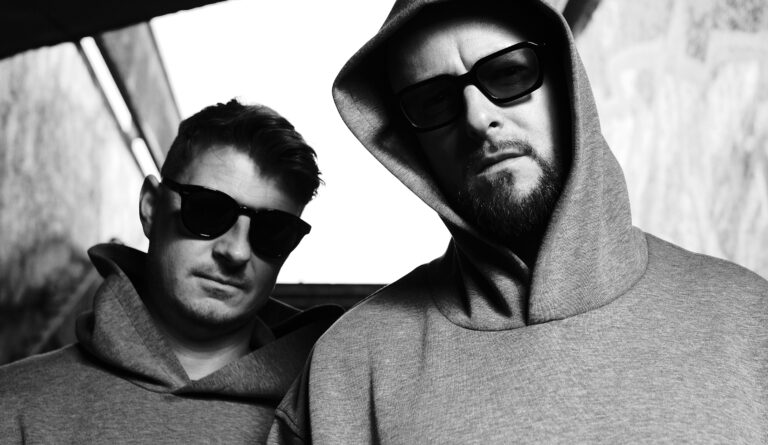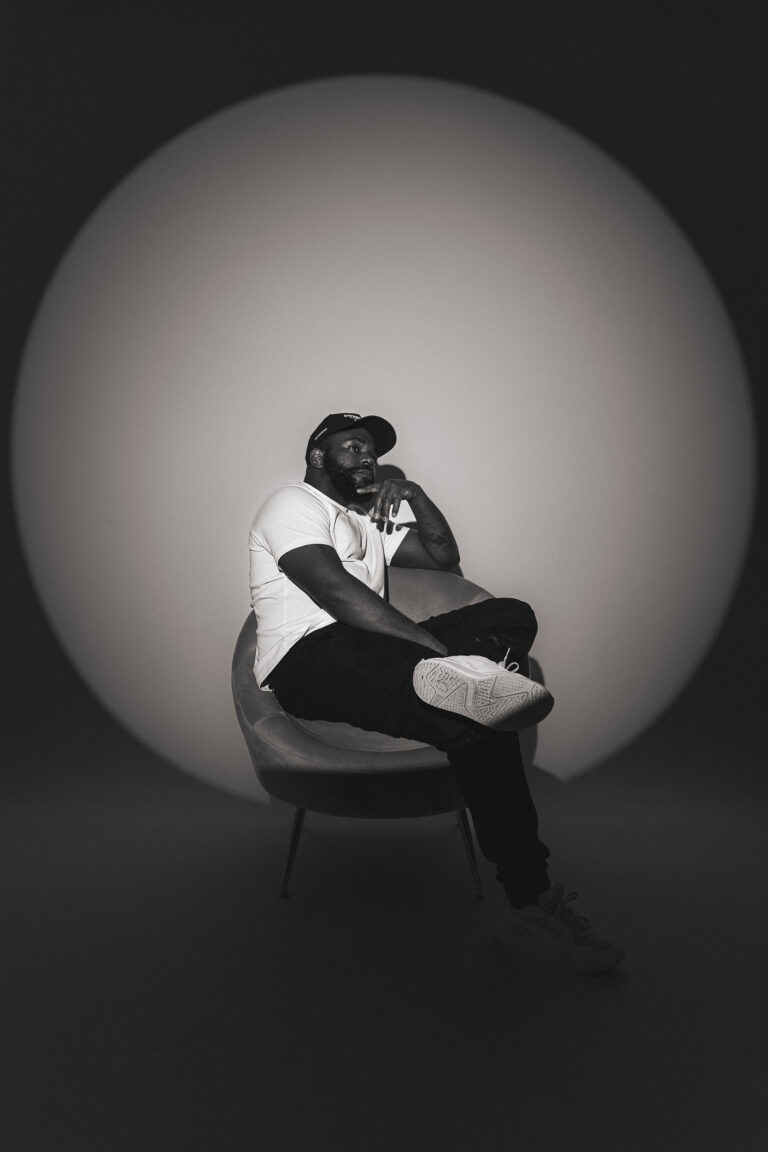


LSB returns for his third album ‘The Middle’ on his own imprint, Footnotes.
Stripped back in terms of sound and containing no collaborations – it’s a very personal LP from the Footnotes founder. While it’s sharply focussed under one theme, when you start to unpack being in ‘the middle’, it’s layer upon layer of emotion, life experience, and coincidence.
The album keeps it tight at nine tracks, with the beautifully rolling title track ‘The Middle’ right where it belongs. On either side of it are an opening quartet of sounds that are more wistful, before the following four closers take the mood gently towards a hopeful, optimistic sound. ‘The Fog’ is an apt introduction – inspired by a foggy, emotional morning on the golf course listening to Kate Bush’s 1989 track of the same name. As the grey haze gradually lifts, we’re treated to a classic LSB piano roller in ‘Without You’, some truly uplifting moments like on ‘Reflections’, and pure sweetness on ‘The Present’.
‘The Middle’ is representative of where LSB sits in life right now. Mid-forties, balancing fatherhood, a bank of memories and experience to draw from, but still with so much left to say when it comes to musical output, running Footnotes, and life beyond music.
Lastly – there’s a layer to this that only starts to feel visible now. LSB occupies a unique position between two of drum & bass’ most influential: the late legends Marcus Intalex and Lenzman.
Something of a protégé under Marcus Intalex, and coming up on the mythical Soul:r – LSB’s sound takes such clear cues from Marcus’ pioneering, techno-influenced approach to drum & bass. They grew together, golfed together, and remained together until the last breath.
Whereas LSB and Lenzman found form in parallel – sharing a similar, soulful sound that’s rooted in jazzy samples and able to draw emotion from a simple, repetitive piano loop. Luke and Teije were great friends, in the same lane of label management and liquid drum & bass mastery – working towards one goal of pushing the music forward.
During a week where we saw the release of ‘The Middle’, Marcus Intalex’s birthday, and the devastating news of Lenzman’s passing, UKF sat down with LSB to discuss this significant moment.
It’s been 10 years since your debut album ‘Content’ on Soul:r. When you look back at the producer who made that versus today, what comes to mind?
It’s interesting how you just pronounced Content. It was almost deliberate at the time – is it Con-TENT or CON-tent? Looking back now it’s quite ironic because I was already sick of the amount of social media content we had to do, and if you compare that to now it seems like a very innocent time.
Back then, I’d write all the time. I still worked three days a week, but the rest of my time was spent in the studio. I put a lot of pressure on myself to constantly be creating. Now it’s completely different. I only write when the stars align – when I’ve got the time, I’ve got something to say, and I genuinely feel like making music.
Ten years ago, if I hadn’t been in the studio for two weeks I’d have been stressing out, thinking, “Man, I’ve got to get on with my career.” Now I don’t think I’ve spent more than three hours in the studio this year, and I’m completely okay with that. Instead, I feel like I’m building up a reservoir of ideas, influences and inspiration.
When you first start making music you’ve got a lifetime of experiences to draw from. Eventually you empty that reservoir and, if you’re not careful, production can become a game of just pumping out tunes rather than actually saying something. So these days I wait until I have something to write about.
So is that new mindset how you arrived at The Middle? How did it all come together?
I was in a pretty significant writer’s block. I’d had ideas and I’d been doing a bit of shadow boxing in the studio, but I was burning out badly after COVID. I knew I needed to leave my job, I wasn’t really enjoying gigs and I just needed a complete reset.
I think it was August 2024. I was playing golf and listening to Kate Bush’s ‘The Fog’. Something about that song just hit me. I started crying. I don’t really know why. There were just a lot of emotions tied up with everything that was happening in my life.
The original concept for the album actually came from that song. All of the working titles were lyrics from it, and The Fog stayed as one of the final track names.
The following weekend my wife and the kids were away, so I suddenly had four days completely to myself. I don’t write well with distractions around me, so it was perfect. I’d play golf in the morning, come home and write until I fell asleep. Then I’d wake up and do it all again.
Those sessions became The Fog, A Forest, The Road and The Middle. Four tracks came out of that weekend and they all shared the same palette and mood. That became the foundation for the whole record. The rest of the album grew around those songs.
Those four are all at the front of the album – which has a wistful sort of sound, while the back half turns a little more uplifting…
Yeah – that’s how I see it too. By the summer of 2025 I was coming out of that burnout, and the second half of the album was written from a very different mindset. It starts off foggy and gradually becomes more optimistic.
There was also this little concept running through the whole project. I’m 44 now, so if I live to 88 I’m literally in the middle of my life. There are nine tracks, and ‘The Middle’ is track five. It came out on July 2nd which is the exact middle of the year.
Even the artwork came from that same place. ‘Content’ and ‘The Blue Hour’ always felt like blue records to me. This one felt like misty greens and greys, so I asked the designer to create something with a sense of isolation based on that idea.
Looking back, I think the biggest difference between this album and Content is that I stopped obsessing over perfection. Ten years ago I’d spend forever refining arrangements and fixing every tiny detail. This time it was about capturing a feeling. There are mistakes in there. There are probably levels I’d change or little things I’d tweak. But those songs captured those moments exactly as they happened, and once I’d done that, they were finished.
The album is concise. It’s just nine tracks, there are no features, and everything feels very understated – even the artwork. Was there a particular message you wanted people to take away from it?
For me, music has always been a safe space. It’s somewhere you can escape to, or somewhere that helps you work through whatever you’re feeling.
I’ve always been a big late-night walker with headphones on. That’s probably when I consume music the most – walking by the river, travelling, flying, commuting. I like music that lets you disappear into your own head for a while.
So if one person can take something from this album that helps them through whatever they’re dealing with, then that’s enough for me. Making it was a cathartic process, so if listening to it becomes cathartic for somebody else, that’s probably the best outcome I could ask for.
One thing I’ve always loved about music is that once it’s out there, it stops belonging to you. It might feel one way to me, but somebody else can hear exactly the same piece of music and connect with it in a completely different way. I really like that. I don’t want to tell people how they’re supposed to feel about it. I just hope there’s enough emotion in there for people to take whatever they need from it.
It’s also not really a club album. There are a couple of tracks that might work in that environment, but that isn’t really what it was written for. At the same time, I wouldn’t necessarily call it a traditional home-listening album either. It sort of sits in this strange middle ground or ether that sits in between – and that’s another reason the title made sense.
You launched Footnotes back in 2018, and recently described the 20th release as the beginning of a new era for the label. What does that new era look like?
I’ve got a lot of other peoples music sitting there at the moment, or at least a lot of ideas for projects with them.
One thing I’m really keen to do is another various artists project. It’ll be a collection of tracks from artists I love – some established names, but mostly people who are still coming through.
I’m also trying something a little different with EPs. Rather than signing finished music, I’m almost commissioning records. I’ll approach an artist and say, “I want you to make an EP for Footnotes. Here’s what I love about your music – now go away and make the record you want to make”. I don’t want to micromanage people. I don’t want to tell them to change this or change that. I want artists to feel like they’re releasing on their own label.
It’s a bit like commissioning a painting. You don’t ask for four versions and then pick your favourite – you trust the artist. That’s the balance I’m trying to find between traditional A&R and giving people complete creative freedom.
It does make the process slower because everyone likes feedback and validation while they’re writing, but I think artists have been really receptive to the idea. At the moment there’s a really healthy group of people working on music.
Villem has an EP coming very soon, which is amazing. Dogger‘s doing one. imo-Lu has one nearly finished. Mindstate‘s working on something. Anile’s always got something in the works. Tokyo Prose has a longer project in the works, and Noppo & Sydney Bryce I’m speaking to. There’s quite a nice pipeline developing.
The downside is that because I don’t give people strict deadlines, the release schedule isn’t always consistent. You might get a few releases close together and then nothing for a while. But I’m okay with that. I’d rather release music when it’s ready than force people into arbitrary deadlines.
It sounds like you’re trying to build a label that’s artist-led rather than schedule-led.
Exactly. I’m very honest with people about how Footnotes operates. It’s basically just me. Maybe I’ll get some help next year, but we’re not backed by a huge team or a massive promotional machine. So hopefully what artists get instead, is a label with a reputation for releasing good music.
I’m still pressing vinyl as well, even though everything seems to be working against it now. Financially it barely makes sense, especially with all the new EU charges, but I still think it’s important – in a world where thousands of digital tracks appear every single week, vinyl is almost the label’s investment in the music itself. Even if it only breaks even years later, it says something about how much you believe in the record.
It’s always going to be an independent label that’s focused first and foremost on the quality of what it releases – not necessarily on how it releases it.
What does the events side of the label look like?
I’m still figuring that out, to be honest. The main reason I’d want to do more Footnotes nights is to create a home for the artists I’m releasing. Somewhere they can play together and people can experience the label in a live setting.
I’d love to find a proper home in London. Somewhere where we’re these like six times a year and it genuinely feels like our space. But at the same time I don’t want it to become one-dimensional…
One thing I loved about nights years ago was hearing a real journey, and real variation across a whole evening. You’d hear loads of different shades of drum & bass, maybe even other genres creeping in. These days a lot of label nights naturally become quite focused around one sound – but like a lot of artists, my taste is much broader than the music I make.
If I had my ideal night, it’d move through all sorts of moods and styles. It wouldn’t just be liquid. It’d just be good drum & bass. That’s something Marcus Intalex always did brilliantly with Soul:r, and it’s something Lenzman definitely achieved with The North Quarter as well. There was always a real sense of progression across the night.
The North Quarter at Phonox became one of those events that people would never miss.
Absolutely. As it stands, my position is really about supporting The North Quarter rather than trying to replace it with something else. I know there’s every intention for TNQ at Phonox to continue, and that’s where my energy is at the moment.
You and Teije (Lenzman) always seemed to have a close relationship.
He was a true friend. One of the things I loved about our friendship was that it was never competitive – even though our labels have such crossover and similarities.
There were artists whose tracks could’ve easily ended up on either label – Tokyo Prose is a good example – and we’d just communicate, we’d always make space for each other. We both understood there was room for both labels, and if anything, supporting each other made both of them stronger.
Unfortunately, there can be quite a competitive mentality in music, and I’ve never really understood it. I compete in sport. I compete with myself in the studio. But I always felt music should be about pushing each other forward. Grow the scene together, then everybody benefits.
Teije was exactly the same. He could’ve easily looked at me as somebody coming after the same gigs or the same audience, but of course he never did, and he was incredibly generous with his support.
Do you think that relationship shaped the way you’ve approached Footnotes?
For sure. Marcus and Teije ran their labels quite differently, and I always liked to think I probably sit somewhere in the middle. Teije was incredibly organised. He’d have these detailed Gantt charts for every release and he’d send them over saying, “This really helps”, and I’d just laugh. I’m a qualified accountant – I know how to do all that – but music is my escape from that kind of structure.
Marcus, on the other hand, was a complete purist. If there wasn’t any music ready, Soul:r simply wouldn’t release anything, he just trusted his instincts completely. So Footnotes kind of sits somewhere between those two approaches.
I’ve probably inherited Marcus’ instinct for trusting artists, but I also understand why Lenz liked having more structure. The one thing they both shared was incredible taste. If they believed in a tune or an artist, they’d back it completely. That’s the biggest thing I’ve taken from both of them.
Let’s talk about Marcus a little more – how much of his influence have you carried into this album and your recent music?
A huge amount. I’m happy to talk about this publicly now because it all links back to the same period in my life that the album came from.
When Marcus died, I was there.
I was staying at his house that night. We’d gone to bed around half six in the morning after eating cheese toasties and chatting, and when I got up I went downstairs to use the toilet.
Marcus was in the bath. I remember thinking, “That’s a bit weird.” He liked baths, but it was early in the morning. I ended up going outside instead, and then I heard his girlfriend screaming, so I ran upstairs. We got him out of the bath and I started doing CPR. I didn’t really know what I was doing, but I just kept going until the ambulance arrived.
I still remember the exact moment he died. For a long time afterwards I carried enormous guilt. There was maybe a minute between seeing him and hearing those screams. I kept thinking, “What if I’d done something differently?”
A few weeks later my first daughter was born, and it was just a crazy point in my life with all this trauma and guilt. I couldn’t even go downstairs on my own without thinking about it. Every little noise my daughter made, I’d panic that she was choking. I was carrying that around for years man.
How did you eventually begin to work through that?
I mean, 2024 I tried therapy, we’d been talking a lot about my childhood, about my dad not being around. I’d always told myself it didn’t affect me. Then my therapist said something that stopped me in my tracks. She said, “It sounds like Marcus became a father figure to you. Have you ever considered that maybe you blamed yourself because, somewhere deep down, you didn’t think you were good enough for him to stay either?”
I just thought like… what the f***. I sat on that for a while. Then I went away to New Zealand shortly afterwards and spent a few days on my own in Queenstown. I remember sitting in the forest and deciding I was finally going to think about it properly.
Rationally, I’d always known I’d done everything I could. But that was the first time I actually believed it, I forgave myself. I remember just sitting there crying, and it seriously felt like somebody had taken two stone off my shoulders. I’d been carrying that weight around for six or seven years without even realising how heavy it was – it was like It genuinely changed my life.
I now reflect on it all very differently. I am grateful I was there and it wasn’t some random hotel room somewhere in the world. On his final day we’d played golf, gone for Japanese food with his partner Ayumi, and chatted about the future of his music and Soul:r. He was rejuvenated in that respect, and then we played a gig in his home city. His final day was full of the things he loved, and that is very comforting.
Did that change the way you approached both music and life afterwards?
Yeah, definitely. I mean, for a long time I think I was just living my dream job in a bit of a daze – and now I’m just trying to enjoy it again, be grateful for the position I’m in.
It’s great that I get to travel. I love DJing. And I just genuinely don’t care how people think I should be behaving or where I should be in life anymore – like, I love listening to loud music on a good sound system, being in the middle of a rave, and that’s always been my thing. I might enjoy that for another few years, or I might decide to disappear and become a complete hermit. I’m capable of both.
I also feel like I’m maybe having a bit of a renaissance in my career – and part of that came from accepting something I’d been resisting for a while. I sort of accepted that I’d probably already gone over the top of the mountain, career-wise. Instead of chasing what I’d had before, I started thinking, ‘How do I just enjoy this for what it is?’.
Rather than being resentful for what I’ve lost, I’d rather be grateful for what I’ve got. That’s probably become my philosophy in general.
There was a point a couple of years ago where I genuinely questioned whether I still wanted to do it. I thought, “If you’re not enjoying this, let somebody else have the opportunity.” There are loads of people who’d love to have this life and opportunity.
So I gave myself until I turn 45 and said, ‘Right, put everything into it and see how you feel.’
Now I feel so much better than I did then. I’m not sure what happens next, but right now I’m just enjoying it again.
With The Middle now out and Footnotes entering a new chapter, what excites you most about what’s next?
Just making good music. I don’t really think much beyond that anymore.
I want Footnotes to keep growing naturally. I want to keep releasing music from artists I genuinely believe in. I’d love to build the events side of things and create a proper home for the label – but I don’t want to force any of it. I’ve spent enough time chasing things.
Now I’d rather let the music decide when it’s ready, let artists have the freedom to create, and just keep building something that feels honest. If we can keep doing that, I’ll be happy.