
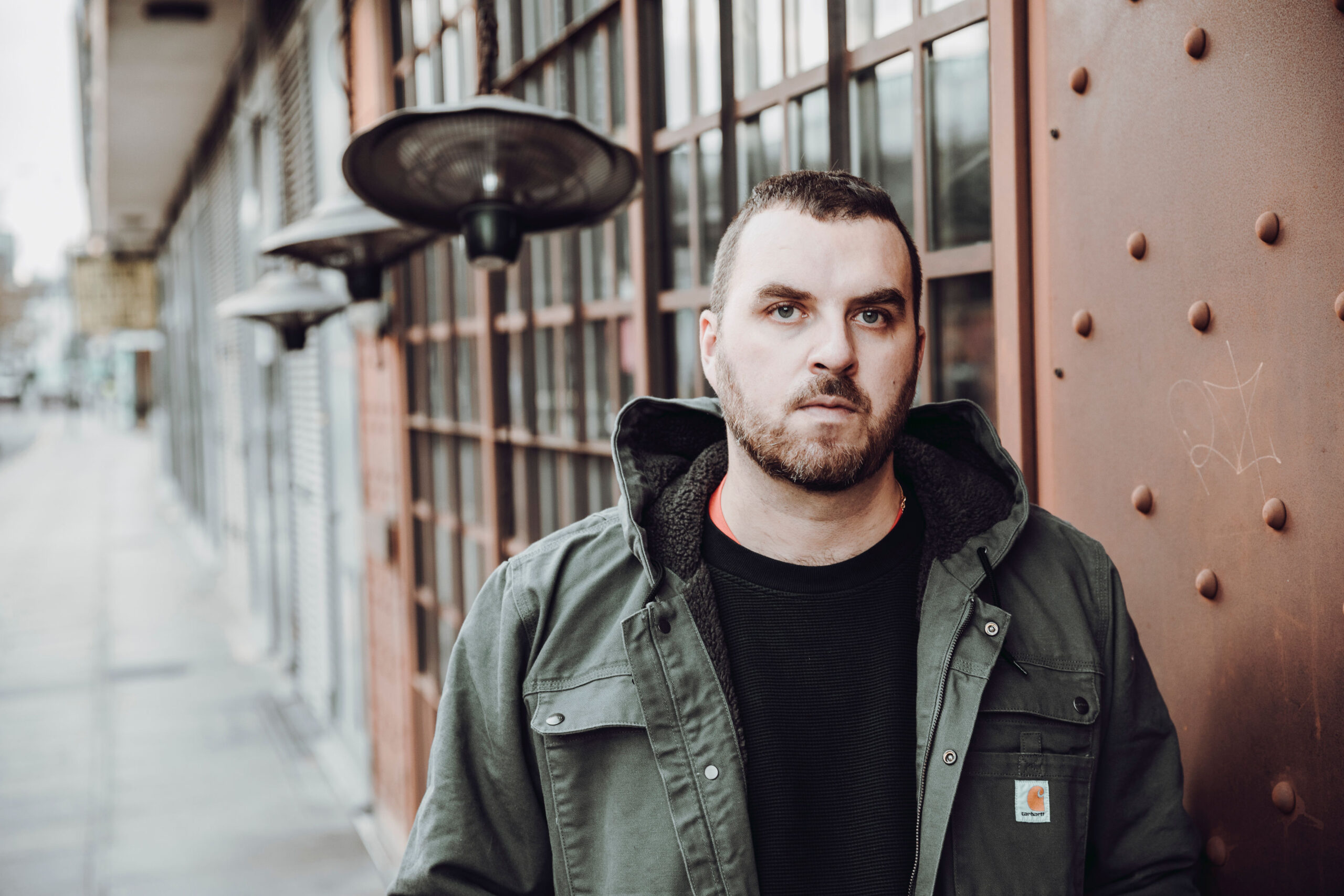
HLZ is proof that in drum & bass, longevity isn’t measured by how quickly you reach milestones, but by knowing exactly when the time is right to reach them. The Italian DJ and producer has spent the best part of two decades quietly building one of the genre’s most respected catalogues, but despite a back catalogue that goes back nearly 17 years, HLZ never felt compelled to rush into writing an album.
For him, a full-length album has to arrive naturally, when both the music and the person behind it are ready, rather than writing for the sake of demands.
This work ethic has defined HLZ’s career from the very beginning, in 2009. Across releases on more than fifteen labels including respected imprints like Metalheadz, Dispatch Recordings, Commercial Suicide, Liquid V, Integral Records, 1985 Music and Fokuz Recordings, to name a few, HLZ has consistently and deliberately made sure to avoided compromise, by choosing substance and patience over momentum. There’s an honesty that runs throughout his work, a commitment to making music because he has something to say rather than because of the need to satisfy release schedules.
Ironically, that’s how his debut album, All My Life arrived in equally organic fashion. While road-testing an unreleased track during, HLZ watched the dancefloor respond in a way he hadn’t anticipated. That single reaction planted the seed for something much larger, a collection of music that would eventually become his debut album and, fittingly, find its home on Metalheadz, a label many producers regard as the ultimate destination in drum & bass.
When All My Life finally arrived via Metalheadz in early May, it felt like a culmination of everything HLZ had been working towards over the previous two decades. It’s an album shaped by patience, lived experience and an unwavering belief in trusting the creative process.
He has described approaching the album with “humble confidence” – a phrase that perfectly captures the balance between trusting his own artistic identity while remaining deeply respectful of the culture and legacy that shaped him.
Now, with the album firmly out in the world and new releases already following in its wake, HLZ continues to work from his small Italian hometown with the same measured approach that shaped All My Life. We caught up with him to chat about why the album couldn’t have happened any earlier, the importance of patience in an increasingly fast-moving scene, the stories behind its collaborations, and what comes next for an artist who has always believed that the best music arrives when the time is right.
All My Life feels like the culmination of years spent refining your sound. At what point did you realize you were on your way to making a full-length album?
In many ways, it started during COVID. I moved back to Southern Italy and suddenly found myself with more time, more space, and a much clearer head. For years I’d been focused on making individual tracks, but during that period I started seeing a bigger picture emerge. The music felt more connected, like there was a narrative running through it. I wasn’t consciously setting out to make an album at first, but after a while it started making sense to have the tunes together into a single piece.
The title track reportedly became the catalyst for the entire project after it was played during Goldie’s XOYO residency. What was going through your mind when that tune first started receiving that kind of validation?
There’s actually a funny misconception there; it wasn’t Goldie who played it, it was me. But regardless, seeing the reaction it got was a really important moment. When you’ve lived with a tune for so long in the studio, you can lose perspective on it. Hearing it connect with people in that environment gave me confidence that I was onto something special. It felt like a turning point where I started believing that the material I was making could carry the weight of a full album.
Metalheadz albums often carry immense certain weight and legacy behind them. Did that history inspire you during the writing process, or did you actively try to shut out expectations and focus on your own vision?
The goal was definitely to get it right. When you’re making an album for Metalheadz, you know you’re contributing to a legacy that stretches back decades. There was always an awareness for me personally that the Headz sound needed to be part of the conversation when I was in the process of writing the album. At the same time, Goldie was super supportive throughout the entire process and encouraged me to trust my instincts.
The album was largely made during a period when you moved back to Italy and embraced a slower pace of life. How much did that lifestyle shift influence the music we hear across All My Life?
The move back to Italy had a massive impact. Everything felt slower, calmer and more balanced. Living there gave me a different perspective on time. I wasn’t constantly rushing from one thing to the next, and that allowed me to sit with ideas for longer. My mind felt clearer and more focused. There’s a patience to the music that probably wouldn’t have existed had I been living the lifestyle I had before.
One thing that stands out on All My Life is how it feels rooted in classic Headz aesthetics while still sounding contemporary. How did you balance respecting that heritage without becoming nostalgic?
That was one of the key ideas behind the album. I come from two different eras of drum & bass. I’ve experienced the older sounds that shaped the genre, but I’ve also lived through all the developments that have followed through different phases of the genre and the scene. I wasn’t interested in making a retro album, nor was I interested in abandoning the influences that made me fall in love with the music in the first place. The album ended up taking shape in a way that it found a finding a bridge between those worlds and created something that felt authentic to both.
The album has a really patient, atmospheric feel to it. Was that something you set out to achieve, especially at a time when so much music is made for instant impact?
Absolutely. I didn’t want to rush anything, and I definitely didn’t want to make an album simply because I felt obligated to. I wanted every track to earn its place. More importantly, I wanted the album to have longevity. The idea of people listening to it two weeks after release wasn’t enough for me. I wanted it to be something people could return to years later and still find value in. That sense of timelessness was always in the back of my mind. Which is
Looking back at your earlier releases, what aspects of your production style have evolved the most by the time you reached All My Life?
One thing I’ve become much more conscious of is recall value. I wanted these tracks to stay with people. Not necessarily through obvious hooks, but through mood, atmosphere and emotion. Earlier in my career I was often focused on technical aspects of production, whereas with this album I spent a lot more time thinking about how the music would resonate over the long term. The goal was to create something enduring rather than something disposable.
Releasing your first album is a huge milestone, but doing it on Metalheadz makes it even more special. What did that mean to you personally?
When you release on Metalheadz, people listen differently because of the history and sound associated with it. Beyond that, one of the most rewarding aspects has been the feedback. I’ve had conversations with some of the legends of the scene and artists I’ve admired for years. Hearing their thoughts on the album has meant a lot to me. In many ways, that’s been as satisfying as the release itself.
‘Eagle Dub’ opens the album with a deep, almost cinematic energy. What made it the right introduction to the journey?
I’ve always been a huge fan of trip-hop, and a lot of that influence found its way into ‘Eagle Dub.’ When I think about classic albums that I love, there are no filler tracks; every tune serves a purpose. That was a philosophy I wanted to bring into the album. “Eagle Dub” felt like the perfect opening statement because it immediately establishes the atmosphere and mood of the album. Alongside tracks like “Bad Boy Sound” and “Roadblock,” it also represents the dubbed-out narrative I wanted to explore throughout the record.
‘Roadblock’ has become one of the album’s standout moments. Did you always know it would connect with people the way it has?
“Roadblock” surprised me in a lot of ways. The way it developed wasn’t something I had fully anticipated, but from fairly early on I had a feeling it would resonate with listeners. Sometimes you just know when a track has a certain energy about it. It managed to become something bigger than what I originally envisioned, and seeing people react to it has been incredibly rewarding.
‘Solitary’ has already become a fan favourite among listeners. Why do you think people have connected so strongly with that track?
‘Solitary’ came from a very honest place. There wasn’t a big concept behind it; it was simply about trying to capture a feeling of calm, reflection and quietness. Sometimes the most personal ideas end up being the most universal. I think people connect with it because it allows them space. It’s not demanding attention; it’s inviting people into a particular emotional state, and that seems to have resonated deeply.
‘The Genie’ with Cleveland Watkiss, whose voice has become iconic within drum & bass history. What was the process of working with him, and how did that collaboration come about?
The story behind that collaboration is almost unbelievable. Cleveland was first mentioned to me by MC Fats, who lived only a few blocks away from me. We’d meet regularly, cook pasta together and talk music. One day he suggested that I should connect with Cleveland. Then, completely by chance, I saw someone in a grocery store who looked exactly like him. I went over and asked if he was Cleveland Watkiss, and that random encounter basically kicked off the collaboration.
What makes the track special is that Cleveland isn’t really singing in the traditional sense. It’s more spoken, and the atmosphere he creates through his delivery is incredible. He brought a completely different dimension to the record, and the serendipitous nature of how it all came together somehow feels embedded in the music itself.
Did you have a visual or cinematic reference point in mind while making the album, or did the imagery emerge naturally from the music itself?
For the visual side of the project, I worked closely with John Black and trusted him to interpret the music in his own way. I wanted someone who understood both my vision and the broader Metalheadz aesthetic. Rather than being overly prescriptive, I gave him the freedom to create something that reflected the mood and narrative of the album. I’m really happy with how it turned out because it captures both the personal and identity sides of the project.
How important is it to make an album when you genuinely feel ready rather than when you’re told to?
I think it’s one of the most important lessons I’ve learned. Albums shouldn’t happen because of external pressure or because someone tells you it’s time. They should happen when you have something meaningful to say. In my case, that’s probably why my debut album arrived at 40 rather than 25. But I’d much rather release an album at the right moment than force one into existence before it’s ready. When you’re not carrying that pressure, the work becomes more honest, and I think that’s when you create your best music.
Is there anything you learned during the creation of All My Life that you’ll carry into future projects?
Patience, without question. This album taught me the value of allowing ideas to develop naturally rather than forcing them. It also taught me that I genuinely enjoy the process of making albums. If anything, finishing All My Life has made me want to make another one. There are lessons from this project; both creatively and personally that I’ll definitely carry forward, particularly around trusting the process and giving music the time it deserves.
HLZ – All My Life Is Out Now