
Every now and then the opportunity for an origin story arises that is so pivotal it can be traced back to a genre that actually shaped your path in life. Realising that I would not be sitting here and writing this, if not for grime, is pretty wild.
Sure, there is more to it than simply stating that without grime there would be no dubstep, which kickstarted my involvement through FatKidOnFire for example.
But who can disagree that the raw transformation of UK garage provided the lifeblood for a darker take on 140BPM bass? After all, the pirate radio counterculture became the beating heart, cutting through commercial FM frequencies, and in doing so creating the fertile soil at the very core of it all: London.
It’s hard to fathom the ripple effect that inspired so many key players in a tightknit community obsessed with vinyl, dubplates, and relentless MC freestyle battles.and pushed that very movement far beyond the UK borders.
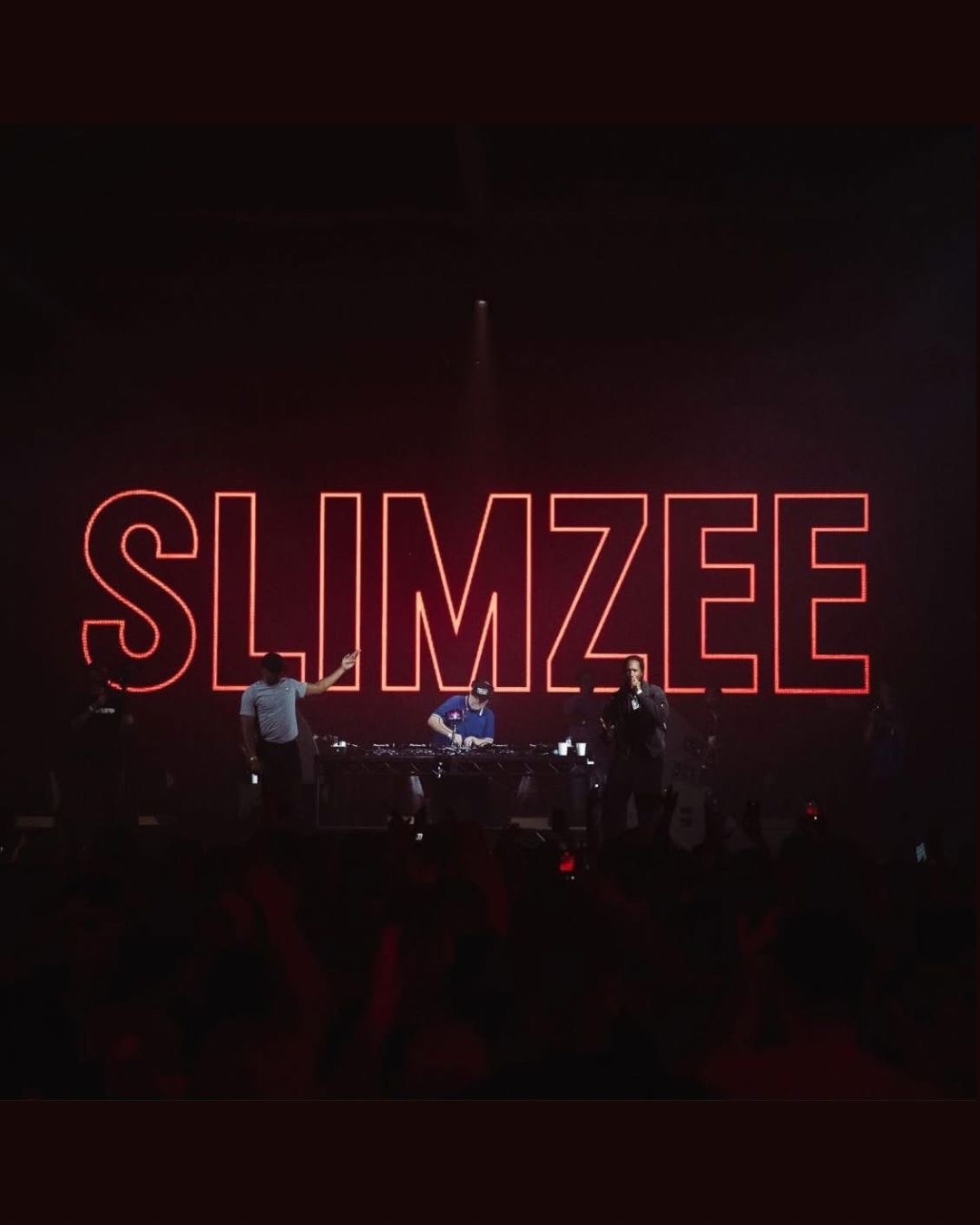
And if you trace it back to its exact epicentre, the roads lead to a tower block in East London and a young DJ Slimzee (Dean Fullman).
Slimzee was the architect, gatekeeper, and curator during grime’s formative years; co-founding Rinse FM with Geeneus at just 16 and driving the Sunday afternoon shows that became the ultimate proving ground for MCs and producers alike.
From cutting dubplates long before digital became the standard to mentoring dozens of artists who would carry on tradition in multitude: Slimzee wasn’t just playing tracks; he was controlling the temperature of London’s underground.
His sets provided the raw, low-frequency blueprint that primed a generation for the 140 BPM explosion. Decades later, with the launch of TowerBlock Radio together with Syxx (Simon Ryan) he remains as fiercely dedicated to grassroots culture as ever.
With utmost respect for the legacy, we pass the mic to the Godfather of Grime DJ Slimzee. Lock in and enjoy.
You grew up hearing the hardcore sound in the early ’90s. Was there a specific moment when the music really hooked you?
Basically, it started with hearing Michael Jackson and synth pop in the ’80s and ’90s, just growing up and hearing the radio playing in the house. Then, around ’90, I started hearing all this underground music outside my house. It was hardcore, and some of the more commercial stuff like Sweet Harmony by The Prodigy was even on the telly.
Were you sneaking into raves at that age?
I wasn’t really allowed to go, but I wanted to. Because I was so young, I would just hear it out my window. My mates and people in the area would put their speakers out their windows, and I was just downstairs hearing all the breaks, the hoover sounds, Mentasm. I’d see the acid house signs and wonder what it all was. I’d hear people shouting and MCing over the tracks, and it just got more intense every week. I started going to record shops, listening to other stations, and it went on from there.
When you eventually launched Rinse FM on Carnival Day in 1996, you already had elder statesmen like Andy C and Mampi Swift as influences. Did you feel the thrill of being on the bleeding edge of the counterculture?
Yeah, I’d been on Fresh FM before that in ’94, and another station before that. I listened to guys like Andy C, Mampi Swift, and Randall: they were my elders who came from pirate radio, jungle, and hardcore. How I dj now is how I’ve always done it, because I looked up to them.
There was a lot involved in the scene before me, so just getting involved in it was really good. You also had bleeps and bass, all those early techno spin-offs, before jungle came in around ’93 or ’94.
What made you decide to go all-in and start Rinse with Geeneus?
I just wanted to be a DJ. Back then, pirate stations kept popping up and going offline because the DTI (Department of Trade and Industry) was out trying to cut them down. In ’96,
I got pulled off Fresh FM and I started Rinse. When you start doing it yourself, you have to do everything: pull the aerials up, sort the equipment, and it takes years. It wasn’t like today where you can reach the world instantly; you had to go and physically do the hard work.
Your sound on Rinse felt like a very organic evolution from jungle into garage and early grime. How did that progression happen?
I was playing garage for about eight years, cutting dubplates around ’97 and ’98. But the scene was moving toward that dark, ravey stuff based on slowed-down jungle. I started taking ravey tunes, like Mampi Swift tracks, slowing them down, playing them, and then speeding them up to get that tempo.
Garage was more vocal-heavy with eight bars of vocals and then an instrumental, but I was pushing the darker stuff, focusing more on the instrumental sounds and the MC culture. Guys like Agent X and Geeneus were all making really well-produced music pushing in that direction.
It seems like there was a powerful synergy between you and the MCs during those iconic Sunday sessions on Rinse.
Oh, absolutely. I met Wiley in ’92, God’s Gift, and Dizzee Rascal was there just before it all blew up. There were no rules, we were just doing freestyle. We were actually battling producers like Wookie at eight bars; he’d come in with the singing, and I’d quickly try to mix it to keep it instrumental. It was so good. You could never get that again because it was something of its own kind.
Did it feel like you were making a real difference in the community as times passed?
Definitely. I was meeting people cutting dubplates at Music House and JTS. The internet hadn’t really kicked in yet, so you had to go out and physically meet people. I had everything: I was playing dubstep, Benga, Skream, Hatcha. I was doing CDs with Sarah Lockhart, working with Ministry of Sound. Everyone was making tunes, and it was just fun to do.
Operating a pirate radio station meant playing a constant game of cat and mouse with the authorities. How intense did it get with Ofcom and the DTI?
They had been going at it since the early ’90s. We had a studio near the airport, and the DTI claimed our transmitter link was interfering with the planes landing. They watched me on and off for six weeks. Usually, they’d pull the plug on the roof, watch you go up to fix it, and then follow you back down to the studio to catch you. They raided my studio and eventually my house, taking everything, computers and records, because they wanted to make an example of me to stop the pirate radio scene.
You eventually got an ASBO that legally banned you from being on any roof in the borough. Do you regret pushing the envelope that far?
When you’re young and in the buzz of it, you don’t realize how bad it is. You’d get your records nicked or get a fine, but it wasn’t like you’d go to jail. They tried to charge me for £15,000 worth of stolen electricity because the transmitters were wired into the block’s lights!
I ended up taking a ten-year break from radio due to the stress and having a nervous breakdown, coming back around 2014. But I don’t regret it. I learned so much, and all the big stars like Dizzee Rascal, Wiley, Skepta came from that station. You even had guys like Oris Jay from Sheffield and Benny Ill pushing the sound forward. It was a mental time.
What was it like broadcasting to thousands of people in the London council estates without actually being able to see them?
You don’t realize how many people you’re going out to at the time. But in the ’90s, the phone lines used to go mad, and that’s how you knew people were locked in. You wouldn’t want to leave the studio all weekend. It wasn’t everyday back then; it only ran from Friday night to Sunday morning. You’d wait all week to get your tunes ready, go shopping for dubplates on Wednesday, play the radio on Saturday, and then go to the raves. It was the best feeling ever because it was a perfect cycle that you just don’t have anymore.
Do you think that raw intimacy is missing from modern internet radio today?
There are so many platforms now, so it’s actually easier to get out there, but harder to break through. Everyone wants to be a DJ now; you can buy decks in Argos. The scene is much bigger, but that cycle of cutting dubplates, meeting people, and building that localized hype is different now.
You have been doing this for a long time and know the ropes. Back in the day, managing the pirate radio lifestyle involved intense sleep deprivation, the adrenaline rush of broadcasting, and navigating the authorities. How did you manage it all?
I think you get a buzz from doing it. You’d wait all week for it. It takes a few of you to find the studios; you might be setting up in a squat, someone’s house, or a kitchen. It could be anywhere.
Obviously, you have to go to the roof and sort the links. You could even hire out units. There is so much involved in it that people will never fully know. I could talk for a year and only tell you a few things about it.
Do you think that intense environment produced more resilient MCs and DJs compared to today’s scene, which might feel a bit softer?
Back then, everything was freestyle and live, and that’s what people wanted. There were massive raves like Sidewinder, and we were doing tape packs for those events. People would buy the tape packs just to hear the tunes so they could go out and buy them when they officially dropped.
People were going to raves, meeting organizations, and connecting with producers to talk about tunes. The music was always there to keep you on the straight and narrow. It was a proper hub to get involved in.
Today, producers can easily get stuck in a tunnel vision of working alone. Do you feel people are more in their own heads now instead of making such personal connections?
The scene is so big out there now, but you still have to let people in. I see things differently. When you used to do pirate radio, you could actually be ‘night fishing’ with the radio on your headphones, catching fish all night long before everyone went to school the next morning.
I was in secondary school around ’90 or ’91 listening to stations like Brockie. You keep listening, learning, and trying to figure out where their studio is based on what they are talking about in the background. You just want to be up there on the station, so you start buying records, mixing, and doing tapes to try and get on. It was like one big family.
The dubplate economy was a huge part of that era. Can you recall the physical ritual of going to places like Music House to cut 10-inch acetates?
I used to go there back in the ’90s. Before they moved to Music House in Tottenham in the 2000s, they were at a place called Holloway Road around ’92 or ’93. Because I’m from East London, I also went to JTS round the corner, which was run by a guy named Tabi. I was going everywhere, really. You would just meet people, cutting 10-inch and 12-inch dubplates, depending on where you could get the best cuts, or what they would charge.
How did you build enough trust with producers like Wookie and Wiley to get those exclusive, one-on-one cuts that nobody else could touch?
We loved the exclusives because we came from jungle when we were younger, and that is how it was. When you are playing tunes, you don’t want a track that has no shelf life or is already dead. It is hard to get tunes that aren’t like that, but if you have dubplates, you have the power to make yourself more exclusive. Older producers in the scene would actually come to me and give me their tunes to play, like Anti War Dub from Digital Mystikz, because they wanted their music heard.
Did dubplates serve as a testing ground for tunes before they were officially finished?
Yeah, it is not just like buying a record. It is metal, it has a wicked smell, and you have to physically go to the cutting house to get it done right there and then. It is very exclusive.
People would use dubplates to play tunes before they were fully mixed down. They might hear it on a rig and realize it needs more bass or other tweaks. That is what dubplates were for; a test run to hear it all. We were cutting so many dubs it was hard for people to keep up.
They say dubplates only last about 25 plays before they start to sound fuzzy. Is that true?
They do start wearing at the beginning, they actually last a bit longer, but you moved on to something else. The versions on dubplate are often different from the ones that eventually come out on vinyl because they get properly arranged and mixed differently for the final press.
What is the most prized dubplate sitting in your collection right now?
They are all really good dubplates, and there are a lot of personal ones. Nasty Crew had a lot, Geeneus had a lot. I like the bangers, the 4×4 tunes. Agent X was making insane tunes from early 2002. There were so many tunes just flying about; you’d play them a couple of times and then move on to another one. I never really look back, I just keep going.
When you launched Slimzee’s Recordings in 2002, how did you carry the original spirit of dubplate culture into your vinyl releases?
It definitely had that spirit behind it. Plastician was actually the second vinyl release on my label. I have always tried to help younger people out when they show me tunes, giving them a start in the scene. A lot of people got vinyl releases off me, like Wiley and Dizzee Rascal, and it gave them a chance to break through. I am always looking for producers worldwide now, especially those making hybrid styles blending dubstep and grime, like Killjoy, Mez, and E3 Breaks.
If an unknown producer wants to get an exclusive dub into your hands today, what is the best way to pitch it?
Just DM me a link on Twitter or anywhere else. That is all I need. I also have my own station now, TowerBlock Radio, together with Simon Ryan (Syxx), which has been running for a few weeks.
What was the moment you and Simon realized Tower Block Radio needed to happen?
I left Rinse just over two years ago. Simon had sent me some sick tunes, and I started playing them. We became friends, and I started giving him some guidance to make his tracks even grittier and dirtier.
He really brought these insane producers through, and we have been doing tunes and releases together for a few years. We eventually started talking about what we wanted to do next, and that is where the radio station came in.
Between my years of experience and his network of producer DJs, we realized it was time for a new platform. The website has loads of DJs, mixes, merchandise, secret grime archives, and even a DJ computer game.
Is Tower Block Radio an evolution of Rinse FM, offering a platform to address the unique challenges independent artists face today?
Yeah, it is always good to help anyone out and just listen to their tunes. I have always been like that. We have a forum on there, and people are really loving it because they are not used to hearing so many different styles mixed together. It is a new thing. We are also going for a DAB license and hoping to get funding to set up a physical workshop to help the younger generation, because there is so much involved for them today.
Do you think there’s a chance to secure government backing for these kinds of initiatives?
Yeah, definitely. Most stations are already funded in some way. The government wants to help if they see you doing good stuff for the community. With what we’ve done over the years, starting with Rinse, we have a really solid foundation. It’s about bringing people together around the world and creating a proper hub. Since FWD>> stopped years ago, there hasn’t really been a central hub where everyone goes every Sunday.
Is Tower Block Radio aiming to fill that void?
That’s exactly what I’m saying. I want to build that again. I’d even love to do record fairs or cinema talks, like what Ray Keith does. It’s good for people to see what happened at the raves and fields during the 90s hardcore era. It all leads on and builds the community.
Looking five years ahead, how would you describe the success of Tower Block Radio in terms of its impact on the London underground scene?
People think streaming is just easy, but there’s a lot more to it. It’s all tied in with the website. As soon as you click on Slimzee or Pirate Radio, it brings everything up, and we’ve tuned it in really well. Getting the DAB license next year will be a huge step because it puts us in cars alongside all the new stations. FM is coming to an end soon, but radio itself is still huge. Having that community is a great start, and we’ll see where we can take it from there.
It’s fascinating that even as TV declines because people want on-demand content, radio remains strong because people still want curated music while they’re driving.
Exactly, they can’t see it, but they can hear it, and it stays in the back of their mind. Plus, the quality of the broadcast, all the compression and stereo inputs; I love all of that. If something doesn’t sound right, people get intrigued by it. I learned all those little tricks of the trade regarding sound engineering when I was younger, and we are just going to keep pushing and testing it, just like we did years ago.
You have been a gatekeeper for quality for decades. How do you stay grounded without becoming elitist?
I just push stuff and do what I can do. I don’t like being held back. Stations sometimes try to hold you back when they want you on their team. You just have to get up on the roof, learn it, and put it out every night. I never look back. I just talk to people, make new friends, and remember that it is always about helping each other in music.
What keeps you coming back to this after almost 30 years?
I just listen to different music and meet new people. It all goes around in cycles; every ten years there is a cycle where breaks and pitched-up drums come back. I have been here for four generations, so there is a lot of knowledge there.
You’ve been playing internationally a lot recently, right?
Yeah, definitely. I went to Poland last year and played a great set in the countryside at Electrum Up To Date Festival with Miły ATZ on the mic. I love doing long, two-hour sets playing hard stuff and grime tunes. I also played a massive festival in Belgium recently and Dekmantal in Amsterdam.
Let’s talk a bit about the technicalities of your DJing. During a two-hour radio set, how do you structure your track selections to build momentum without burning the energy of the room too soon?
I prefer doing long mixes. I come from jungle and drum and bass, and I always looked up to the DJs from that era, so that is how I mix. I have always blended tunes, chopped here and there, and played special edits that no one else has. I have always had that in me, and people really want and like that energy.
When you have three or four MCs fighting over the mic during a set, how do you approach mixing to accommodate them?
You just have to know how to chop and cut out for the MCs. You learn all the little tricks of the trade, like managing levels while they are talking, over years of doing it. Because I had the radio background, I understand all the sound engineering and compression techniques to make it work.
What is the single biggest technical mistake young DJs make when trying to recreate that 2000s pirate radio sound?
Everyone gets into bootlegs. When you are younger and can’t get certain tunes, you might make a little edit or copy a vocal. In the early days of jungle and drum and bass, people didn’t like that. I heard stories about people getting in trouble for bootlegging tracks. It is a bit more laid back now because you have plugins that can split stems instantly, but it is always about paying respect and doing things the right way.
Does having access to all these modern plugins dilute the craft compared to the ’90s when producers were making timeless tracks with just a drum machine and a sampler?
It is much easier now because you can get everything on a plugin. Back then, you had analogue gear and archives with maybe four seconds of sampling time on a floppy disk. Guys like Ed Rush and Bad Company were making incredibly high-quality tunes in the ’90s with very limited time and equipment. That hard craft is exactly why their tunes are completely timeless.
What is it like mixing in a dark radio booth where you can’t read the crowd, and do you ever use modern tools like Rekordbox?
I have been doing it for years, so I just keep going with that same energy. The gear always changes; back in the day, it was turntables, which were a lot harder. Now CDJs are easier, but some people still do not use them properly. I have never used Rekordbox or anything like that. I just like to mix normally. It might take longer to upload and organize everything, but I am just old school and have never used the sync button.
For an 18-year-old creator today, what is your advice on building a legacy rather than just going viral for a couple of weeks?
It is always good to send tunes out and collaborate. The scene is worldwide now. Look at Skrillex; he did something with Flowdan, and that brought Flowdan massive success again. People build entire careers just by making tunes with current artists. I love working with young vocalists because they often start out rapping on grime, and as they mature, they get onto half-time dubstep tunes and really find their lane.
So it’s about keeping an open mind rather than sticking strictly to one genre?
Yeah, I’ve done all sorts. I did a tune with Boylan that got signed to Sony a few years ago. I’ve done festival tunes, radio tunes, everything. It gives the younger generation something to look up to.
After three decades at the core of underground culture, what is the biggest lesson you’ve learned about loyalty and relationships in the music industry?
In music, people come and go, and there is always a lot of talking behind people’s backs. I learned my lesson when I was younger: you have to keep focused. People get upset over social media, arguments over raves, or money. It can go mental. It is best to keep things straight down the middle, keep yourself to yourself, and keep it strictly business without the arguments. Things online often look better than they actually are.
With age comes a better understanding of self-care. How do you manage your mental health after so many years in such an intense industry?
There is a lot of mental health involved, and in the last eight years, people are noticing it more. I went through it myself; I lost a lot of years not knowing what I was doing, and I took ten years out. I am lucky I am still here. Just by talking, getting a bit of therapy, and getting out every day, you learn things. I am still here, but everyone suffers in their mind. It makes us human.
How do you evaluate success today compared to when you were in your twenties?
It is hard to earn money in music now. The early days were different. Today the scene is worldwide, but I don’t really look at the money. As long as I am happy and investing in myself, I just keep going. I want to build the radio and keep doing my thing. Everyone has a chance in this industry, just look at DJs like Carl Cox who have been massive for years.
A lot of people today just see the success and want it instantly, ignoring the grind.
People just want to get it quicker because that is what they see. But we are lifers. There are a lot of lifers in this world, and the younger generations don’t always realize that this is a lifelong commitment. You will always run into the same people eventually, so it all comes back around.
What is next for Slimzos Recordings?
We are doing the DISAPPEARING DUBS, putting out limited colored vinyl dubplates. I just put out a green Killjoy one last week. We release a lot of vinyl, even though it is hard to sell, because we love pushing that hard, hybrid, trappy sound. I just want to keep putting out good releases, bringing in new DJs, doing the radio, and keeping going until whatever happens next.
Any final thoughts to add?
I just love playing festivals. I was on Wiley’s first album tour and played Outlook six years in a row. We’ve helped a lot of massive people in grime and dubstep over the years. The radio channel is a great starting point that leads people on to bigger things, and it is always good to offer that support and get involved.
And that’s that, the end long-read interview with one of the pioneers of bass culture.
A huge thanks to Dean for his continuous involvement in the scene. Lastly, be sure to show some love and support!