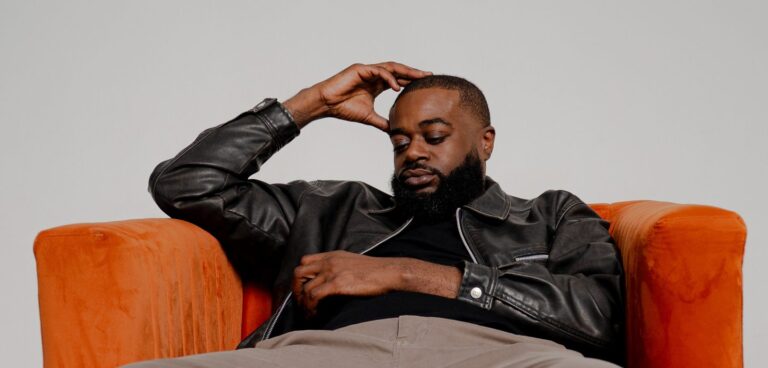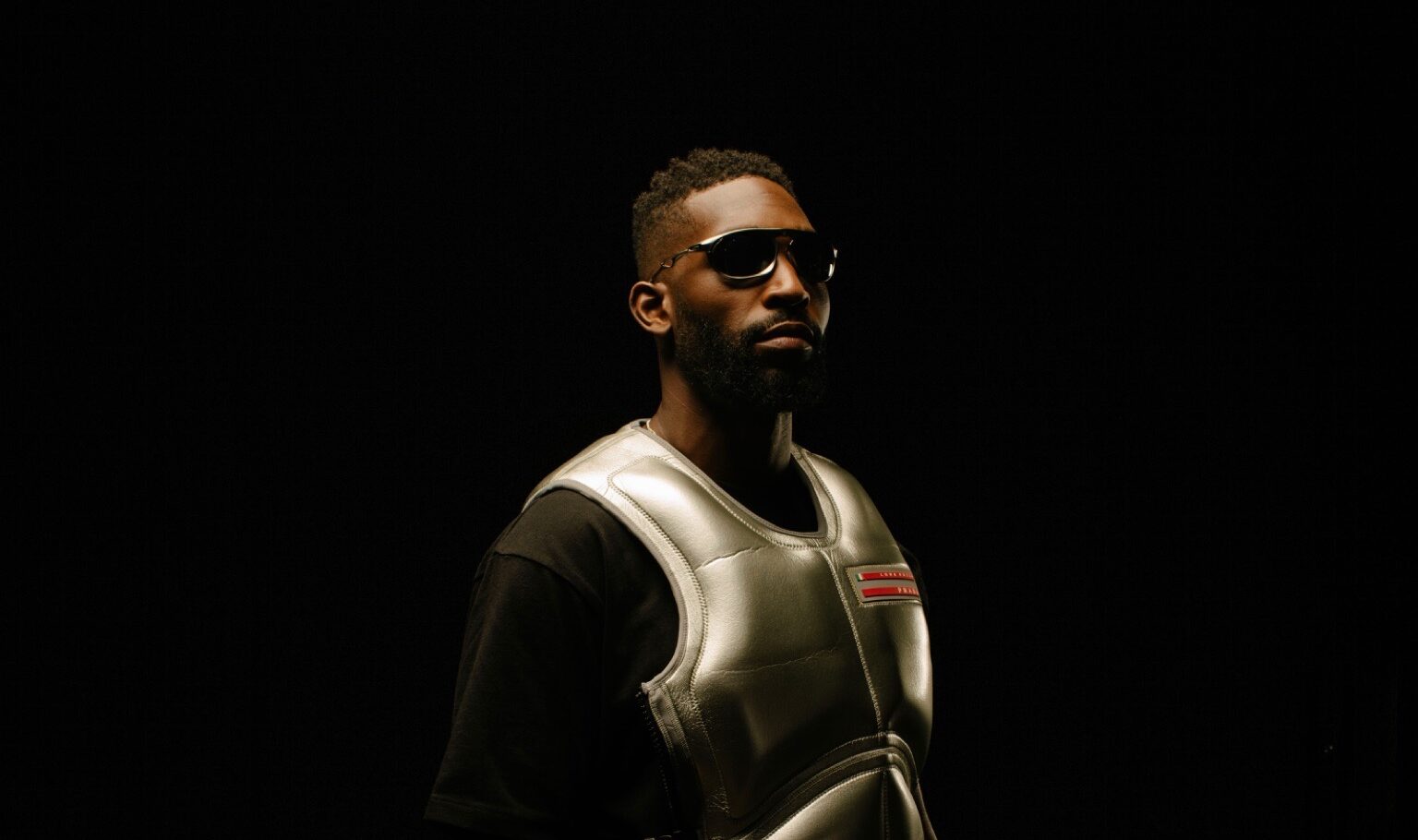
After almost a decade, Tinie Tempah is back with a new album. With The Night’s Not Dead, he brings an ode to UK nightlife, and emphasises the importance of clubs and music venues. In the nine years between Youth and his latest album, he had the chance to take a step back from his own music career and focus on supporting the next generation, and finding new passions.
When club after club started closing due to the implications of covid-19 and the cost of living, Tinie Tempah felt that he needed to do something. This album is what came out of it. It tells the story of a night out, and it tells us how important those nights are for growing the next generation’s talent, for building a real community.
You’re back with a new album, congratulations for that. How is it to be back after nine years?
It’s amazing, I feel like I’ve got a new lease on life, and I’m excited to put out music again. I have something to say, and so far the love has been amazing. I’m doing what I’m supposed to be doing.
How did you evolve during that break?
I evolved as a human being. At the core of what I do, I’m an artist, but I needed to do some real life stuff. I settled down, I started taking up extracurricular activities, I started doing Brazilian jiu-jitsu, and getting into other areas of the music business. I set up a music publishing company, started signing loads of producers and songwriters, built a studio, started exploring other passions, even went into a bit of tv as well, explored my passions around property and architecture etc. I used that time to really feel fulfilled in other areas, not just waking up, and being on the hamster wheel, which at some point it started to feel like.
What made you decide that this was the right time to come back?
There were a couple of things. After the pandemic, I felt the urge to do something, but it wasn’t concrete. When I started hearing news of our loss of nightlife and the fact that a lot of the small grassroot music venues were closing down, I felt like it was really reflective of the times that we’re in. Art, music etc is so important for Britain. Because of these spaces, we’ve been able to create and birth so many exciting scenes and genres. From grime, garage, dubstep, drum & bass… To learn that we were losing these spaces, it felt like the end of an era, and it made me really feel for the next generation of artists trying to break through. Even though we have social media, which is amazing in so many ways, there’s nothing better than getting in front of your fans and building that real face-to-face, in-person connection. For your music as well, testing your music out, playing it, seeing what feelings it evokes in people, how it makes people move, getting the good and the bad reactions, and honing in on your skills, it’s a very important part of our industry. This is definitely a time to highlight what’s going on, highlight the importance of us trying to preserve it, and highlight the joy that it brings. It’s like a rite of passage to go out with your friends, maybe meet new friends along your night out, build some new connections, create some memories, it’s an important thing for us as human beings to do.
Did you grow up in the rave as well?
When I was 15 or 16, I went to my very first one, Eskimo Dance in South East London, and it was put on by Wiley, pioneer of grime. For me it was very ambitious, because this was a relatively new and exciting sound, and prior to that you’d only hear it through pirate radio. There was no real concept of how many people were listening to it, how big it was, or what the movement around grime looked like. I remember sneaking out of my house and going to this rave in some tunnel somewhere in South London, and being so surprised at how packed the venue was. There were all different types of people coming to enjoy grime.
You’re talking about how the closing of the venues inspired you to make music again, but what does that rave culture mean to you specifically?
For me, it’s an area that I’ve existed in more so as an artist. When I was 15, I went to my first rave, but as an artist, for almost 20 years, I’ve been in these environments, and a lot of my music is very fitting in those environments. I’ve seen the joy, the elevation of state that it brings to people, and if it wasn’t for all of these spaces, all of these raves, I wouldn’t be here 20 years later talking to you. That for me is the foundation of my live experience, if I didn’t know how to have crowd control in a rave, whether it be a grime rave, knowing how to fight for the microphone, project your voice loud enough to be heard, to get a good reaction, or understanding a drop of a house record that I’ve jumped on, and knowing what that does to the crowd, I wouldn’t be the artist that I am today. I wouldn’t be able to perform at the big festivals or do the O2 arena or Wembley arena like I have done. I just wouldn’t be the same person, so it’s been integral to me and my career. A lot of my fans who have stuck with me from very early on in my journey, that have memories from as far back as 15, 20 years ago of going to their first rave at university during Freshers’ Week, and me being one of the performing artists on the lineup and what that meant to them and what that means to them now, it’s a huge foundation to what I am now.
We’ve also seen the release of the 3AM EP, there’s a lot of rave influence on that. What inspired that EP?
Nightlife culture in general, and like I was saying earlier, the breadth of scenes that have been birthed from these spaces. Part of making the album was to highlight the state of play and where we’re at in terms of losing a lot of these spaces, but also to celebrate them. In Berlin specifically, UNESCO has protected the techno scene, and it feels like something that should be happening in the UK, because of the breadth of genres that have come out of these spaces. That’s why on the album you’re gonna hear drum & bass, you’re gonna hear garage, you’re gonna hear tech house.
The album’s called The Night’s Not Dead, and we decided to break it up into three different EPs. It begins from 9PM, which to me is when you’ve decided that you want to step out, you’re connecting with all your friends via WhatsApp, or you’re calling them, and then you’re heading out for your pre-drinks. Then we fast forward to 12AM, where you’ve gone from your pre-drinks, you’re in the main event, and it’s all happening. Then 3AM is that point where there are the hardcore ravers who usually are searching for some after party, or another venue that’s going to take them all the way to 6 or 7AM in the morning. That EP is reflective of that time in the night, whether that’s another venue, whether that’s a house party where people are a little bit more relaxed in themselves. Essentially it’s reflecting that energy, that tribe of people that almost doesn’t want the night to end, wants the night to just keep going.
Basically, this album’s like an ode to nightlife.
An ode to nightlife, and an ode to how important it’s been in British music, and the fact that a lot of other artists and I that are now household names are a product of UK nightlife. Sometimes by influence, sometimes by experience, and sometimes by merely just going through the experience of it ourselves, performing or DJing. There are a lot of rappers, not myself particularly, that are household names now that used to be DJs, and they would have been DJing at some of these said spaces. There are a lot of household names that are full-blown artists who are winning awards, getting nominated for Grammys that used to be MCs for a DJ, and the DJ would be at the forefront, and they’d be hyping up DJs.
Nightlife has definitely played an integral part in UK culture, and the rise of loads of UK artists that we know and love today, which is why it’s called The Night Is Not Dead. It’s for a future generation who may not be able to experience it in the same way that I have, and it’s to remind them or show them all of the highs and lows of the experience. When you look at nightlife from more of a removed perspective, it tends to have a negative connotation. People going out, getting messy, but it’s just so much more than that. Connections are formed, memories are made, you find yourself in a flow state where you’re not even aware of the time, you’re not thinking about what you’re going to do tomorrow, you’re just in the moment, in the music. Music has become so disposable. I don’t know how many people listen to an album from start to end anymore. I don’t know how many people even necessarily care who the artist is, or what the artist represents, or what the artist is actually trying to say, or put across. The lack of being able to see them in real life… You can still go and watch someone on tour, or see them at a bigger venue, but that excitement of discovering something fresh that you never heard before, in a small space. I think it’s detracting from how special and how important music is, like, music is the soundtrack to life.
On the 3AM EP you’ve got a collaboration with Badger on it, ‘Rude’. How did that collab happen?
It was really cool to work with Badger. We’ve been working on that track for about two years. He’s a great guy, and we met through another producer that I know called Sid, and they came to the studio, played a couple of beats, and I loved the ‘Rude’ instrumental. We just worked on the track, and two years ago we had one version that was just me the whole way through. We performed it in a few places, one of them was Bass Fest in Sheffield. We took it up there and the reaction was crazy. As we got closer and closer to releasing it, we thought, we’ve lived with it for two years, let’s add some new life to it. I reached out to Travy, who’s an Irish-Nigerian rapper. I really like his sound and his approach to music. He reminds me of myself from before to a certain degree. He jumped on the second verse, and that’s how we got ‘Rude’.
Is there anything else that we can expect from you this year?
We made a little short film that gives a little bit more context to the album. We should be dropping that a week or two after the album comes out. It’s based in real time, but it’s a little nod to a dystopian future, where nightlife really isn’t a thing anymore, and people are more focused on their screens, and trying to look the part. There are tutorials on how to get dressed up for a rave, or how to rave when people are not actually doing it. I think we’ve created something quite beautiful there. There’s the tour as well, which is sold out across the UK, then we’re going to go into Europe after that, and then we’re right up until the end of the year. The tour finishes in December, and after that, it’s just back into the lab, back into the studio. There are a couple of DJ gigs that I’ve also got as well, which I’m excited about. I’ve been trying my hand in that a little bit, so we’re going to go to Australia at some point in October for a couple of DJ gigs.