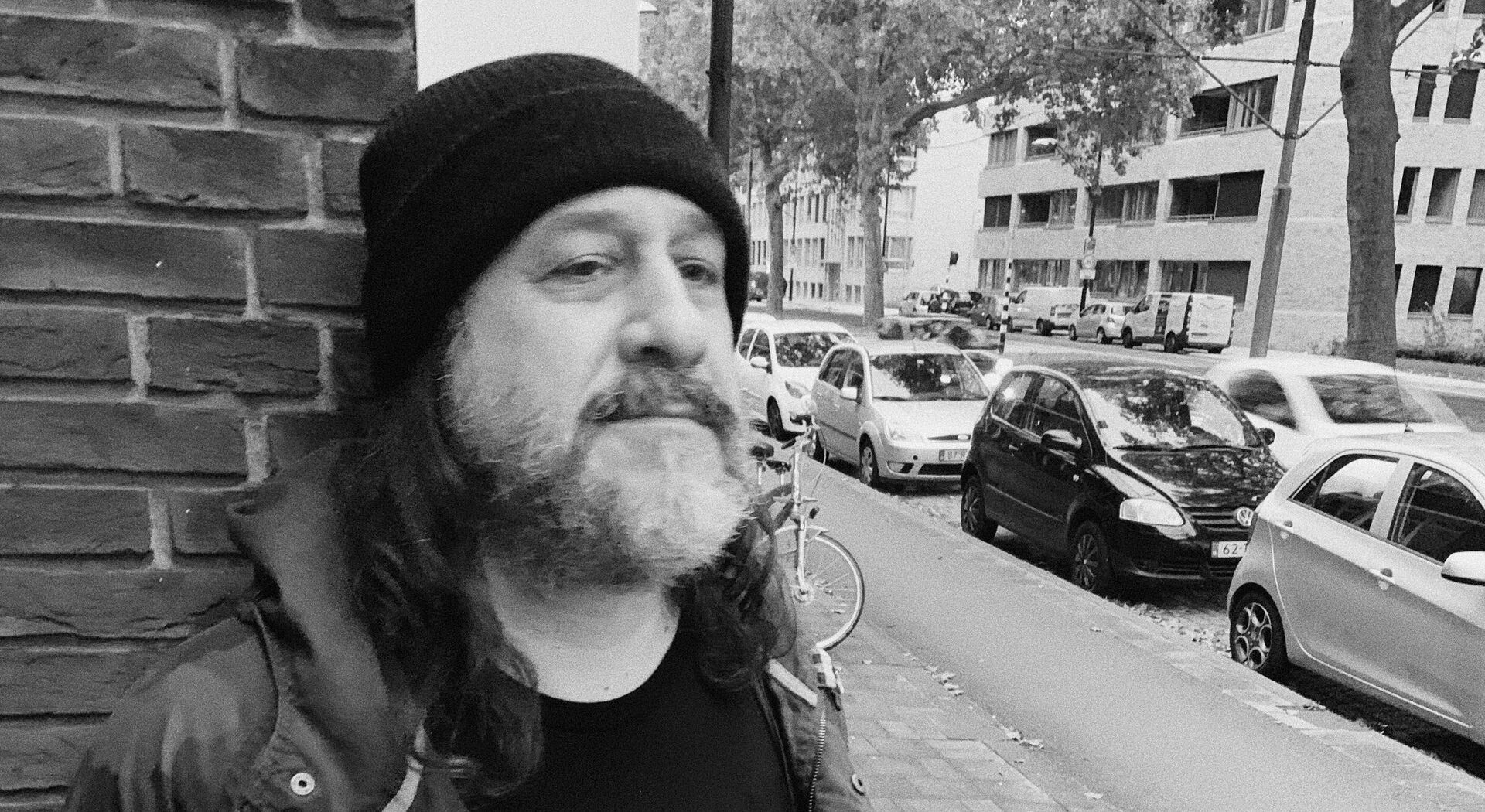
Few names are as closely tied to the darker, heavier side of drum & bass as Gridlok. For decades, he’s stuck to his guns, building a sound of his own rather than chasing whatever happens to be popular at the time. Now based in Rotterdam, he’s back with Symptoms of the Chaos Mind, an album that’s been years in the making and, at several points, almost didn’t happen. After countless revisions and plenty of frustration with the direction of the scene, Gridlok eventually stopped trying to make something that would fit in and went back to making the music he actually wanted to hear. The result pulls from the different corners of drum & bass he’s explored over the years, without losing what makes his sound his own.
With the album finally out, Gridlok has plenty more up his sleeve. He’s been bringing old-school analogue gear back into the studio and has plans to get more artists involved with his Project 51 imprint over the coming years. We caught up with him to talk about the long road to Symptoms of the Chaos Mind, the pressure to keep up with an ever-changing scene, life in Rotterdam and what’s next for his music and the label.
What’s life like in Rotterdam?
I don’t really operate on a set schedule, so days can vary quite a bit. When I’m not making myself busy, I’ll usually head across the street to the Zuiderpark to walk around and enjoy nature. I always try to make time to cook a nice dinner at the end of the day, so I can spend time with my wife.
What’s the local drum & bass community like?
There are some great people in the Netherlands that I consider friends, but I tend to be a hermit most of the time. As anyone will tell you, it’s always a challenge to get me to go out, but when I do, I always have fun and wonder why I don’t do it more. I don’t want to name-drop because I’ll surely forget someone and regret it later. So I’ll just say the vibes are good.
How long was Symptoms of the Chaos Mind in the making, and what was the process like?
For much too long! It was complete mental anguish, and I went through multiple fits of completely giving up. I started on this project a bit before COVID. A lot has happened since then, from changes in the music business and the world to shifts in my own mental state. I really struggled to keep my voice clear in the current climate of D&B. There is a lot of pressure to just fit in, and I went through a personal tug of war to get it done and out the door. Countless versions were abandoned; I just couldn’t get happy trying to make a sound that fits in. Ultimately, I had to fall back on my instincts and just produce a sound that I like, regardless of what is going on in the scene.
Did the process change your approach or vision compared with previous ones?
At the end of the day, no. I’m wiser and older, and spent too long on it, but when it’s all said and done, I fell into my habits and got it done in a very similar way to my previous albums. As far as the vision goes, I guess I was thinking on a wider scope: something more diverse than Z3R0 H0U2. I have done a lot of different flavours of D&B over the years for a lot of different labels and made some effort to reflect that in the selection for Symptoms of the Chaos Mind. I suppose it was part of the inspiration for the title.
How would you describe the state of your sound at the moment, and how has the album been received?
Hmm, it’s a difficult question when asked to analyse your own music. I just try to do what comes naturally to my tastes. The state of my sound is that I continue to put out music that I stand behind, and this time it took a while because there was a lot of confusion and distraction. The reception has been great. People clearly appreciate that I put effort into making a Gridlok record and not a 2026 flavour-of-the-week record. It’s inspiring and reassuring that there is some space for me in this world to do my thing.
What’s the biggest privilege of being an artist?
I don’t know how to answer this question. It’s kind of like asking what the biggest privilege of being alive and human on this planet is. I guess having the chance to exist and appreciate all the beauty and diversity in this world is the biggest thing. Meeting interesting people and seeing amazing places—everyone should make a point of living life to its fullest. I’m pretty sure this is the only life we get, so don’t waste it. Oh yeah, bucket-list stuff like working with artists I admire and releasing music on legendary labels has been a highlight when speaking strictly about music, so that’s worth a mention!
What’s next for you and Project 51?
I’ve been building up the studio recently with some more old-school analogue equipment. I’ve always been interested in the sounds I get from not working strictly in the computer, even though I was an early adopter of in-the-box tech. I recently bought an analogue console again, and for the first time I have a reel-to-reel tape machine in the studio. I want to explore vintage analogue textures more in whatever I do next.
As far as Project 51 goes, the distribution setup—with Triple Vision handling vinyl and CDs and Virgin Music Group handling digital—puts the label in a strong position to put together projects. I really, really want to get more like-minded people on board. I’ve been speaking to old friends and new friends, as well as artists who have been on the label in the past, to try to line up some cool guest appearances for 2027 and 2028. Other than that, there are some other things pencilled in that I won’t speak on yet. With me, you never know WTF will actually happen!
I also want to say thanks to UKF for representing my music for a long time now. I get that what I’m doing is very underground, and you guys could easily just ignore it and stick to the big things, but you’ve always made time to support my work and I really appreciate that. Thank you.