
Fast, ferocious and feral – in other words, a trademark Merikan set. The Italian God of neurofunk is synonymous with the international scene, rising from the dust clouds of the free party fields, to today’s respected leader of modern hard neuro across the continent.
Giuliano Gronholz started in the 2000s, exploring hardstyle, dubstep, dark techno, psytrance, in his formative years before landing on neurofunk and never looking back. After decades of perfecting the craft; attending music school in London, releasing the now classic staples ‘Witch Hunter’, ‘Vektor’ and ‘Absolute Zero’ and joining the rosters of Blackout Music, Eatbrain and PRSPCT, he now marks over 20 years dominion with his first album; ‘Nightreign’. A complete voyage through battle, combining polished conceptual sound design, with meticulously arranged evolving drums; a crafted fight of the ages.
His sets correspond accordingly, leaving you gasping for breath, screwing your face up and gleefully abandoning all hope, as the flawless conductor spins you on a journey through the highs, lows, reeses and operatics of neuro and all its genres. This is the Merikan magic that has kept the bass world in his grip for the last few years; technical precision mixed with chronicled melodics that allow you to rage and roll in the dance, without losing the musicality, rhythm and flow.
Read on for pure headzy music chat, with a sprinkle of therapy.
Have there been any fan reactions to the album over summer that stand out to you?
Yeah! I’ve received a lot of love from the people, a lot of fan artwork. To be honest all kinds of things from paintings to shirts, keychains, toilets, like a small toy toilet. I received a bunch of weird ones too. It’s great to see how people spend their time to actually give back to you. I think it’s awesome every time.
Rewind a second, a small toy toilet?
A little tiny toy toilet.
Wow.
It had some candy in it. It was a container for some candy, but in a toilet! I had a laugh. I’m grateful for the creativity. I’ve used it as an ashtray later because you know, it makes sense.
But of course. Big up the Merikan fans. What was the painting of?
I had a show in Puerto Rico and this very sweet girl comes to me and hands me this painting of myself with all the releases from Blackout that I’ve done up until that day and my logo behind it. She put a lot of effort and work into it and I wasn’t expecting something like that at all. It was an amazing feeling. I have this painting here next to me nowadays, accompanying me in the production process.
Big up the artist fan from Puerto Rico! Another summer of shows has passed, where has been your favourite location to play this year?
It’s been a very busy summer. I love playing in the Czech Republic, at places like Let It Roll because the crowd is pretty much international. You have all the drum and bass heads from all over the world that gather together. But when I tour during the year, I get to play smaller shows in different cities, then meeting all these people together in this festival is amazing but also when the room is smaller, the people are closer to you and you get more of the response from them. I played in Perth, Australia where they’re trying to build a neuro scene – shout out to Rob, although the parties are small, the love I’ve received from the people is insane. I had a moment to chat with each and every one of them and it’s amazing that they’re together supporting the movement. In the end, it’s all down to the people. People attending and supporting are what help make a difference. Big love to you guys!
Bass music is universal. And it’s the best when you can celebrate the album release all together in the dance too.
I started hating the album project when it came to an end, but that’s what happens when you work so long on something! But it was such a fun, creative process overall and started years ago now, where Black Sun Empire had a show in Holland and asked me for some tunes. I knew it was time for a bigger project and when I was brainstorming Norse mythology imagery came to mind and I’m a big fan of video games like God of War. For months I had gameplays going on, just to always keep myself in that mood, and it was a very fun process in this sense because in the beginning it was hard to see which direction to go in, but then the story unfolded.
Love us a bit of Loki. And love how this came across in the production.
I started with mythology, but initially it was Greek mythology because I’m a big fan of Assassin Creed’s Odyssey. I thought the sound design would end up as something a bit too epic. I still wanted some hard dance floor character to it. So crows and Odin worked much better. I also wanted the raw aggression to be there, trying to externalise the anger accumulated over the years in a healthy way, and the music to me serves this purpose really well.
Where did the Nightreign title come from?
Because I was mainly working at night, when I was still living at night haha, playing shows. The composition process meant the album was a product of the night. It’s magical at night, you’re alone, no one bothers you. But yeah this album was very much born in the dark and from the mystery of the night.
You’ve mentioned in the past that you like to allow ideas to grow over time. And neurofunk is indeed a great genre for helping release pent up emotion.
The function of writing music is to have fun. For the album, I had a concept in mind. Everything was specific for that. But in general with tracks, I just try to have as much fun as I can with them, and I don’t have any problems with leaving stuff on my hard drive just sitting there. Not everything needs a release immediately. I like to keep stuff laying around for a long time to then go back to it with a fresher perspective. When you keep things open like this, I love it because you can change tracks and ideas many times and allow it to evolve naturally. The same idea could be drum and bass, it could be electro house, and then you see more like where the track wants to be and where it wants to go instead of trying to push your own will on it.
But obviously, this being a job, you have to balance between wanting to be creatively free and getting stuff done. Sometimes you just have to wrap it up, but then there are other tracks where you don’t have that pressure and you can keep exploring for a while.
We can really hear this organic approach in Nightrein and throughout your work. How do you cope with creative block?
I used to obsess myself 24 hours in the studio. I don’t do that anymore and you’re more creative that way, ideas flow more naturally. Work life balance is very important to me now. Two, three years ago, I realised this and decided to work on myself, get in better shape, balance stuff out in order for life to be more of a manageable experience, instead of burning out here and there.
What has helped you take care of yourself?
First of all, therapy. But then just the basics. Morning routines, cooking good meals for yourself. Trying to be more sociable, not spending your whole life in the studio, simple things in the end, but so important.
We hear it! What’s the local scene like around Napoli where you’re based?
There are small pockets but not really drum and bass. There used to be, but there are less parties these days after COVID and stuff. There hasn’t been a newer generation to take over from the old one. The OG drum and bass crews here became old at a certain point, and it was too much work to keep everything going. The laws have also become very strict after COVID which has made it harder. But there’s still a chance to do it. For any new crews, you would have to start everything from the beginning. Like when I was 15, and we bought a generator, put on some parties around here with some speakers my Dad built and all I had was a ropey mixer and a laptop. We just improvised. Those were happy times.
It takes time for the scene to be developed. I’m sure people around here would like neurofunk but it just takes time for it to become part of the system and the culture.
You cut your bass music teeth at the free parties, but was there one moment where you fell in love with it all and decided to produce?
It was when I first heard Stigma by Noisia at a show in Rome in 2006, my God! It got me hooked. From that moment on I knew this was something I had to do. I’d been listening to electronic music, it was a bit of everything mixed, psytrance, hardcore, dubstep, you know. In high school, a friend showed me that you could make music with a computer, and to me it was fascinating. Keep in mind this was the early 2000s, so socials or the internet weren’t really a thing. From there, I got hooked on making music. But when I heard drum and bass, then I went down that rabbit hole.
And the rest is history. How did neurofunk speak to you?
Through the emotion. I’ve always listened to music since I was a child then learned the piano later when I was 15 to understand musical theory would make sense. I was very young at my Grandma’s house in the States, she had a piano that I was playing around on and she gave me some great advice; if you want to make a melody, try to hum to it, and then follow your hum, and actually that’s very helpful while DJing more than while producing. But lately, during B2Bs and F2Fs, playing with other people humming to my tracks has helped a lot with my flow!
Trying to imagine humming in the middle of a loud rave.
It’s all in your mind.
Chord matching we hear ya. So Merikan really is from the US of A?
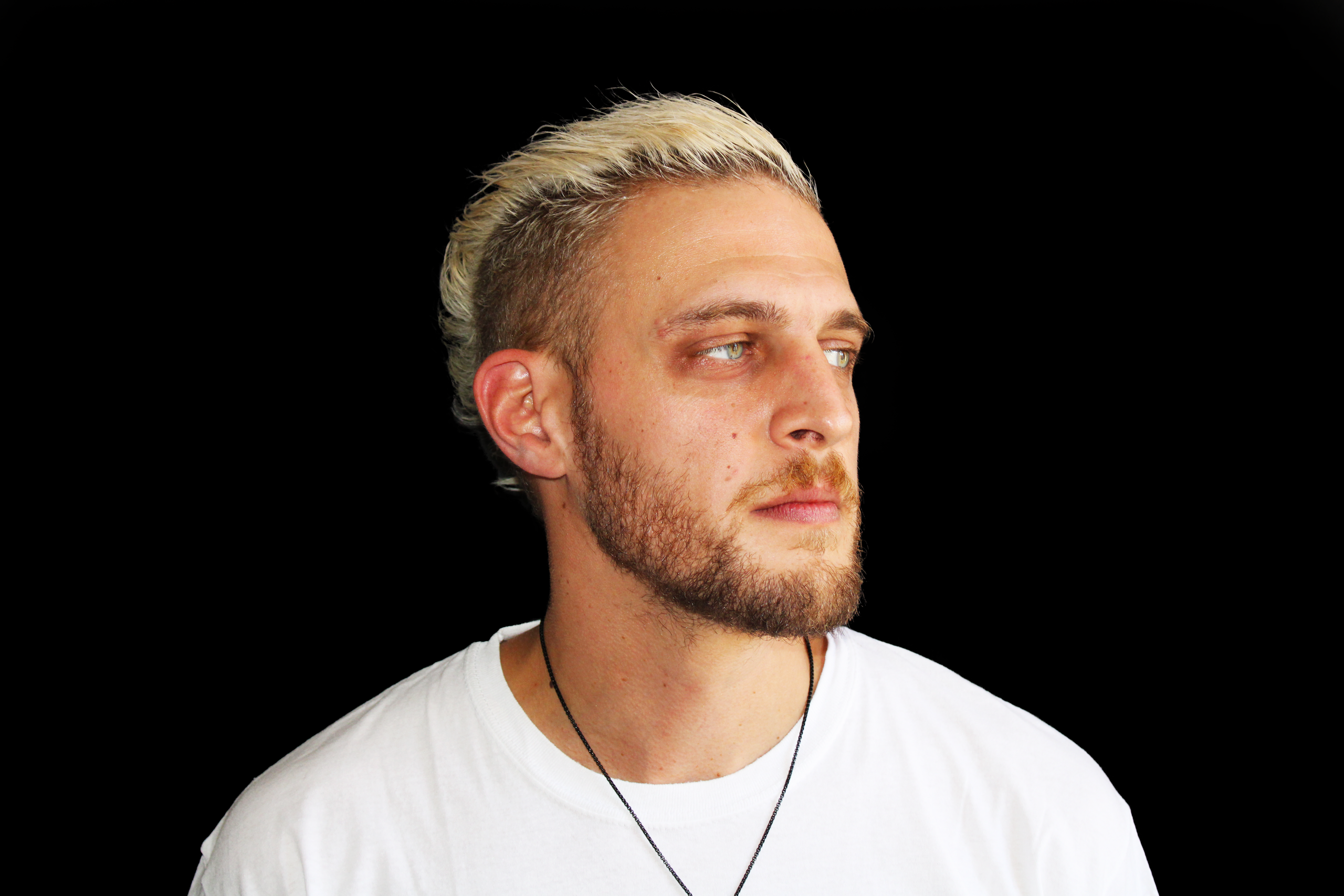
Howdy! I’m half American, Merikan has been my nickname since I was a child because here in South Italy not many people are blonde. Growing up the kids called me Americano.
Speaking of flying across the pond, you recently said your Desert Island Disc would be ‘Deeper Cello Investigations’, does classical music inspire you?
The cello is my favorite instrument, I find it the most expressive. Also if you think about it, it’s played pretty much how a reese bass would be played. You have these glides between low and high notes, you know, and then the vibrato thing going on, which is what makes it expressive.
What’s top of your listening library right now?
Big beat 90s stuff and I’m still following these video game soundtrack vibes, going back to the early PS1 racing games with fast paced kind of music. It’s outside the realm of drum and bass in a way, but also very close. I’m not listening to drum and bass when I’m producing drum and bass, I allow everything else to influence me.
Merikan staple sound is always a perfect balance of fast, intense, yet always a listener’s journey. We know from experience.
Exactly. It’s going somewhere. I think that’s the positive side of being a raver before even producing, because you can experience sets and artists for yourself, then decide how you want to create your own set, bring in your own way of doing things.
Agreed. Tell us the plugs, what are you up to in the last few months of 2026?
I’m experimenting with all kinds of genres with all kinds of artists, getting out of my comfort zone, doing even stuff that I wouldn’t normally do. I think these are important catalysts for change. It’s always good to get inspired by the people you click with creatively.
I’m super excited to be releasing on an Evolution Chamber VA project I’ve collaborated with Katharsis on. He’s a staple in clanky snares and early aggressive chords. There’s also talk of a vinyl for it! And apart from that, many many many shows going all over the place.
What’s your message to the headz?
Keep in touch with your local community. Make sure you support your locals. Get out there and keep together.