
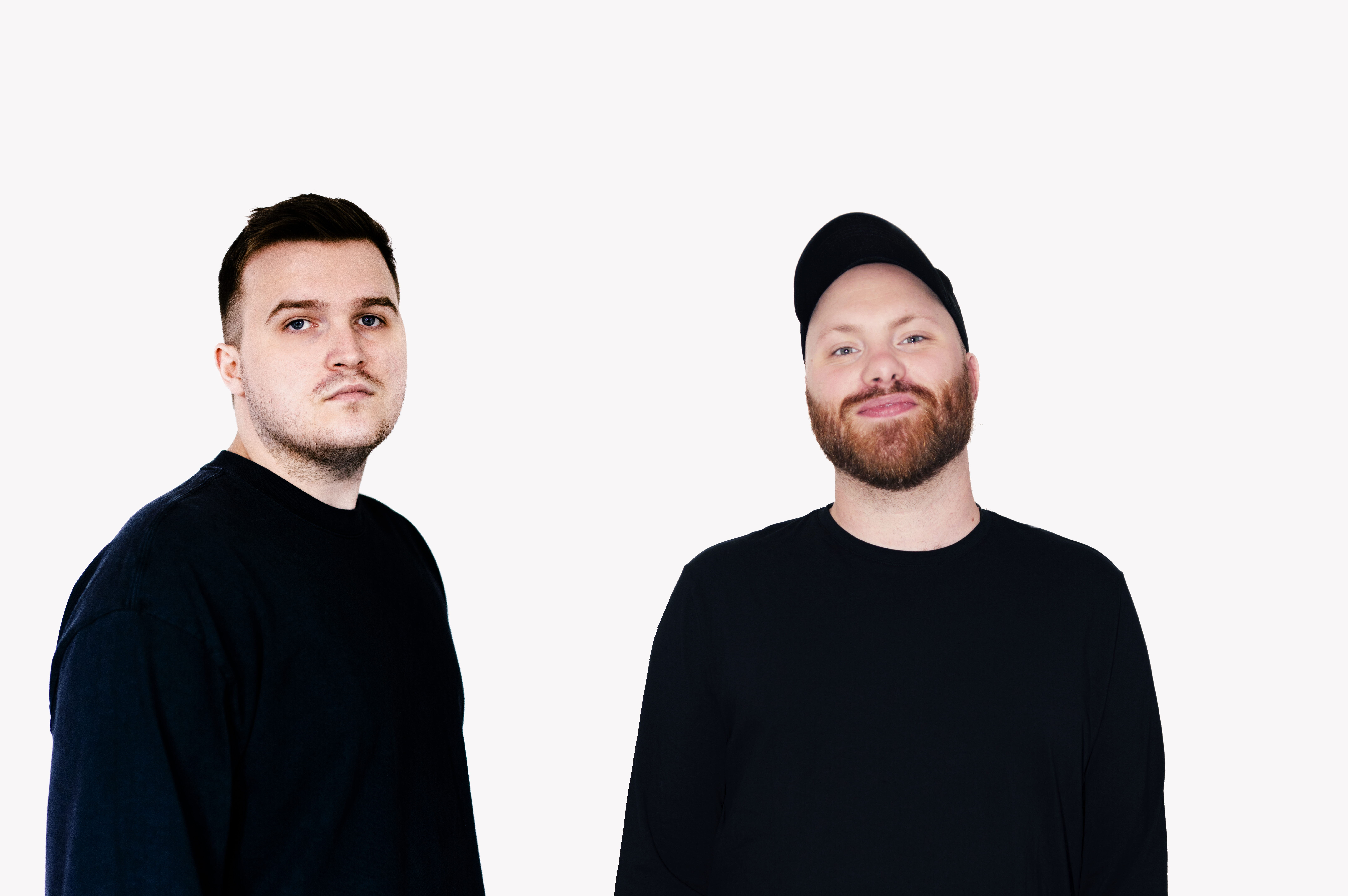
Always wanted to know what your computer thinks about when you put it into sleep mode? Good news, London-born Welshman Josh Croft and Brisbanian Bailey Greer are here to illustrate in most wonderful fashion!
Brought together by way of SoundCloud’s garage underbelly while attending their respective home country’s equivalent to high school, inspired by the legendary Hospital Records roster of the 2010s, and nourished artistically through a group chat consisting of future headliners like Andromedik, Changing Faces, and Justin Hawkes – every algorithm would agree that Josh and Bailey have had an artistic journey unlike any other.
More than a decade on from the year-8-bit days as Aux Verba (Josh) and Greed (Bailey), their collaborative In:Most project has seen them work together with their heroes, moving from Australia and Wales to Cambridge and back again, remastering legendary club nights, putting together their debut album Voyager in 2020, and even pursue their own little sideloader projects, with Bailey cracking genre firewalls as OSO and Josh taking on the Cyfort mantle.
Now, the transcontinental pair have merged together influences from day jobs, hobbies, and their own evolving music tastes, to bring us an entirely new experience – Dream Sequences. Across the 15 spins on the titular theme, they not only explore the intricate worlds of liquid, deep, and tech-infused drum & bass, but also wander the realms of garage, halftime and ambient.
For this integer overflowingly joyous occasion, we sat down with the duo to dissect our digital buddies’ dreams.
Congrats on the album! How does it feel to finally get that out there?
Josh: This album in particular has been a bit different to the last one, because of the way we’ve released it sequentially. We slowly started drip-feeding singles and then releasing some of the album as EPs, so it’s been the slowest album campaign ever! It is nice to have this full culmination of the whole project out there. It definitely feels like a reflection moment, a poignant moment in time for us. It’s been six years since our last one!
What made you choose this EP format?
Bailey: Some of these songs have been knocking about since the start of lockdown! The slow format allowed us to let everything breathe and gave us more time to focus on the whole product in the end. When it came to finishing the album, we had a deadline to finish up just around seven tunes, which were all already pretty much done. That allowed us to take extra care in preparing all of these, getting them the way we wanted them to sound, and thinking about how everything’s going to be pieced together. Listening back, you can definitely tell that we have had the time to get everything in order and curate it properly. We’re pretty stoked with it!
Josh: It feels kind of a lot more considered. There was no rush to get any of it done, because we gave ourselves the time. The initial idea was that we weren’t even going to do a full-on album at the end, it was just going to be three EPs and that’s it! It was towards the end that we decided to go for the full LP, to bring everything together. Which Soulvent were amazing about!
Bailey: Sonically it made sense to have it all as a collection, because even though there’s so many different styles and genres, it all sounds cohesive! Definitely not planned, but sometimes the best things aren’t planned. We were like, “Hey, should we just make an album out of these tracks we’ve got?”, so we just plucked some of them out of our demos folder and moved them around to fit with the rest.
Josh: The nice thing about having this amount of time was that it gave us a chance to really delve into the sort of sound that we wanted to create with this project. We definitely felt like we had a “Dream Sequences sound”. We knew what would work for the project and what wouldn’t. I hope the end result is worth it!
It is, it is! You can tell that you put the time in – time well spent. Regarding the more futuristic Dream Sequences sound: What would you say arrived first, the idea to go down that route or the tunes that you afterwards realised shared a common theme?
Bailey: It’s a combination of inspiration from the things that we love. I like playing lots of games, I’m a big nerd. Halo is my favorite game, ever. We’ve also got 80’s aesthetics, synthwave music, ambient stuff in there. What we basically did was picking out all the best parts from all these inspirations and trying to make a sort of glue that we can put all over our music.
Josh: I think games like Mirror’s Edge we really love the soundtrack of and that’s indirectly informed a lot of our sounds in the past five or six years anyway, but in this album you can really hear that. I work as a sound designer in video games, which means a lot of my day is spent making very highly detailed sounds, so I definitely have more of an ear for that when it comes to production and sound design.
Bailey: All the ear candy!
Josh: It’s nice that the job helps the music and the music helps the job. They both coexist.
You’ve got some really impressive games like RuneScape: Dragonwilds and Total War on your CV as well! Do you find that having a background in making snares helps you in crafting sword clanks, or vice versa? How much overlap is there?
Josh: Hah! In terms of my overall sound design style people would probably say that I’m quite low-end and bass heavy. I like going quite big and upfront with my sound design. As far as the creative process is concerned, I break things down in the same way I would when designing in drum & bass. Splitting things by frequency and working with layers, in the same way I would when creating a bass or an atmosphere or a pad for a tune. Layering is also a thing I bring over between the disciplines – and I guess the ability to “use my ears”. I’ve definitely noticed a difference in intuitively knowing what to reach for, what to do at a certain moment in time, and not second guessing it in a way that I might have done before. These days it’s a much more of an intuitive process! It feels a lot easier to write music now than it used to.
You’ve mentioned in other interviews that you used to be a waiter back in the day. How did the jump from that to a successful career in sound designing happen?
Bailey: He had to live on my couch for a month whilst doing the portfolio for that job!
Josh: I took a bit of a leap of faith really. I realised that working in the hospitality industry wasn’t where I wanted to end up eventually – what I really wanted to do was sound designing things. So I ended up leaving where I was at the time in Cambridge and moving home to Wales. This would be around the time that we were writing Voyager. So I was living at home in Wales and spending my time designing a sound design showreel and doing a course to get my chops up for videogame sound design, middleware, all that lovely stuff. At the time, we were also finishing up Voyager, so I didn’t really have a place to stay in Cambridge other than Bailey’s, so I literally lived on his couch for like a month.
Bailey: Explosion sounds from the living room all day.
Josh: Bailey eventually even made me pay some rent, hah! It was good fun though, loved it. It meant we were able to finish off that album together in the same space, which was also really cool. We didn’t actually get to that this time around!
Right, you have moved to Australia again Bailey! Would you say your move back home factored into the album process?
Bailey: Absolutely! Unfortunately, I was just really homesick. I have a friend there who I spoke to on Discord almost every day, when I had the day off work. He’s based in Brisbane and I grew up with him, you know. I just missed hanging out with this guy, missed being able to jump in the car and see my brother, see my mom. It was just time to go home – that was end of 2023. Weirdly enough, as soon as I got home, the production just started going crazy! About 85% of this album was written after I moved home, because it was just full speed ahead. I got a setup, I moved back in with mom, so I didn’t have to worry about financial stress and it was just all about being creative. If that move hadn’t happened… I don’t want to say the quality wouldn’t be as good, but there would less creative inclination. There was just a lot of financial stress, living away from family, the whole post-Covid stress… it all added up!
Josh: I think you could hear it in the music. There was a time at the start or just before starting with Dream Sequences, when we had a batch of tunes, which we had spent a while on. We showed it to people at the label and they were like “Actually… keep writing, this isn’t your strongest stuff”. We were knocked back a bit! A lot of those tunes were reimagined and redesigned, and then those became the tunes you can hear now. ‘Rabbit Hole’, for instance, used to be such an idea. That was part and parcel of that time. When people aren’t happy, the best music doesn’t come out. I’ve noticed a massive change in quality and I think this album shows that. That’s the power of being happy where you are in life and with yourself! Of course, sometimes the opposite can be true, and challenges can really help drive you on creatively.
It probably also helped that it’s an entirely different environment – people, culture, weather, all of it.
Bailey: It’s the little things. Being back where I grew up. Seeing the family cat.
Very important!
Bailey: Stuff like that! My nephew was born in the April of the year that I moved home, so I got to meet him for the first time. He’s three now, but I got to be involved in that and that gave me more purpose and desire to stick around and make something of it. All of it was the trigger for all of this production!
How do you make it work with that much of a time zone difference between you two?
Bailey: Josh and I met when we were both in high school. He was finishing year thirteen, or sixth form as they call it in England, and I was in year ten or eleven. Way back then, we set up a shared Dropbox folder, where we just uploaded our Logic session files – we later switched to Ableton. Then, when we started the In:Most project together, we just renamed that folder. To this day, it’s still the same one! So I’ll start an idea, name it something random like “this has the feels”, hit up Josh, and then after a couple hours he’ll come back to me like “I’ve done this, I think we need to this”, and then I’ll take over when he’s going to bed. It’s pretty streamlined! We try to catch up fortnightly on a Sunday and just have a chat, before doing a production session on Discord. We try to have as much fun with it when we catch up, and when we just want to work on stuff we’ll pass it back and forth. We know what the other person wants and we can see where the vision lies with all of our ideas. We rubberband off of each other!
Josh: Recently I’ve acknowledged that we have the same sort of sound now when we’re writing. It sounds like In:Most no matter what we both do! So there’s no worries that one of us will go too far astray and it sounding like something completely different. We always know that it will sound cohesive and like it’s part of the project.
Bailey: There used to be a bit of a fear back when we first started. When it wasn’t 50/50, then the other person wouldn’t have their ‘bit’ in the song, that sort of thing. But now, for example, there’s a tune on the album called ‘Wibble’ – Josh pretty much wrote that entire idea. I just put a bit of sounds and some cool synths in the intro, but that initial idea sounded like In:Most already! I didn’t feel like “Oh man, I have to put this bit in otherwise it won’t sound like me”. We’re at the point now, where no matter if one person writes an idea, or we do a shared project, or a person does a full song, it still all just sounds like us. It really sped up the workflow as well.
Josh: It means that we don’t always both have to put a massive stake in each track, you know? If one of us has written a really strong idea, then you can leave that and try to improve or accentuate it, but not feel like you have to really stick the oar in and do massive changes.
Bailey: At the end of the day it’s both our brand. We represent each other. It’s nice to know that one song can be 90% Josh 10% Bailey, then another the other way around.
How do you approach getting collaborators into this process?
Bailey: One of the tracks, ‘Frail’ with Askel & Elere, has been knocking about since the start of lockdown. We were working on a few tunes for their debut album, Simulations, and that was one of the ideas that we had started working on. At the start it was simply a “you send us one, we send you one” situation, and then we would work on those together. As the tune sat for a bit, we realised this track has the sound for the album that we’ve sort of accidentally written in the last couple of years, so we beefed it up a bit. There’s also tunes like ‘Atlas’, where as soon as that first sketch was laid down, I sent a message to Josh like “I want BOP on this, no further questions.” Will from Mistrust we’ve been friends with for about seven years now. The first idea for that song, ‘Close’, was sitting on one of our computers and we were just going through our potential demo ideas. Josh said to me “Why don’t we send this one to Will?”, because it had a direction that his sound normally gravitates in. Some of the ideas just made sense to go to that specific person. ‘Escape’ with SOLAH we’d been trying to get done for a while now. I think we’ve been through about three different instrumentals for that vocal?
Josh: Oh god, yeah! The vocal was amazing, and we felt like the tune wasn’t doing it justice, so we had to try and try again, until we landed on something we’re both really happy with.
Big up Hannah for her patience!
Bailey: It was like a four year process, hah. Then of course Rich Visionobi. We’ve worked with him loads and it just made sense to get him on something. ‘Rabbit Hole’ is probably the deepest cuts of the album. Pretty left-field, intricate, spacey, weird.
Josh: Sometimes tunes happen and you can just hear this person singing or rapping over it. Rich immediately sprang to mind and I don’t think we would have sent it to anyone else, it had to be him.
Bailey: Not to forget the Hillsdom boys! ‘Chasm’ is like the perfect example of sci-fi horror liquid. Their sound is really cool, super fresh, with lots of gnarly sounds you can hear in the tune we did with them. We’d been loving their stuff for a while, but never actually made the leap to work together, but as that song came about we thought why not send it to those guys and see what they come up with.
Josh: It’s really important that we also shout-out Caio Laborda-Davies, also known as Bonsaimedia, who did the all of the visual content for all of the Dream Sequences projects, so all the EPs and then also the album!
Bailey: On his own as well!
Josh: He’s been the mastermind behind all of the visual aspects of this whole thing, and that’s something I’m really proud of. How this whole project looks and feels, and the synergy of that with the music. He’s absolutely smashed it. He’s a mate I went to college with, years and years ago back in Cambridge, so it’s been really nice to rekindle that friendship again. He’s amazing, very talented guy, I recommend him to anyone!
Bailey: The Soulvent team has been great as well. Basically just let us do our thing! There’s been zero pressure or “you need to do this” or “this needs to sound more like this”, which was super cool.
Amazing! You’ve got a lot of multi-genre stuff going on on the album as well. I’m curious how you decided what to include and what to shelve for some of your other projects like OSO.
Bailey: ‘Cosmonaut’ started as an idea, I had the intro and the drums – that was pretty much it. I just had no idea what to do with it. So I uploaded it to our Dropbox folder, quite incognito. It was just sitting in there for a bit. I was a bit hesitant to show it to Josh, because I really liked the idea, so I was a bit nervous!
Josh: Hah!
Bailey: So I showed him the tune, and he was like “cool, let’s work on that”. It ended up being real easy! It was so fun to work on a garage tune with Josh for the first time properly. It had the sound we were chasing for Dream Sequences, but not what I was chasing for OSO, so we were figured we would put it on the album. I’m stoked we did, because it’s such a good middle tune. I’m really proud of that one.
Josh: Yeah, I love it as well, it’s great. We’ve actually been writing a couple more of those sort of things now as well, little ideas of garage bits. Going back to the multi-genre question a bit, that’s definitely something we’re exploring more of as well. Sure, we do a lot of drum & bass and that’s what we’re known for, but it’s been really nice to try and start writing some other bits and pieces here and there. For an album project, we wanted to make sure it was multi-genre and not purely drum & bass. We did the same with Voyager. We thought it’s quite important to break things up a bit here as well! The reception has been the great as well. People haven’t binned it off because it’s not drum & bass, they’ve really taken to it.
It’s seems to have become a bit of rarity on drum & bass albums nowadays, so it’s great to see you keeping the multi-genre fire going!
Bailey: We’ve come to the realisation that we love drum & bass, but we also want to explore. That’s how my side project, OSO, started, because I didn’t want to be bogged down. I feel both artistically and creatively it sharpens the sword, so to speak. It gives us a fresh perspective to approach songwriting in general. Different genres have different techniques. Drum & bass is super clean, but garage tunes are slower so you got more groove in them and then you can work that groove into a drum & bass tune, etc. It does nothing but good in the long term.
Josh: It all helps drive the evolution of drum & bass forward. When you bring in different influences from different genres, that’s how you make something fresh. Otherwise it can be a copycat of what’s happening at the moment, or what’s happened before.
Is there a tune, a moment, a melody, or a specific sound that you are most proud of on the LP?
Josh: There’s a few! I really love the intro, ‘Sequence Start’. I used an EMF mic, which is a mic that records the electromagnetic frequencies of computers, TVs, anything really, and basically captures the interference of everything. It’s called Lom Elektrosluch, it’s amazing. A bit of kit. So I recorded my laptop and my PlayStation 5 with a disc drive spooling up, and that’s what you can hear in the intro! Those bleeps and bloops are from that. The idea was to have something representing a sentient computer entity waking up and coming to life.
That’s amazing!
Josh: I’m really proud of that one! Bringing in those sorts of tactile sounds of machines themselves, merging both the sound design and music stuff together, that’s part of our sound now really. We use a lot of field recordings and different sources in our music as well. We might layer recordings of Brighton Beach, the sea and the waves, underneath everything as a kind of bed or a layer or an outro. They breathe a lot of life into the music and make things feel quite organic.
Bailey: I love all the foley, all the field recordings. I love making them sound really glitchy and horrible and weird. They breathe throughout the tracks. If you listen really closely in ‘Iris’, you can hear swelling in the background – that’s a recording of birds that’s been put through all of these weird effects, causing it to come alive. My favourite moment on the album, and I say this every time my partner listens to this specific song, is the breakdown of ‘Spectre’. It’s got these really lush chords and it’s got that vocal that says “have you ever thought, what if this is a dream?” Man, it really transports you somewhere – and obviously the second half of that track is, you know, really fat. I love that particular breakdown, because for me that is Dream Sequences. That tone, all of the sounds, the atmosphere, that for me is the album defining moment. Every time I listen to it I’m actually super, super chuffed, and I’m very critical of my own work. It takes a lot for me to listen to something of my own and be like “I really like that”, but that part is just sick, I love it.
‘Sentient’ also caught my attention. A bit of retro-futurism, an old-school spin on the futuristic Dream Sequences idea!
Bailey: Yeah! If you listen to 90s Jungle, it does sound completely alien and futuristic. The idea behind ‘Sentient’ was that we wanted to have a callback, a tip of the hat to that era, because the whole amen rinseout thing is just so cool. Jungle music in general, artists like LTJ Bukem and Peshay, it just had that futuristic sound. As the tune progressed, it was evident that it had that vibe we were looking for to it. Plus, we haven’t properly done a tune like that, ever, besides ‘Over The Shoulder’. It’s probably the most simple, stripped back tune on there, but the vibe that it carries is pretty consistent with the vibe we wanted on the record.
It reminded me of those Playstation 1 Jungle mixes on YouTube!
Josh: Absolutely love those mixes, I listen to them all the time!
And you were literally recording a Playstation in the intro!
Josh: Hah, true!
Am I allowed to ask if you are already back at working on album three now?
Bailey: (pained sigh)
No pressure of course, hah!
Josh: We have got a bunch of tunes and we’re not 100% sure what to do with them yet! It all has a running idea and sound that we’re leaning more towards for this next bit, but what we’re doing with it is still up in the air a bit.
Bailey: We’re 100% starting up a new project, just not sure of the magnitude of it yet! Definitely don’t wanna leave it another six years if we’re going to do another album, hah!
Josh: Oh god, yeah. It’s ten years of In:Most this year, so we have been doing some VIPs, like the ‘Home VIP’ we released recently, and we’ve been cooking up a couple more. So those might be on the way out at some point.
Any last notes?
Bailey: Make sure to check out the vinyl!
Josh: Available now!