
The art of DJing is a skill that has seen plenty of input with over decades and decades of history. Hard house, hard dance, old school, happy hardcore and elements of jungle- we have been blessed with reintroductions to these authentic, heritage sounds in more recent years through a variety of new artists paying homage to the roots of the respective scenes.
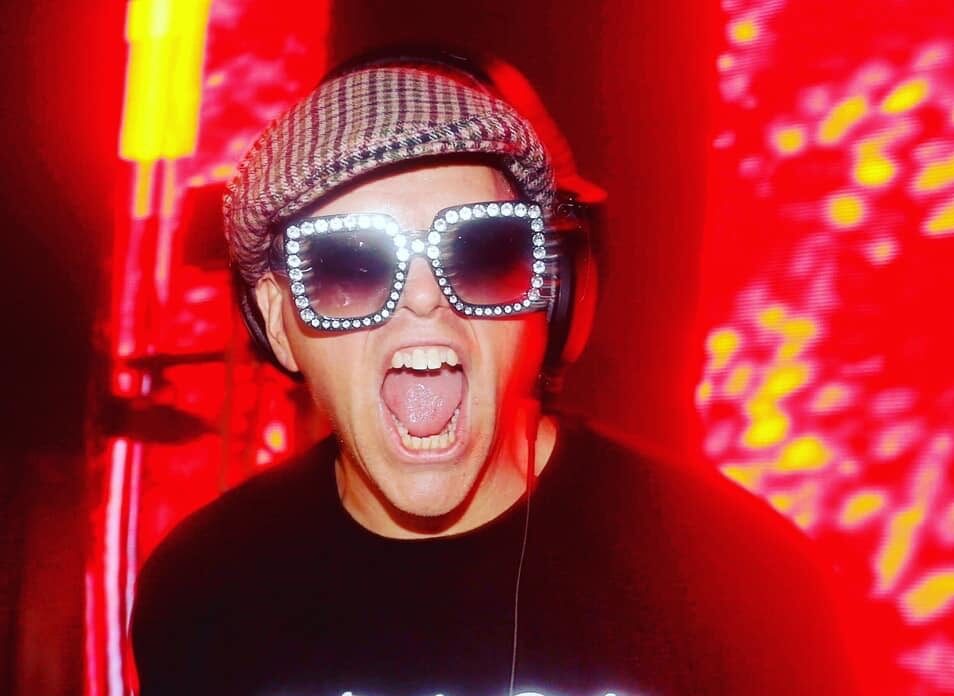
However, over 3 decades, there are also those DJs who have remained true to these electronic genres. One of these DJs is Billy ‘Daniel’ Bunter, who was spinning tracks from 1990, playing at the best warehouse raves including the infamous Labyrinth and Raindance nights. Other notable artists still proudly bridging our 90s roots to modern day raves include Fabio & Grooverider, Slipmatt, Kenny Ken, LSD, Micky Finn and Rat Pack.
The career of Billy ‘Daniel’ Bunter has taken many forays into an array of projects. Through proud moments at Ministry of Sound playing Helter Skelter and Raindance, to ending up number one in a number of charts. Not forgetting he’s hosted some of the most forward-thinking shows on Kool FM, Centreforce and a number of old school stations spanning decades.
Bunter’s resume is rich with culture and authenticity. This involves his role in groundbreaking act Bang the Future who were unique in pushing dubplate culture in UK hardcore and techno. Over time he branched out to publishing books, creating merchandise, CDs, and starting the Rave Story paving the way for art galleries, seminars, raves, record fairs and charity work.
Starting in 1990 Bunter started with a weekly residency at seminal club Labrynth this was the catalyst for him through the mid 90s playing at huge hardcore events like World Dance, Dreamscape, Helter Skelter, Raindance, Slammin’ Vinyl, Rezurection, United Dance, Desire and Hardcore Heaven. From the late 90’s to mid 00’s Daniel was a pioneer of the hard dance sound and scene; regularly rocking dance floors in the UK and overseas for events like Frantic, Sunny Side Up, Heat, Slinky, Sundisential, Pendragon, Freedom, and Tasty.
Throughout the 00s and in more recent years Daniel’s unique mix of musical styles and energy on stage has seen him expand to even wider audiences of the festival scene regularly playing stages at Glastonbury, Bestival, Boomtown, Tranzmission, Nozstock, Beatherder, Moondance, Clockwork Orange, Illusive, 90’s Fest, House & Classics, Centreforce
Fast-forward to today and Bunter’s schedule shows no signs of holding up. Having celebrated his 35 years as a professional disc jockey his bookings are as busy as ever. This included a 35 year celebration courtesy of Epidemik at the famous Electrowerkz last October. Paying homage to a career that has remixed tracks for the likes of Altern8 and The Prodigy, played some of the worlds best raves including Bangface, Glastonbury and Boomtown, whilst leaving an ingrained legacy on happy hardcore, hard house and jungle.
With FooRs rendition of Bang the Future’s ‘Body Slam’ out last summer it’s been an appropriate time to reflect on the scenes Billy Bunter has influenced, as well as go back down memory lane to get a flavour of what raving was really like in the 1990’s and 2000’s.
How was last year?
I was very busy. Playing shows around the country and going abroad to play in places like Ibiza. I’ve also launched a podcast with an ex-football hooligan turned rave promoter and I’m still doing my radio show every Monday. I recently had DJ Slimzee on my podcast. You might ask yourself why the godfather of grime would be on my Rave Story podcast. Back in the day Slimzee and Wiley used to buy records off me back when I used to work at a record shop near to where they lived. If you read interviews with Slimzee he said that the hardcore clubs they used to go to that I was a resident at made them want to also perform. I’ve performed all through festival season and now have a very busy club season period coming up. Which included my 35 years of Billy Daniel Bunter event presented by Epidemik at Electrowerkz.
How does what you were doing in the 90’s differ to what you started doing at the turn of the millennium?
I started at a record shop in Whitechapel, the heart of East London, at the height of the illegal warehouse rave scene back in 1989. I was exposed to it very young as I was only 14 at the time. Through this I met the promoter of Labrynth, one of the most prominent venues in the London scene at the time. They gave me my break in 1990 at the age of 15 and I became a resident there. This was a time where being in these spaces you’d be surrounded by football hooligans and gangsters. The greatest raves shouldn’t have been happening every weekend in East London, but it was the hub for this scene and for 5 years I’d say it was comfortably the best place to go for a rave. There was never any trouble, everyone got along. During this period of 1990-1995 there’d be at least 1000 people passing through the club where I was a resident every Friday and Saturday night.
In your infancy as a DJ, what were some of the sounds you could expect at these raves?
In 1988 to 1989 acid house and house music was prominent at these raves. There was some introduction into breakbeat. The most notable guys pushing it were the likes of Renegade Soundwave, Shutup and Dance, Meat Beat Manifesto and Rebel MC – there were various people. The breakbeat and basslines hadn’t fully formed yet. By 1990 we started seeing elements of hardcore and jungle come through – even though they weren’t used as a genre. In London, throughout this period, weekly club nights had a life span of 6 months to up to a year. This included the likes of Astoria and Heaven.
As a DJ in the late 80’s and 90’s was the evolution of genres clear to see?
Yes it was. There was a commercialised element being dragged into the scene. However, the media and government were so publicly against it saying these parties needed to be stopped. Naming and shaming the underground culture for social issues. All this achieved was to create more of a buzz for it – making it go back underground. You now had loads of one off parties but Rage and Labrynth were the two places you could guarantee it was going on every week in 1990. Rage had changed to Fabio & Grooverider as their main DJ’s. Moving away from their balearic and acid house vibe. At Labrynth you’d have the likes of myself, Kenny Ken, Vinyl Matt and Adrian Age. This was before Telepathy, Awol and Innocence. 1991 we started to get introduced to hardcore, european, sounds. When 1992 came along the tunes became faster. There was a turning point with breakbeats and bass, and these new sounds had such a British essence. If you were a DJ that hadn’t gone solely down the house and techno route then you’d predominantly be playing tracks by British artists. 1993 sounds became darker. You’d hear ragga vocals and reggae sampling on tracks. This was essentially the advent of intelligent drum & bass, happy hardcore and ragga jungle – without realising it. By 1994 there were clear splits between DJ’s specialising with specific genres as more genres were being rapidly discovered. This 5 year period had radical change you just won’t see again.
What DJ’s were flying the flag for the faster tempos during this period that are still around today?
You had myself, Fabio & Grooverider, Micky Finn, LSD, Ratpack, Slipmatt, Nicky Blackmarket, Ray Keith and so on. We were a group of rough and rugged DJ’s that weren’t coming from the house scene. As circuit-breaking DJ’s of hardcore, jungle or drum & bass we are still here over 30 years later trying to convey the message professionally as a career lifestyle. I don’t think there’s more than 30 of us who can truly say they stuck to these styles through thick and thin.
It must be quite touching still seeing these genres flourish?
These genres are bigger than they’ve ever been. It’s great to see. If you’d told me at 15 years of age I’d be speaking to a young music journalist over 30 years later about what I’m up to, in addition to playing to thousands of people in Ibiza, whilst having 10 million views a month on my socials, I wouldn’t have believed you.
What would you say were key differences between then and now?
Driving past the likes of Fire in Vauxhall and what used to be The Fridge (now Brixton Electric) to see them shut at 3 or 4 in the morning on a weekend is mental. They used to be leading establishments in the UK. What’s happened is that everyone is now preferring to go out during the day. It’s more convenient for everyone these days. We had a period in time where some clubs were 24 hours. The state of the club scene in general now is suffering. I’ve been promoting events for 30 years unbroken, I’ve seen this drastic change from back in the 90s to now. Another thing that’s different is that there was no career mentality. Promoters back then would just be living from one weekend to the next.
The idea of an agent and stuff like that was very alien to us. We were just doing it for enjoyment with no understanding of the business side of things. 30 years later this thing is now paying for my life. I’ve now gone to colleges and universities to discuss potential career paths as a DJ. Also, dealing with the tax man isn’t something I thought would’ve been necessary in my first 10 years of DJing. I’m not one of those older artists who say things have changed for the worse. I really disagree with older people who claim the raves were better back then. I think they’re just as good, but obviously different. I don’t believe phones kill clubbing culture like these people also claim. I think it’s great there’s content out there to share with the world. I love the heritage scene but I also love to embrace the new generation of people. They can soak up music a lot better than what we did back in the day. Using the internet gives me access to promote my stuff and tune in with the wider scene. I’d be a fool to not use it.
You must’ve played some great raves! How do the ones today compare?
In more recent years I’ve played Clockwork Orange, Boomtown, Moon Dance, Rave Story, Rejuvenation, Centreforce, and so many other great raves. I played back in the 90s and am still doing my thing today. Believe me, there are undeniably still great places to go and dance across the board. Ones that are as good or if not better than they were in 1992.
I guess entering the 2000s you started to see these significant changes occur?
By the late 90s and early 2000s, things started to become more magnified. Business-minded people started to take a lot more interest. Including on a global level. Some underground tracks were getting chart recognition. DJ’s started to want careers out of it. Learning from the mistakes of their predecessors in the late 80s and 90s. This idea of a ‘business plan’ and ‘growing the brand’ became more of a concept as we came into the 2000s. People were becoming more savvy regarding logos etc. I personally still see these things as a rave or a club night rather than a brand. The advent of super clubs meant the underground promoters were levelling up their game too. The early 2000s aren’t really talked about as much as the late 80s and 90s. Probably because the late 80s and 90s had a certain charm due to the birth of acid house, hardcore, jungle and general underground culture that created the scenes we know today.
How do you see yourself in the world of electronic music as a pioneer of multiple scenes?
I see myself as a heritage rave DJ in my own lane. I’m 100% committed to the history of our music. Hence the birth of my podcast, the books I’ve released, my galleries and seminars I work on, the two radio shows a week, my dedication to working with newer artists in the scene and my positioning within events and raves promotion. Keeping the heritage alive and sharing stories of past, present and future in any way I can. This year is my 35th year of having a full-time career as a professional DJ. 1991 was the first old-skool night I ever played. From 1991 to this day I’ve always had a flurry of old-skool gigs. By the mid 2000s I had a huge album series on Ministry of Sound which sold around a million copies. If I was excited by something I’d do it. I found it hard to stick to one genre. I played the different rooms at many venues that focused on multiple sounds. To this day, there’s not many people who could headline a hardcore rave, a house rave, an old-skool rave, a jungle rave or a hard dance rave. Over the years I’ve dipped in and out of scenes in periods I may have found them a bit boring. But all in all, I love to DJ and I love music – so I’m always happy to mix up the genres.
How did doing a remix for The Prodigy come about?
The old-skool explosion was huge. There was a huge breakbeat scene which included artists like Deekline and The Freestylers. A lot of people were doing lots of wicked breaks remixes. Myself and Slipmatt thought there was a lot of room for us to do this on our Ministry of Sound album series we were running. Me and Slipmatt asked if we could remix their ‘Out of Space’ tune to play in our sets which they agreed to. Prodigy’s first ever gig was at Labyrinth and I was their warm-up DJ. They were old ravers at the same club. Keith Flint was one of the first people to ever hear me DJ. We’d been in touch over the years regarding doing a documentary about an old club called the Four Aces which they also agreed to. Liam Howlett also wrote a segment in my book touching on when he used to go to Labyrinth whilst I was the DJ there. So in essence, staying in touch over the years managed to swing us a remix with them.
And likewise for Altern8. You did a remix for them too.
Mark Archer from Altern8 had been in no man’s land for a bit. He was also in a group called Nexus 21. They had tracks like ‘Self Hypnosis’ and ‘Real Love’. Absolute classics for me. But Mark was always fascinated as to why I loved that record as he didn’t think they were, as such. As a result, we’d built up a relationship. He went on to write a piece for me in my book. I did remixes for him and I helped release his album. So that’s how the Altern8 remix came about. There’s actually two members of altern8. There’s Mark Archer and Chris Peat. But I’ve only ever dealt with Mark as Chris is a hard man to reach. I’ve written a book about Mark Archer called ‘Man Behind the Mask’, it would be wicked to track down Chris and get his side of the Altern8 story too.
You had a long standing relationship with the label Ministry of Sound.
I was signed to Ministry of Sound for about 6 years. What was originally going to be a one-off album deal ended up being over 20 albums. With over a million copies sold. I also worked in a concept capacity for them. I had a long standing, successful, relationship with them as a DJ and as an adviser. When vinyl started dying, we then had CD albums come about in the early 2000s which Ministry still wanted me onboard for. After that, streaming came about and so the relationship dried up with Ministry. So I also stopped playing on the Ministry radio show, I had a show called Love Music every Monday. Ministry ended up selling parts of their business off and so that marked the end of my time with them. But I then found myself on Kool.FM every Monday pretty quickly after with a show called Music Mondays.
So essentially, moving to Kool provided you with a new challenge.
Exactly. The heritage at Kool.FM was humungous. Music Mondays allowed me to play these in depth shows that educated people on the heritage and the roots of our scene. This show was very popular and one of my proudest things I’ve done. This led to me releasing books, albums, merchandise, CDs, starting the Rave Story which was an art gallery, a seminar, a rave, a record fairs and all kinds of other stuff. This essentially filled up my time again after no longer working with Ministry of Sound. Through my label also named Music Mondays, we were back on the vinyl boom very early. Re-releasing loads of vinyl from Liquid, Ragga Twins, Altern8 and artists like that. There weren’t many labels doing this in the early 2010’s.
Would you still want a slot on Kool Fm today?
Well, once Rinse.Fm took over Kool Fm and they gave me an offer to start Music Mondays again. However, what I was being offered just didn’t match what I wanted to do on the show. It felt like my wings were being clipped. I turned it down and went to Centreforce every Wednesday, a huge heritage station. They’ve brought me a whole new window of opportunities. I still do Music Monday’s on livestream. Everything worked out for the best. Working hard is ultimately what will get you to where you want to be, not just working with the ‘best’ labels or brands. I’ve always had loads of energy and passion for doing things. Everything I do, I make sure I see through to the end.
Talk to me about FooR’s recent remix of ‘Body Slam’ by Bang the Future, a group you were a part of.
Me and John, who is the writer and producer for FooR, have had a lot of success over the years together producing tracks, starting record labels and becoming great business partners. We are also great friends, I was best man at his wedding. He was a backbone in my career throughout the noughties. As times went on, FooR blew up with their streams and gigs. I’ve been very proud to watch their journey. Gavin and the rest of them loved a hardcore track, particularly the one from me and the rest of Bang the Future produced from the 1996 track called ‘Body Slam’. John approached me about the idea and as he is a close friend I was more than happy for them to put their spin on it. Also they are such experts at what they do. I know they’ve done a lot of collaborations with other older tracks and it works well for them. It’s really great that the older tunes are still getting a nod today.
It’s really great that we also get the old-skool rave flavours in today’s jungle and hardcore scene.
100%. When I play music from the likes of Pete Cannon, Arkyn, T-Cuts, Swankout, Origin8a & Propa, Hypershe, 4am Kru, and so many other newer artists it feels great because I’m playing new music that sounds old. I always gravitate towards the above artists because it sounds so authentic.
Finally, your podcast is something that is getting everyone talking in the scene. Why was that something else you wanted to take onboard – on top of your already busy schedule?
I love doing the podcast. Over the years I’ve done radio. My first ever radio show I did was on Eruption FM every Sunday night, a fantastic pirate radio station in the mid 90s. I had DJ Vibes on as my first ever guest. I loved having guests on. Then I was on a station via Sky TV. Sky had the first legal stations in the early to mid noughties. On your sky box you’d get a load of radio stations and they had a channel called Sky Dance which I did every Saturday. I interviewed loads of people on that one too, it was relentless. Artists like Rebel MC, Slipmatt, Devious D, Nicky Blackmarket and so on. Once I signed with Ministry I was doing radio with them every Monday and, again, I’d interview tons of people there. And finally, on Kool FM I’d interview an array of people from DJs to street artists. As you can tell I love to talk about the scene. Which brings me to now, I went up to see Dodge Woodall to be a guest on his podcast. I absolutely loved it. It was like all the interviews I’d done over the years, but now people could watch it. It inspired me to make my own podcast. I felt a strong desire to cover the heritage sounds, especially with all the content I’ve gathered over the years. I have more than most. I want to interview the most underground people to capture our scene properly. Even at my age I’m still hungry to do these new projects. I’ve already interviewed the likes of Pete Cannon, Slimzee, Nicky Blackmarket, Aries and I have a load more in the pipeline which I can’t wait for you all to see. I’m just happy to be busy.
Follow Billy ‘Daniel’ Bunter: Instagram