
There’s been a noticeable swell in orchestral drum & bass over the past few years. What once felt like a novelty, a one-off spectacle performed for special occasions, has started to take on a more permanent place within the culture. From concert halls to festival stages, the pairing of breakbeats and string sections is no longer left field.
At the centre of that shift are artists who’ve grown up with one foot in each world, equally comfortable in front of a DAW as they are in front of a score. For them, this isn’t about bolting an orchestra onto electronic music, it’s about translation. Picturig tracks outside of their natural environment and rebuilding them for a room full of musicians.
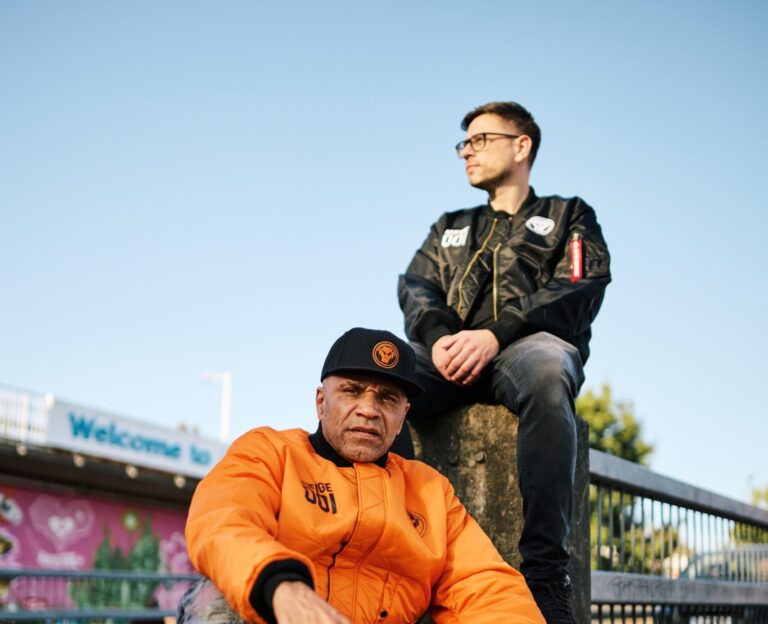
We sat down with Steve Pycroft to chat about his new album Moments Between, a project that marks a shift from reworking other people’s music to fully stepping into his own. A record shaped as much by quiet reflection as it is by orchestral scale.
There’s been a surge in orchestral drum and bass recently. Why do you think it resonates with people?
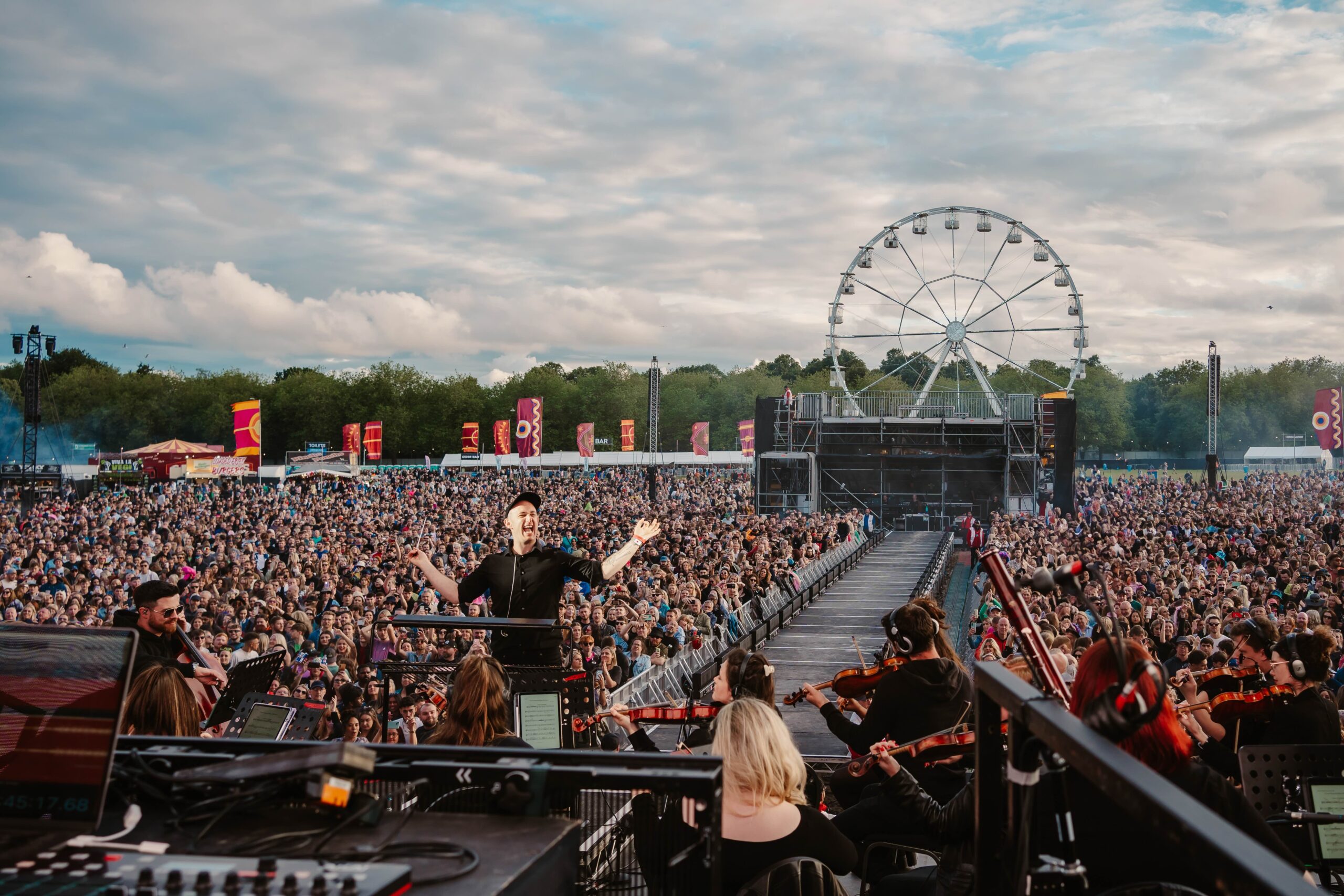
I think regardless of whether you’re a fan of classical music, an orchestra is such a powerful experience, visually and audibly. You’ve got a group of musicians performing live together and I think that’s quite a spectacle in itself.
I think people love watching live music and when orchestras perform it brings another layer, especially when they’re playing music that people already know. If you hear a tune that you’re used to hearing in a club and then there’s an orchestra, it brings another dimension. Also because of film music, orchestras are quite a familiar sound, even if people don’t realise.
What do you think people get out of the live performances that they don’t get from raves?
I think it’s watching a large group of people performing together, seeing their collaboration, seeing the energy that they create. I think it’s really powerful. It’s a bit like going to the theater over going to the cinema. Both are great experiences, but you’re actually watching people on stage and it’s a bit more raw.
How do you go about transcribing other people’s tracks into orchestral music?
It’s something I’ve always done since I was a kid. I would listen to stuff and then write it down. With the kaleidoscope stuff it all starts with a reaction that I have to music. If I hear something that makes me feel something I start to think “what could I say with this musical material that’s a bit different.”
With the Avichi and The Prodigy things we’ve done, it’s taking that music out of its environment, the melodies, and then creating something else. That’s always fascinated me. In terms of how I actually go about it, I listen over and over and then write down the melodies and the harmonies and then it’s quite a lengthy process.
I like being in the gym or in the car and having the track playing so that it’s kind of ingrained in my brain. When I start writing the orchestral parts it comes out and then I can start to decide which instruments play which parts. It’s a bit of a messy process.
Are there particular subgenres of drum and bass that work better orchestrally?
I think any subgenre is workable. When you think about the pendulum arrangement that I did- that’s what I’ve responded to. But I’ve also done arrangements of people like System of a Down and Foo Fighters.
But for me drum and bass and dubstep, are the most fun because trying to emulate the sounds of producers like Skrillex, Flux Pavilion or Noisia are just bonkers. I like the challenge, it’s a fun process.
Have any of the artists spoken to you about your work?
The first one that I did 15 years ago, was a Skrillex suite and he shared it on his Facebook page, which is what we were using then. He was like, “This is awesome.” I think that was when I realised that I was on to something.
We ended up working on an album with Flux Pavilion off the back of an arrangement that I did. It’s always nice to think the artists like it. I feel like it’s a bit arrogant of me to be like “I’m going to take their music and do something else with it!” but I think actually a lot of artists see it as flattering really. We did a thing with Etherwood as well. I got in touch with him; it was something that was on his radar in terms of where his music could go. He was quite emotional in the studio.
Let’s talk about your musical training
I studied classical music at Manchester University. So I had a formal education where I learned orchestration and writing for orchestras. But another side to that education was going out to dubstep and drum and bass nights in Manchester. I mean it was such a great city for that.
In 2009/ 2010 I was going to nights like HIT & RUN and the early Warehouse Projects. I was seeing people like Netsky, Goldie and all these other people in these club environments. I remember the UKF dubstep 2010 album came out around that time. It had Flux Pavilion’s remixes of ‘Cracks’ and ‘Gold Dust’ and they were so educational to me, this world that’s completely different to orchestras.
Between this very classical degree and then dubstep and drum and bass nights. I was kind of getting these two worlds and it started to fascinate me how these could come together maybe in some way.
Have you seen any other orchestras perform drum and bass?
The only thing I’d seen was a J Dilla orchestra thing on YouTube a friend of mine,Rich Reason, showed me and I was like “That is exactly what I want to do”. We started the orchestra in 2011. I’d just finished at uni and I was thinking about doing a PhD in crossover genre stuff but I didn’t get funding.
I was like, well, let’s just do it anyway then. So, we set up the orchestra and I did the Skrillex suite and then from there the rest is history. It was such a good time, I remember seeingSkrillex at Park Life. The whole thing was educational for me. Everything I was going to, music just came at me all the time in different formats and it was amazing.
What do you play?
I’m a drummer. So, a lot of this drum and bass and dubstep is interesting for me. Obviously, the beats are a big, big part of that as well.
You’re also Musical Director… So for those of us not Classically trained, what does that mean?
A musical director guides the creative decisions and shapes how to translate those creative decisions to a performance. So, a bit like a conductor, a bit like a producer in the studio. So for me it covers choosing repertoire, writing music and then conveying my creative vision to the musicians and then trying to get a performance out of them. I try to compare it to a producer in a studio who’s got these artists working and they’re kind of pushing the creative flow. With 29, 30 musicians someone needs to lead the way.
When you say you’re guiding them, do you give them a pep talk of the emotion you want to evoke or the vibe you’re going for?
The music is written down and that’s the first step. Obviously, they can play the notes, but then, especially with versions of other people’s music, I’ll play them the original, and say, “This is the original. This is the vibe of the original. I really want to capture that, but in our realm, you know, in our sound world.”
I’ll describe things non-musically to musicians, and I think that can be as beneficial as the notes themselves. It’s about how we are performing? How are we using our energy to affect either a recording or the audience in a live setting?
We talked a bit about your influences at uni what were about when you were a child and when you were growing up?
It was film music really. Um, people like Han Zimmer and Thomas Newman, John Powell, these composers. I think what drew me towards them was how a lot of scores transcend different genres. In one in one film score, you can have something quite heavy and then maybe a choir. That’s what really inspired me to pursue music.
Also, drummers. I used to follow a lot of drummers and be like, “Ah, yeah, that’s what I want to do.” I actually started playing the clarinet and then got very bored.
And from film scores when did you find drum and bass?
A friend of mine showed me Hold Your Color by Pendulum and I’d never heard anything like it and I felt energised by it. And then like I mentioned I started going to HIT & RUN. It was actually there I met Netsky and I had a CD of some of my stuff and I ended up chilling with him after the show and we had like a bottle of Jack Daniels and worked on some of my tunes which was amazing.
It was through him that I was able to contact Hospital Records and then I worked with London Elektricity on his Big Band. I wrote the music for it then I drummed for it too. It was the ultimate project for me, these worlds coming together, but it was chaos. I had these jazz musicians playing drum and bass music and then working with Tony Coleman is off the charts. It was an education for him, and an education for me. The first show we did was Hospitality in the Park and then suddenly we ended up doing all these festivals around Europe.
It was awesome and I’d never done a 90 minute set of just drum and bass on the drums before that. So my upper body was the most ripped it’s ever been.
Tell us about the album…
It’s the first album of original music, and I suppose for years I’ve enjoyed making these orchestral arrangements and I still do. It’s a different kind of process than arranging. But during lockdown I started to feel like I was hiding behind these arrangements when I had all these ideas for compositions and original music.
So I decided to just take the plunge and it was actually when my son was born in 2023. I decided to take a bit more time at home and just started working on these tunes that I’d had in the pipeline. So I spent 2023 writing the parts and then in 2024 we got the 30 piece orchestra together, recorded it, and then 2025, I finished it all off. So, it’s been quite a long process, but it feels like a huge moment. There’s lots of orchestras that do like Ibiza classical and these kind of tributary type things and they’re awesome, but I just wanted to do something different and I don’t think there’s like an orchestra that’s doing original stuff in that space.
It’s a culmination of everything that I’ve done with those arrangements, writing my own music and producing it. And it’s called Moments Between. It’s really a reflection of the quieter periods, when there aren’t many shows and I’ve been less busy. I struggle quite a bit in those times because I feel a bit alien.
But actually I’ve realised again since becoming a father that it’s those seemingly insignificant moments that shape our lives and creativity. So hence the titleMoments Between.
That’s very nice. What was the first track you wrote for the album?
It was ‘Midnight Checkin’. I describe it as a halloweenesque house tune. I wanted to take the very famous cue from the Alfred Hitchcock film Psycho where the woman gets murdered in the shower. And I wanted to take something like that and make it into a kind of orchestral house tune. So that was the first idea I had. It was way different to how it sounds now, I remember it being fun to do.
How long did it take you to get everything ready from start to finish?
I’d say 12 months from like ideas to taking it to the orchestra. I could have spent another 10 years if I’d not had a deadline in my head. Like for me,I have to set a date when it’s done. Otherwise, it’s never done. I think a lot of artists feel the same. It’s like it’s never finished.
And what was good was getting with the orchestra, so it needed to be ready for them to play. So two years from the start to the album coming out, but a year of the creative process.
And how was it recorded? Do you take one instrument at a time?
So it’s everyone together in a room. You can do it differently. During lockdown we did a load of projects where everyone would record their own part in their own house and send it. And I know that film scores will often do it in sections, for example strings, percussion, because that gives you more control when you’re editing and mixing.
.
But I really wanted it to be an orchestra performing together because it is different when everyone’s in the same room. If they’re not there, they can’t bounce off each other. They can’t lock in with each other. But also for the visuals, to see the orchestra.
I produced all the beats and kind of mocked up all the orchestra parts with sample libraries and then I essentially transcribed my own music for the orchestra. Then we had 30 musicians in a concert hall in Manchester recording all the orchestra parts. They were recording to the beats and the production that I’d done.
Talking about the beats on the album, sometimes they sound live and sometimes they sound like they were created in the DAW. What’s going on there?
It’s both! Being a drummer I like playing stuff live but in the DAW I have way more control when it comes to loops and like samples and things.
A couple of the tracks I recorded drums in a studio and then some bits I took out and used just some of the sounds as triggers and then some other bits of me playing tambourines and shakers. So I’m glad it’s come across as that because it is a hybrid of both live and production.
It’s really interesting because again it’s all about these two worlds coming together and sometimes I think it could be a bit confusing in terms of what it is.
Are you touring the album?
Wev’e got a lunch show in Manchester at The Yard on 26th April. Now for me it is outreach, I’m very privy to the fact that talent only gets you so far. I play in another band called Riot Jazz who I’ve been with for like 15 years as well. So I’m contacting all of them and all the people I’ve met through that and just trying to build together a UK tour and get that going. It’s difficult with an orchestra, but we’ve got this smaller ten piece orchestra that I’m pretty confident we’ll be able to get some shows. But it’s finding the right angle and getting people to realise that orchestral music isn’t what they think it is.
Get Your Tickets To Manchester Show Here
For playing with the ten piece is there a backing track?
Yeah, it’s something that for years I didn’t want to do. I didn’t want to cheat. But then I’ve worked on quite a few projects recently. I think tracks can be used in a way to make a project kind of scalable.
Like it’s all right saying to someone, “Hey, we’ve got a 30 piece orchestra. Do you want to book us?” but the finances don’t work.I’m in the process of dissecting the tracks and knowing what will be live and what will be tracked. I’m triggering a lot of electronics and samples as well. I thought the only way to achieve that large sound but also have a manageable ensemble is to do it that way.