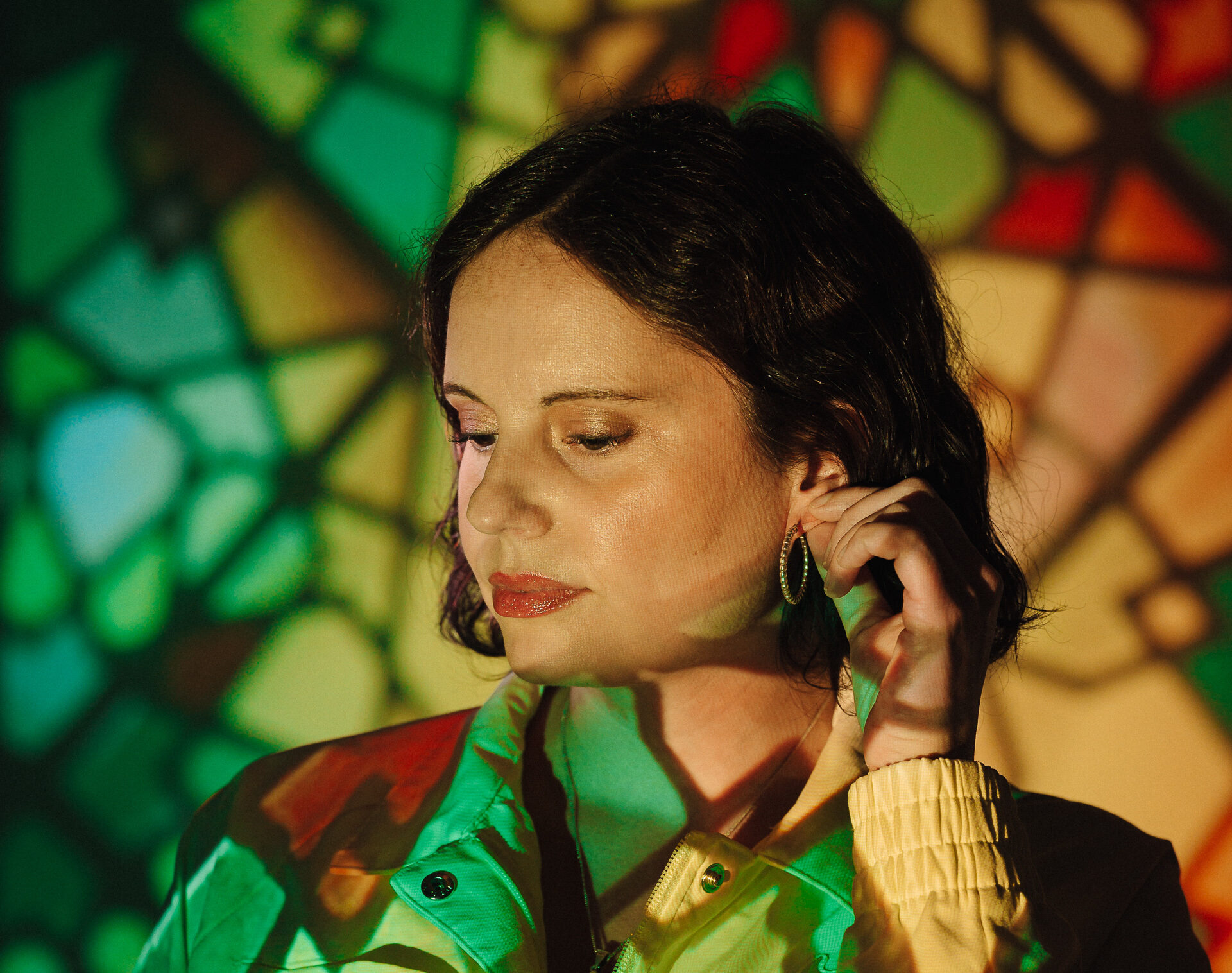
Some songs don’t belong to a solitary moment. They outgrow it, twisting and climbing like a beautiful vine, until they drift off into the universe somewhere, collecting new meanings with the passage of time. Finding people exactly when they’re needed. Music has this strange way of wandering off. An artist might write it, but give it enough time and it’ll find its own people, its own memories, its own meaning.
Few voices in drum & bass have travelled quite as far as Riya’s. Honeyed, soulful and, when speaking, carrying just the faintest hint of her Birmingham roots. She’s spent well over a decade soundtracking countless moments on dancefloors and in headphones alike. And in more recent years- helping redefine what it means to be a vocalist in the genre. Long before it became commonplace, she was carving out space for singers to stand as artists in their own right. Now, eleven years on from her debut album, This Is Riyality finds her exactly where she needs to be: reflective, grounded and writing from an open place.
We speak about grief, healing, motherhood, imposter syndrome, sound as therapy and the winding path that led her to V Recordings. More than anything, we speak about connection. Because whether it’s a roadblock party, a deeply personal lyric or simply a voice that stays with you long after the music fades, that’s always been at the heart of what Riya creates.
Hey, how are you?
I’m really good, lots of big news with the album coming out and I’ve found out I’ll be becoming a mum. Lots going on but I’m doing really well.
Let’s get into the music. Over the years vocalists have progressively become more recognised in their own right. How have you seen this change over the years? Is there still more to be done?
Yes, there is more to do, but I don’t have a straight answer on that. It feels like there is more space now for vocalists now than there ever has been which is a good thing, although some, and especially MCs (I consider them vocalists too) would say there’s a way to go still.
When I started, there wasn’t really a pathway for vocalists to perform as artists in their own right. I felt I had to become a host and start DJing just to get onto line-ups and create opportunities for myself. Live PAs were often seen as something that would kill the energy of a rave, so they just weren’t booked.
Thankfully, that’s changed. There are far more vocalists doing their own shows, performing with DJs, releasing albums under their own names and being recognised beyond just a ‘feat.’ credit. That’s been one of the biggest shifts I’ve seen.
I do think there’s still room to grow, though. Collaboration should feel like a partnership. I’ve had situations where I’ve only found out a track was being released at the last minute or wasn’t included in conversations about marketing, despite being half of the record creatively. To be fair, I’ve experienced the opposite too, so I don’t think that’s unique to one side—it just shows how important communication is.
I’d also love to see more opportunities for emerging talent in general. Sometimes line-ups can feel quite repetitive because promoters naturally rely on established names. It would be exciting to see more space for new vocalists, producers and DJs to come through, because that’s how the scene keeps evolving.
You were getting booked long before the scene proactivly pushed for more gender equal line ups…
Yeah, I was getting booked before that. But I never really saw it as a male/female thing. I always looked at it through the lens of being a vocalist.
I’ll go back a bit—I was actually a DJ before I was a songwriter. I started DJing when I was 16, but I didn’t pursue it as much because my songwriting really took off, so naturally that became my focus.
When my first album came out, though, I reached a point where I realised I had to take control of my own career. Up until then, most of my gigs had been hosting for other people. It started to feel strange because I’d written all these songs, yet the only opportunity I’d get to perform them was maybe one track during someone else’s DJ set, if they chose to play it. And that’s completely their prerogative—they’d been booked as the artist that night, and I’d been booked as the host.
At the time, there also wasn’t much belief in live PAs. The feeling was that promoters didn’t really know where they fitted into a drum & bass night, and there wasn’t much space for vocalists to perform their own music. So I asked myself, how do I change that? How do I create a place where I can be seen and recognised as an artist in my own right, with control over my own set?
That’s what led me back to DJing. It wasn’t about wanting to be a DJ again for the sake of it—it was about creating a platform for my own music. It meant I could build my own sets, perform my own songs and shape the experience myself, instead of relying on someone else to give me five minutes in their set.
I wasn’t thinking, I’m doing this to pave the way for other people. I was simply trying to create the opportunities that didn’t really exist for me at the time. But what happened afterwards was really special. I started hearing from other women and vocalists who’d seen me doing it and realised it was an option for them too. There were already MCs who’d crossed over into DJing, but it felt like seeing a vocalist do it in that way resonated with a lot of singers. Quite a few reached out asking for advice or guidance, and that’s something I’m really proud of.
When you changed from being a host to the main artist, how did the agencies and promoters respond?
The norm in rave culture has always been that you book a DJ, you book an MC, and maybe you have a guest PA from time to time. That’s what had always worked, so when you try something different it naturally ruffles a few feathers. That’s what happens when you disrupt a format people are used to.
When I moved from hosting into becoming the main artist, there was definitely some uncertainty because people hadn’t really seen a vocalist presenting their own show in that way before. Some promoters were asking, “How’s this going to work?” or “Why are you doing this?” because they were so used to the traditional DJ and MC setup.
Even on the technical side, it was a learning curve. Some sound engineers didn’t really understand what I was trying to do, and there were times where I felt like I had to educate people about what the show actually was. I wasn’t an MC coming in to hype someone else’s set—I was performing my own songs and building a live show around them.
Even convincing my own agent took time because people were trying to fit it into a format they already understood. They were thinking, “Where does the MC fit?” or “Who is going to hype the crowd?” But I wasn’t trying to recreate the DJ/MC dynamic. I was creating something different.
The biggest thing that changed people’s minds wasn’t me explaining it—it was audiences responding to it. Once promoters could see that people enjoyed it, that the energy was there and that it worked, it became much easier. Now, because more vocalists are doing their own shows, the format is much more understood.
I think the exciting thing is that what felt unusual then has become much more normal now. There are more vocalists creating their own sets, performing their own music and being recognised as artists in their own right, rather than only being a guest within someone else’s performance.
Let’s hope that we can move into more of an authentic space…
II think it is happening. I was reading about younger generations putting on listening parties and creating these smaller, more curated spaces where the focus is on the experience and the community rather than just the size of the crowd. They want to come together, listen to music properly, connect with people and, in some cases, step away from their phones.
I think there’s something happening where people are starting to question what they actually want from these experiences. For a while, everything became about capturing the moment—getting the video, proving you were there, sharing it online. And I think people are starting to ask, “Is that actually what this is about? Are we missing something by trying to document everything?”
Because ultimately, coming together to dance is a really powerful thing. It’s a connection, it’s a release, and it can be a healing space. That’s always been one of the most beautiful things about rave culture—the feeling of being part of something bigger than yourself.
I think people are rediscovering that. They’re looking for more meaningful experiences, whether that’s a small listening session, a more intimate club night or a bigger rave where the focus is genuinely on the music and the collective experience. It feels like there’s a desire to get back to the heart of why people came together in the first place.
Let’s talk about your music, first album was in 2015. 11 years! Can you believe it?
Actually no, it doesn’t feel like it’s been that long. It feels like I’ve just constantly been releasing music and working. Time really has flown.
I always knew I wanted to make another album. The first one took around two and a half years because I was working a full-time job at the time, so it was something I was building alongside everything else. When it came out, it was a really special moment. It was nominated for a lot of awards, I won a couple of Best Vocalist awards, and I was really proud of what I’d created.
But the idea of doing it all again was quite daunting. The first album took so much energy—bringing everyone together, writing, recording, getting the right people involved, finding the right label—and for a while the thought of repeating that process felt overwhelming. Then life happened, and I got pulled into different things. It just didn’t feel like the right time.
A few years ago, though, I had that feeling of, “No, it’s time now.” A lot had happened in my life, and I had a lot I wanted to express. Music has always been a form of therapy for me, and songwriting has always been how I process things.
Tom, my partner, really encouraged me to go for it. He helped keep me motivated throughout the process and was involved in writing many of the tracks too—he’s an incredible lyricist. He was a huge part of helping me bring this project to life.
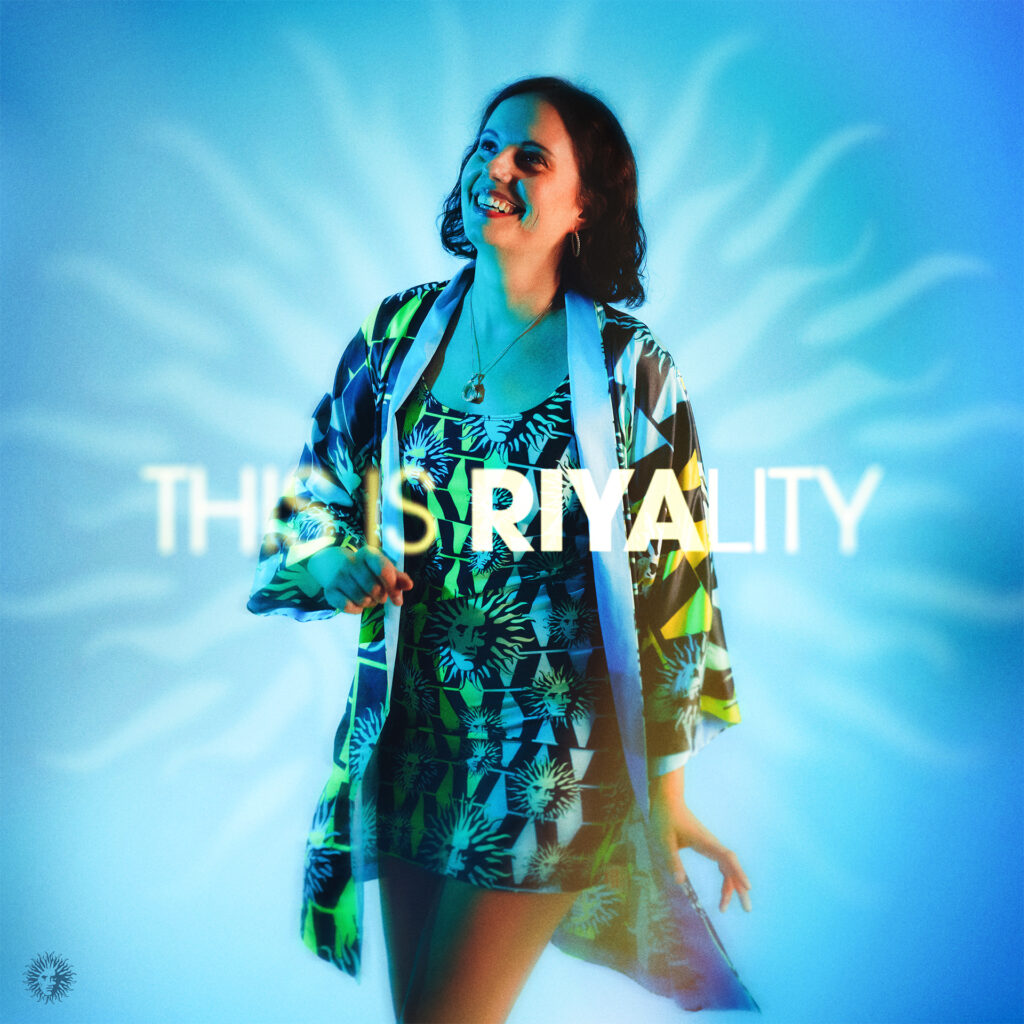
The album is called This Is Riyality, and it’s really based on looking back over the last five to seven years of my life. I think the biggest difference between this album and my first one is where I was emotionally when I made them.
The first album was much more reflective and came from a more difficult, introspective place. This album still talks about the lows, but it also reflects growth, change and the highs that come with life. It feels like a much more complete picture of who I am now.
There’s also a really strong soulful thread running through the album, which was a conscious choice. I wanted to bring in more live instrumentation, live piano and those organic elements because they connect so much with how I feel about music.
So yes, it’s been a long time between albums, but it doesn’t feel like that. It feels like the right time. And I’m so happy that it’s coming out on one of my all-time favourite labels, V Recordings, which makes it even more special.
So talk to us about how you approached Bryan Gee …
I’ve listened to V since I was about 16 or 17. I absolutely love Bryan, and I grew up listening to so many of his sets and tape packs. V has always been such an important label to me.
I’d already done a few tracks with V artists. Alibi asked me to do a track for his album, and Paul T and Edward Oberon had also asked me for music. So there was already a connection there, but I never really thought I could just approach Bryan and say, “I want to do an album on V.” I didn’t know him well enough, and I think a lot of it was probably imposter syndrome and a lack of self-belief.
But those tracks with V artists gave me an entry point. I kept thinking, every time I’m playing music in my sets, I’m playing V tunes. I’m always drawn back to that sound and that label. I remember thinking, “It has to be V. I’ve got to find a way to make this happen.”
Tom was also a huge part of encouraging me. He kept saying, “Just go for it,” and gave me that confidence boost when I probably needed it.
Then I was at Hospitality On The Beach with Tom, and me and Bryan ended up on the same boat party. I was quite nervous because I have so much respect for him and the label. After a few drinks, I finally got the courage to say, “Bryan, I really want to do an album on V.”
And he just looked at me and said, “Yeah? Come on then, Ri. You know I love you, Ri. I’ve been waiting. When are we doing this?”
I was so happy. I couldn’t believe it. It was one of those moments where you realise you’ve probably been overthinking something for a long time.
Then about five months later, the whole thing was done. I’d been thinking about it for so long that when the opportunity came, it all just came together. I reached out to producers, told them the album was going to be on V, and everyone just came through. It was amazing to see how much people believed in the project.
And again, Tom was a huge support throughout the whole process.
The first album felt like pulling teeth in comparison. There was so much organising, so much chasing and so many pieces to put together. This one felt completely different. Everyone was excited, everyone brought their ideas, and it all flowed so naturally. That made it such an enjoyable experience.
How much creative input does Bryan have over the album?
Bryan was there for anything that I needed support with, but creatively he gave me a lot of freedom. He said to me, “I trust you. Go and make what you want to make. Obviously check in with me, but I trust you to make the bangers.”
And that meant a lot because he respected me as an artist and respected everything I’d already done. He wasn’t trying to change my sound or steer me in a certain direction. He gave me the space to make the album I wanted to make.
I did keep checking in with him throughout the process, sending him tracks and getting his thoughts, but honestly there weren’t really any songs where he came back and said no. I already had about 14 tracks, but I kept writing and making more because I was always thinking, “What if I can make something better? What if the next one is the one?”
Bryan actually said to me that he didn’t necessarily think the newer ones were better than what I already had, which was a good reminder that sometimes as an artist you can keep chasing something when you’ve already created something special.
He was just incredibly supportive. He let me be an artist, trusted my instincts and completely backed the vision for the album. That level of trust gave me a lot of confidence.
We’ve touched on the lyrical content already, it’s personal and quite moving to listen to. Does it feel cathartic to write?
It’s always been like therapy for me. I think that’s why I need something real to have happened before I can write about it, because songwriting is how I process things. It gives me a way to take something that’s happened, understand it, and work through the emotions around it.
Bryan actually asked me recently whether I find it difficult writing such personal songs, and strangely, I don’t. Like you said, I find it cathartic. The writing process is almost like getting it out of my head and putting it somewhere else.
The strange thing is, it’s not always when I’m writing that the emotion hits me. I can almost separate myself from it while I’m creating. It’s when the track is finished, I listen back to it, or I have to perform it, that the full emotion comes back and hits me.
There’s a song on the album with Etherwood called Sapphire Skies, which is about my mum passing away. It’s a tribute to her, and it’s filled with all these little details about the things she loved. Sapphire was her stone, so even the title has that connection.
When I wrote it, I think I just needed to get those feelings out. But then when I sing it, it’s completely different. The emotion comes rushing back. Even now talking about it, I feel emotional. I was rehearsing it the other day and I just couldn’t stop crying.
It’s quite strange because when I’m writing, I can be quite detached and focused on creating the song. But when I have to step into it as a performer and share it with other people, that’s when the full meaning of it really hits me.
Do you sometimes take a tune out of a set because of this?
Yeah sometimes, it depends how I’m doing on the day. I’ve been able to sing it recently, but a couple of weeks ago- I was just too emotional. I’m pregnant, there was no way it was happening.
Is it weird that other people are hearing your inner voice?
Not really. I think we all have that inner voice, and we all go through difficult things in life. For me, when I’m putting those thoughts into music, there’s something comforting in knowing that someone else might hear it and recognise a part of themselves in it.
It might not be the exact same situation, but a lot of the emotions are universal. Heartbreak, grief, loss, change, growth—we all experience things that connect us as human beings. So although I’m writing about my own life, I know that a lot of people will have gone through something similar, and that actually gives me a sense of relief too.
I don’t really sit there and think too much about what people will think when I’m writing. I’m just trying to be honest and create something that feels right for me. Hopefully people connect with it, and if they don’t, that’s okay too—I’ve still enjoyed the process and it’s meant something to me.
I’ve been really lucky that so many of my songs have resonated with people. The messages I’ve received over the years have been incredible. I’ve had people tell me that a song helped them through a really dark time, or that hearing my music made them feel less alone. When someone tells you that something you created gave them comfort when they needed it, that’s a huge honour.
And I think that’s why I don’t feel afraid of sharing those more vulnerable parts of myself. Somewhere along the way, you realise that being honest about your own experiences can create a connection with someone else. If sharing my thoughts and emotions helps someone feel understood or gives them a moment of comfort, then that’s a really powerful thing.
The only thing I do think about is the people connected to the stories I’m telling. Sometimes I can imagine it’s difficult for someone to hear a song and wonder if it’s about them, especially when the subject matter is personal. I’m always aware that these songs come from real experiences and real relationships, so there’s a balance between being honest about my own life while being mindful of the people who are part of it.
Listening to the album, there’s elements of grief and loss that come through, but also a lot of gratitude. Would you say there’s an overarching theme to this album?
The overarching theme is that it’s my life. That’s why I called it This Is Riyality. It’s not just a collection of songs—it’s my reality, and it’s written chronologically.
If you listen from the beginning to the end, it follows the journey of what happened. The catalyst for the whole album was my mum’s passing, and that was the starting point for so much change in my life.
When you lose someone, it makes you look at life and death differently. You start questioning things: what’s working, what isn’t working, what makes you happy, and whether you’re truly living the life you want to live. It really made me realise that life is precious, and you have to make choices that allow you to be happy and fulfilled.
From that point, everything else unfolded. It led to moving somewhere new, meeting different people, finding new communities and experiencing different parts of myself. The album follows that journey—the grief, the loss, the changes, the challenges, but also the gratitude and the moments of happiness that came afterwards.
So by the end of the album, it’s not that everything is suddenly perfect, but you get to a place where there’s acceptance and appreciation for everything that has happened. It’s about understanding that even through difficult experiences, there can be growth, love and new beginnings.
Can we talk about collaborations?
A lot of the collaborations came from existing relationships, or from people whose music I’ve genuinely loved for a long time.
Some of them were people I’d worked with before. Bladerunner was on my first album, and then he remixed Vices for me and Collette Warren. I’d also worked with Etherwood before, and I knew I wanted to work with him again.
With Sapphire Skies, there was actually a bit of a journey to finding the final version of the track. It’s a really special one because so many people brought something important to it.
Gemma Rose was a huge part of it. She played the piano on the track and brought so much emotion to it. She’s also someone we’ve been supporting through my label, Carnelian Music, alongside Collette Warren, so it felt really special to have her involved in such a personal song.
Technimatic were actually the first people I worked on the track with, and they really understood what the song was about. We were also working on another project together at the time, and that ended up taking priority, so we just couldn’t quite get Sapphire Skies finished in that moment.
Then I showed the track to Etherwood, and he brought something really special to it. He took the foundations—the vocals, the piano and the emotion behind the song—and elevated it in his own way. He put so much time and care into the production, and it became one of the tracks that took the longest because everyone involved wanted to make sure it honoured what the song represented.
That’s what I love about collaborations. Sometimes a song finds its way through different people and different moments before it becomes what it’s meant to be. Everyone who touched Sapphire Skies played a part in getting it to where it is.
Tom Voice MC was always going to be part of this album too. Obviously he’s my partner, but more importantly, I genuinely rate him as a lyricist and a performer. He’s an incredible writer, and he’s been such a big part of this project, so it felt completely natural that he would be involved creatively as well.
A lot of the other collaborations came from people I genuinely wanted to work with, like Crystal Clear. He’s just a man of the moment, and I’m a raver really—I love that sound. I love his music and what he’s bringing to the scene. There isn’t one person on this album who I’m not a fan of. Every collaboration came from a genuine love and respect for what they do.
When I look back at the first album and then this one, especially with the collaborations with artists like Collette Warren, we’ve covered a lot of drum & bass and so many different subgenres. For this album I was thinking about what I’d already explored, but also asking myself, “Who haven’t I worked with yet? Who could bring something different to this project?”
It was really about finding the right people for each song and allowing them to bring their own identity while still serving the story of the album.
You’ve been successful for a long time. You’re very well loved and respected. Do you think that level of love and respect affects your way of working?
It probably affected me more at the start. When Open Page came out, the reaction was incredible. Everyone was talking about it, everyone was playing it, and I remember thinking, “How am I ever going to follow that up?”
Then Red Lines and Piano Funk came out and did really well too, and I think I started putting a lot of pressure on myself. I was thinking, “How do I match this? How do I make something that has that same impact?” And I think, in trying to reach that level again, I probably lost my way a little bit.
But over time, I realised that I’m never going to be able to recreate those moments, and actually I shouldn’t try to. Those songs came from a particular time, a particular feeling and a particular moment in my life. That’s the nature of art—you can’t force yourself to recreate something that happened organically.
Now I try to focus on where I am in that moment and make the music that feels honest to me. I can’t predict whether something is going to connect with people or not. In fact, some of the tracks I think are going to be huge don’t always have the reaction I expect, and sometimes the ones I’m less sure about take on a life of their own.
That’s actually been quite freeing because it reminds you that you never really know. All you can do is make the best art you can, be true to yourself and put it out into the world. After that, it’s up to everyone else to decide what it means to them.
You have another connection to sound… Can you tell us a little about that?
It’s another expression of music, really. I do sound healing, which is something that has become a really important part of my life.
The way I try to explain the difference between music and sound healing is that music is organised patterns, melodies, rhythms and hooks that we connect with emotionally. Sound healing is more about the vibration and frequencies of sound itself. It’s not necessarily about a melody or a song structure; it’s about using instruments like singing bowls and gongs to create an environment where people can slow down, relax and reconnect with themselves.
I discovered it because I was really unwell about eight years ago. I was having lots of health issues—stomach problems, problems with my hair, and generally feeling like something wasn’t right. I had lots of tests and the doctors couldn’t find anything specific, and they said that stress seemed to be a big factor.
When I looked at my life at that time, there were a lot of stressful things happening, and I realised I needed to find ways to calm myself and look after myself differently. I happened to be walking around Victoria and saw a poster for a crystal singing bowl session. It sounded interesting, and because there was a musical element to it, I thought, “I’m going to check this out.”
I went along and I was amazed by how relaxed and calm I felt afterwards. It gave me a sense of clarity—I started reflecting on what was working in my life, what wasn’t, and what changes I needed to make. It was such a powerful experience that I kept going back.
Eventually, that led me to train as a sound healing and Reiki practitioner. It changed so much for me, and the more I work with it, the more I understand the importance of balance.
I love that I have both sides of music in my life. I can go to my gigs, dance, rave and experience that incredible energy and release that comes from a crowd. Then I can also go and play bowls and gongs, use my voice in sessions and create a completely different kind of experience for people.
People really respond to the vocal element because the voice is such a powerful instrument. It’s another way of expressing myself and connecting with people.
But actually, music isn’t just part of me—it’s part of all of us. It’s one of the oldest ways we connect, communicate and understand each other. Before we even had words, we had rhythm and sound. There’s something universal about it; it crosses cultures, languages and experiences.
For me, sound is a way of connecting with people. Whether it’s a drum & bass rave, a live performance, songwriting or a sound healing session, it’s all about the same thing: vibration, emotion and connection.
Head to Thisisriyality.com to buy the album, vinyl, and exclusive limited edition merch.