
There’s something deeply satisfying about taking the things that once made you feel small and turning them into something massive.
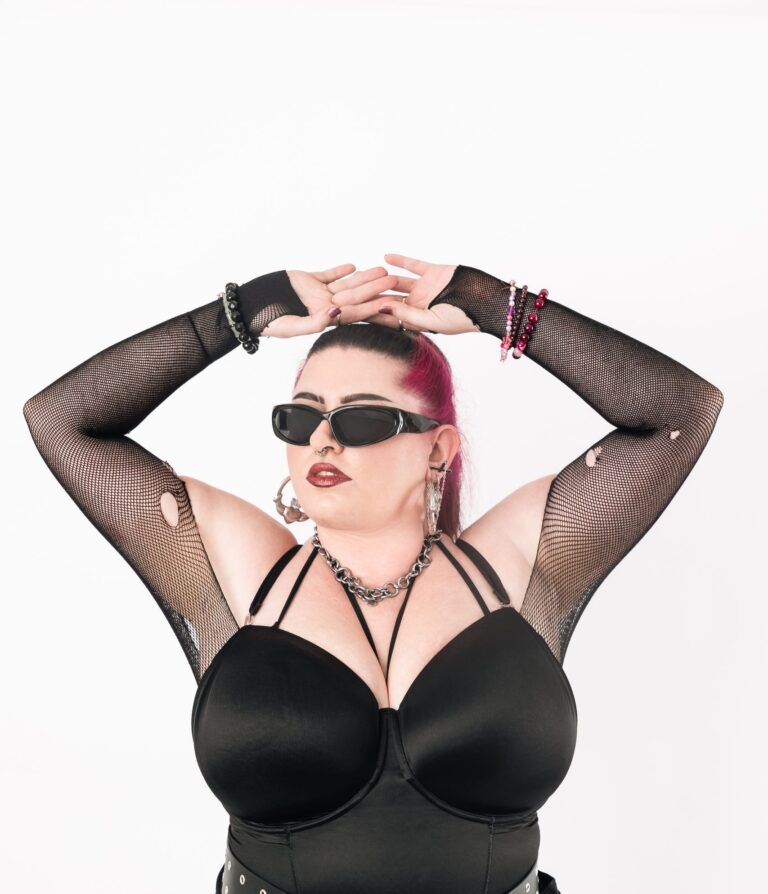
Grief. Injustice. Comparison. Manipulation. Being underestimated. All the not-so-lovely stuff that can quietly grind you down over time. It’s easy to let them win. To let them weaken you. To wallow. To surrender to the sadness, the feeling of not being worthy… Or, you can flip the script entirely and use those very experiences as unapologetic, first-class rocket fuel. Kaitlyn Aurelia Smith did.
Kaitlyn’s brilliant new album RUIN: It’s Not Just Music is – in her own words – ‘a fuck you album – but not to you, for you. Which, quite frankly, says it all.
Known for her beautifully unique world of experimental electronics, intricate synthesis and contemporary composition, Kaitlyn remains unboxable. Her new album RUIN showcases her extraordinary ability to dig deep. Breakbeats in abundance. Physicality. Jungle, drum & bass, all intertwined as she explores grief, femininity, injustice, competition and the process of harnessing your own power.
Don’t get it twisted though – there’s fun amongst the fury. Hidden messages buried beneath basslines. Sassy track titles. A song finished in the middle of a hurricane. A theme of ‘Sonic combat’ – the idea that music can physically hit you without ever laying a finger on you.
Ahead of the release of RUIN: It’s Not Just Music, we caught up with Kaitlyn Aurelia Smith to talk about what it means to be ruined, turning her injustice into power, falling in love with drum & bass, being underestimated as a female engineer and why she chose to premiere some of the most powerful music of her career to an audience who weren’t even allowed to stand up.
Kaitlyn! We read that RUIN is ‘a bit of a fuck you album – but not to you, for you.’ That description is pretty incredible.
That makes me so happy because that was honestly the only thing I ever wanted to say about the album, but then everyone was like, ‘No, say more!’
What was happening in your life, or in the world around you, that made you want to create something more confrontational this time round?
My cousin, who I was really, really close to, passed away. He was really into drum & bass. He was just so obsessed with it. After he passed, I felt like he had woven in and out of my creativity. I feel like he’s constantly inspiring me with little memories that I have of him. The last four years felt like cascading grief. There were all these things falling apart in my life, a lot of emotional abuse, music business abuse, people threatening to ruin my career, and I just kept feeling ruined. That was the word that kept coming into my head: this part of my career was ruined. This is ruined.
Then I moved to Portugal and when I walked around the city, I saw so many things that were architecturally ‘ruined’, but they were so cherished. There were amazing pop-up venues in abandoned buildings and it really inspired me to sit with the concept of ruin. At the same time, I felt like I really needed impact. I couldn’t get enough impact. I kept wanting to feel it on my body.
What other factors played a part in you needing something so cathartic and physical?
I’m a tiny person. I happen to be in a petite body, and there was this building frustration with being underestimated for my size, my gender and my preferences. After processing the amount of manipulation that had happened and feeling taken for granted, it came out in this one gigantic fuck you. There’s so much injustice in the world and so many assumptions. People are talking about it right now with AI and artists – the way people mine artists. It really fueled this music, and it came out really fast. I wrote the whole album within a few days.
I feel like injustice is this double-sided coin where you’re simultaneously shown your value and your worth through your resistance to it. There’s this really beautiful edge of being shown your own power and strength while people are mistreating you.
You wrote the album within a few days. It must’ve just poured out of you…
Yeah. It also came from wanting to make sonic force fields. When I’m listening to tech stuff and breakbeats, I’m always like: Oh, I feel like I can walk in the world and I have a force field on, just because I’m listening to certain types of music. My tour manager always says he loves watching the audience get sonically punched by sound. They’re getting punched and they love it! I love how music has that ability. It can soften someone. It can do so many things without touching them.
I think there’s a reason bass music is getting more and more popular and mainstream. So many people are like, “I need to feel catharsis.”
When you’re making something from such a personal need for catharsis, are you thinking about how that translates to the listener too?
It’s a bit of both. If something comes out of me really fast, I like to have a long time reflecting on it as a listener before deciding something’s done. I’ll take a break from it and then go and listen on a sound system where I get to experience it as a listener.
You mentioned your cousin’s love of drum & bass. Is this the first record where you’ve really explored D&B and breakbeats like this?
Yeah. A lot of the instruments I use are analogue, vintage, rare synthesisers or modular gear, and I feel like the last decade has been learning synthesis and creating whatever feels like the thing I’m learning with those instruments. I feel like I’m now entering an era where I actually get to make the music that I listen to and the music that impacts me the most.
What drum & bass do you love as a listener?
I love a wide range: liquid D&B, jump-up, neurofunk, jungle classics, breakbeat and tech stuff. I also really love singeli, which is a bit faster than drum & bass – like 180 to 300 BPM. It makes me so excited. I go into different genres depending on what aspect of production I want to learn about because I learn so much from all of it. The thing I love about D&B is that it reminds me of dance. If you’re a breakdancer, there’s a construct and everyone is doing a variation on the theme and adding their own style. D&B is like that. We have our theme and we’re all doing variations on it – especially because of the drums.
But mainly I love D&B because of my cousin. You know when someone shows you something and they’re so excited about it that suddenly you’re like, Wow, okay, I love this, because their love is contagious? I’m so grateful to him because I feel like he really shared that with me.
Let’s talk about ‘I Don’t Know What It Is’. There’s something quite sassy about that title. What does the track mean to you?
It is me being sassy! There’s a lot of playfulness and sassiness on the album. That track comes from the ‘fuck you’ and being manipulated as an artist – when people undermine your intelligence and think you’re not paying attention or noticing what’s happening. That’s the: I Don’t Know What It Is. It’s me playing with other people’s projections of me not knowing what’s going on.
Being a female musician, and especially a female engineer, there’s this forced comparison and competition just by being female. I don’t personally feel competitive with anyone. I don’t navigate the world that way. I think there’s enough space for everyone. Early on, people would put me into comparison with other artists just because we happened to be females. Then you mix that with how our culture works now – competing with algorithms and lookalikes and soundalikes. There are actually a lot of hidden messages in the album. There’s spoken word underneath synth lines where there are little comments.
Are there other tracks where those hidden meanings come through?
There’s a song called ‘It’s In Everything You Say’. I wrote it during a hurricane! We had a hurricane in Lisbon and the power went out, but I still had enough battery on my computer to finish the song. There are a lot of sounds in it that really felt like the storm happening outside. That song also came from learning how powerful questions can be. Questions can open people or close people or trigger people. They really reveal things. When I go into a business situation and want to figure out someone’s intentions, I tend to be really quiet at first and ask questions.
Everyone is revealing their truth all the time in what they’re saying. It just takes a little bit of refined listening to hear between the layers.
Which makes ‘I Don’t Know What It Is’ even funnier, because really you do know exactly what’s going on…
Yeah! Exactly.
Is there another track on the album that feels particularly important to you?
‘I Don’t Know What It Is’ is definitely my favourite one to play, but I’m also really excited about Part Two, because there’s a second album. I haven’t shared it yet, but I’m hinting to people that there’s a Part Two. Also, all the songs on this album are in the order they came out of me – the order they were written in. I’ve never done that before. It was really fun to capture the process.
You premiered this music with the London Contemporary Orchestra at the Barbican. Why did you want people to experience it in that environment?
I wanted to do it like that for a specific reason. So much of the feeling I had before making the album was that I felt like I was confined to a seat, but I wanted to move. So I thought it would be interesting to premiere it where it’s super high-energy music with an orchestra – and you have to sit. I brought my lighting designer too, who created timecode with projections and lasers so everything was synced up. I wanted the catharsis to be this shared thing that wasn’t coming from people moving. I can’t speak for other people, but my experience performing it felt like we were all merging in this shared thing. It feels different when we’re all dancing together and feeling the music together. At the Barbican, it felt like we were all orbiting something.
After someone experiences the whole record – all that tension, conflict and release – what do you hope they’re left feeling?
That something got released. Something got validated and released and amplified. There are two phrases in my artist statement that feel really important to me:
Music intended to move the unmoveable.
Music for eyes stuck wide open.
It was intended to have fun with that shock feeling. That’s the impact I hope it’s had on people.