
There is always a strong festive energy that takes over the streets of London at the end of every August, especially as we celebrate a remarkable 60th anniversary of Notting Hill Carnival this year. Honestly, there is nothing quite like it. In the weeks leading up to the bank holiday weekend, the entire city comes alive: sound system warm-ups, after-party lineups dropping daily, and everyone scrambling to lock down their last minute weekend plans. Across West London, the pre-Carnival transformation is already in full swing. The roads are blocked off and houses have been boarded up behind white wooden walls, ready to be bombed with vibrant graffiti throw-ups. As carnival commences, the smoky smell of jerk chicken filling the air is to be expected, and children eagerly prepare to parttake in the steel band competitions, and of course, the sound systems are ready to cause absolute carnage.
And at its core, Notting Hill Carnival wouldn’t be what it is without sound system culture: a tradition born in Jamaica and brought to Britain by the Windrush generation in the 1950s, whose music and speaker culture has directly influeced the UKs multicultural and sonic landscape. Spanning reggae, dub and dancehall, all the way through to hip hop, electro, jungle, drum & bass, garage, dubstep, and grime, these genres and grassroots communities laid the foundations of British bass music that we know and love today. However, when we recall on these histories, whose story are we telling when we celebrate that musical lineage? And who actually gets to be celebrated today?
Women have always been at the heart of this story. From the foundational sounds of Jamaica, pioneers like Sister Nancy, Sonia Pottinger, and Warrior Queen, to the cross-atlantic musical movements in the UK and US, throughout generations, women have selected records, held the microphone, built and run systems, produced music, organised dances, created community spaces, and passed knowledge down through generations. Yet their contributions are still too often treated as a footnote in a history dominated by men. We must create the space to recognise these talents. This is a celebration of those women: the pioneers, selectors, singers, producers, organisers, and DJs who shaped the sound of London, connected global bass culture, and continue to define where UK bass music goes next.
As part of filming the documentary Sisterhood, which will be released later this year, I wanted to explore the recognition and cultural legacy women carry in contemporary sound system spaces across the UK across generations and genres. I sat down with many women from various communities who engage with sound system, from reggae to jungle and dnb, to discuss how they navigate these male-dominated spaces, and how music can also serve as a cultural and political tool against opression.
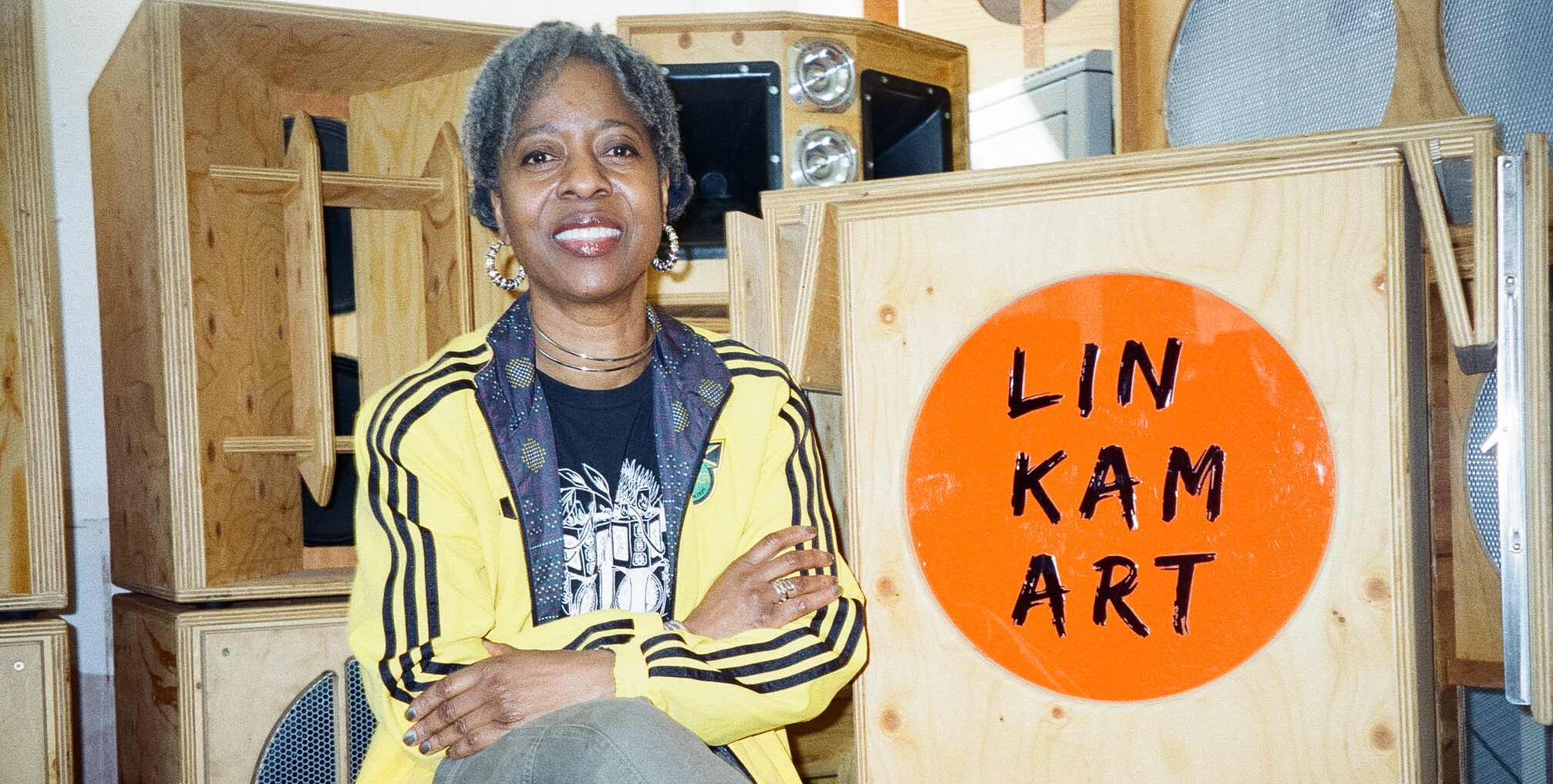
One of the major figures in that story is Linett Kamala, whose musical history is deeply intertwined with Notting Hill Carnival. In 1985, aged just 15, Linett became one of the first women to DJ at Carnival, playing electro and hip-hop alongside a group of male friends. Nearly four decades later, she remains deeply involved in its future. Founding director of Lin Kam Art, and now sitting on the Notting Hill Carnival Board of Directors, she continues to run her own sound system while working to make Carnival safer and more accessible, ensuring women’s stories and contributions remain central to its culture, having collaborated with women across sound system genres, like Dubplate Pearl, DJ Flight, and MC Chickaboo. From being the only girl behind the decks at 15 to shaping how Carnival and sound system culture is run today, her journey reflects how women’s participation has evolved, and why their presence remais ever so vital.
When making Sisterhood, I also wanted to look at how that history continues to shape the music being made today, and how different generations interpret and carry the culture and musical legacy of the Windrush generation forward. VXRGO is one example. A young jungle DJ and producer, she truly embraces the roots and culture of old skool jungle and dnb and has already made her mark through work with the Rupture crew, Mantra and Double O, while appearing alongside established names including DJ Flight and Tim Reaper. Through her wicked soulful productions, her Kool FM residency and her own People’s Corner events, VXRGO is the face of the new generation in jungle/ dnb inspiring and creating spaces for a new wave of young artists to come through. Being a third generation caibbiean in th euk, Her reflections on how her childhood, listening to lovers rock and reggae i the living room through a small diy sound syetm cet up, set the foundations of the lectoric music she kniw has grown to love, drawing a musical ligeagewiothin her family across generation.
Alongside VXRGO, I also sat down with Princess Dej and Shari Soul who shared a similar experience growing up around music. The three have a close friendship and a deep love for music, which came through beautifully when we filmed together at VXRGO’s home. Princess Dej, a London/NYC-based jungle DJ, has a deep-rooted family connection to sound system culture, her auntie sang on a truly 90s track for jungle production legend Lloydie Crucial, giving her a deeply personal relationship with the music she cherishes and plays today, ranging from jungle to soul and soca. On the other hand, South London-based Shari Soul runs Home Radio, a community-led events platform, and continues to champion Caribbean sound system culture through intergenerational connections. This includes her well-established Ludi Club events, which were inspired by her Jamaican grandmother as a way to connect with others in her local community. Sitting with all three of them together offered a refreshing perspective on what sisterhood is about: the friendships that form around music, the knowledge shared between generations, and the networks women build within scenes that have historically been male-dominated.
And of course, this lineage doesn’t stop at jungle. Lady Passion has long been a vital figure championing the underground US and UK house and garage sounds. Collecting vinyl since the age of 11, her skills have been honed by years of dedicated digging. Her strict, dubplate-led selections on Rinse FM showcase the direct, uncompromised lineage of UKG and house music, championing the productions of Donna Dee and close friend Jeremy Sylvester. Alongside her brother, DJ Perception, she built the Moodswing community hub in South London. Her sets blend the spaces where garage, ragga, and jungle constantly collide and feed into each other, bridging cross-continental influences.
The influence that sound system culture has brought also reverberates globally, drawing international selectors directly into the UK bass hemisphere, where they operate alongside the finest homegrown talent. LA-born and raised producer and DJ Introspekt, alongside South East London’s own re:ni, are actively subverting traditional styles of dubstep and garage. Moving away from a typically aggressive, hyper-masculine approach to heavy basslines, they consciously channel a deep, sensual, and spiritual energy back into the music, a sound that is revitalising modern dubstep. This renaissance is perfectly captured by their alignment with the legendary, foundational label Tempa, which hosted the both of them at Phonica Records to celebrate Introspekt’s highly anticipated album, Moving The Center.
Though firmly London-based, Mia Koden injects this same modern vitality into the scene, matching that high-octane energy with a distinct, bass-heavy weight. Earlier this year, grassroots community venue and radio station Sister Midnight hosted a vinyl listening session at The Standard Hotel, where both Mia Koden and Linett Kamala were invited to share a deep archive of their musical lineage. While Kamala showcased an evocative tribute to women in trip-hop, Mia Koden provided a special insight into the pioneering women who shaped her own multi-genre inspiration. Her selection journeyed from Sonia Pottinger’s foundational reggae productions in Jamaica to the iconic release of Nia & Natty’s “One Love Style” and all the way to Nina Simone. This well-rounded, deep-digging musical palette is vibrantly evident in her own self-released productions, where low-end pressure seamlessly synthesises with an expansive sonic history.
Finally, I would like to mention Brooklyn selector Ayanna Heaven, who truly and authentically celebrates the transatlantic bass influence of Jamaican dancehall, which grew prominent in the 1980s in both NYC and London. While her sets are usually fully rooted in reggae and dancehall, as frequently heard on her residency for Brooklyn’s The Lot Radio, her recent London appearances have seen her also delve into UK funky, bruk, and jungle. Her massive, high-energy terrace set at Jumbi in Peckham, shared alongside South London regular JJAMZ, earlier this month proved how interlinked the Caribbean sounds really are across the atlantic. Co-founded by Bradley Zero and Nathanael Williams, Jumbi serves as a cultural hub for the Afro-Caribbean diaspora, making it the ideal setting for Ayanna Heaven to weave together dancehall, UK funky, bruk, and jungle.
So, back to sound-system culture and Carnival. Although I haven’t had the privilege of speaking to every woman whose work inspires me, I carry their contributions with me as a woman navigating sound-system culture myself in todays context, whilst drawing on the histories and traditions, exploring everything from jungle to lovers rock. And making Sisterhood has made one thing certainly transparent, this culture is about far more than music. It is about family, legacy, history, relationships, representation, and legacy. And women have been at the heart of all of it. This music has had a global impact because the culture behind it has always travelled. So as we approach another Carnival, let’s give flowers where they are due. Respect the women who built it, the women still carrying it, and the women coming through next. Big up each and every one.