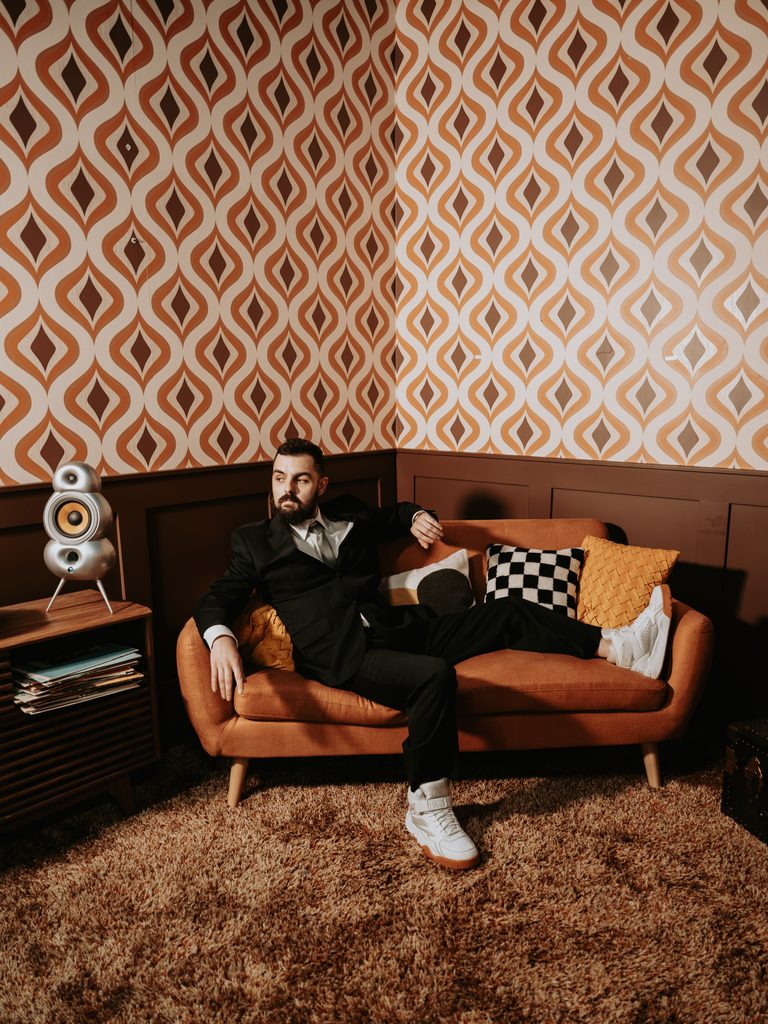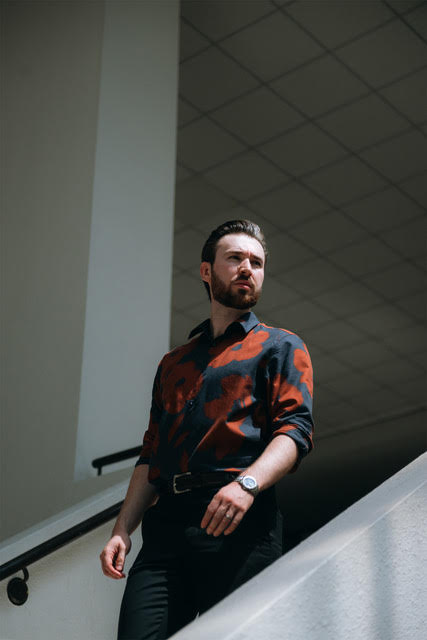
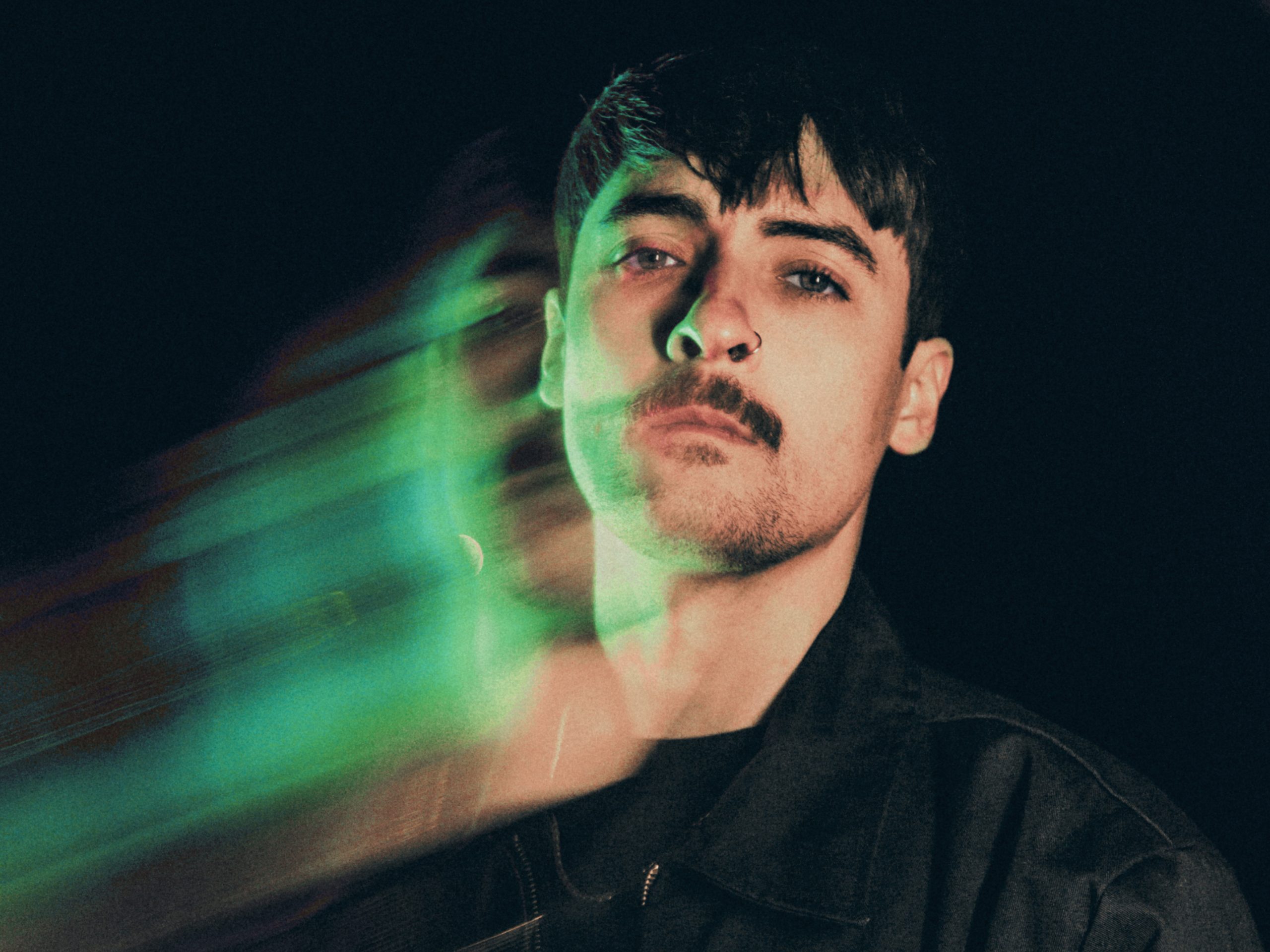
Polished yet viscerally raw and provocatively uncompromising. With his second album Now or Never Justin Hawkes proves why he is yet again pushing the envelope of North American drum and bass culture.
From cinematic storytelling rooted in pivotal personal chapters to a versatile technical execution, Hawkes is unafraid of going against the grain, holistically reshaping his perspective and sidestepping the predictable traps of an algorithmic scene.
The second album, released through Drumcaste Collective, is officially out now on all platforms and delivers a no-holds-barred approach across both sonic and philosophical dimensions.
For those looking to peer beneath the surface of such an ambitious body of work, this deeply personal interview offers a rare glimpse into the mind of an artist who has spent the journey consolidating life’s biggest questions.
Unafraid to share universal truths, Justin opens up about how aligning his consciousness with introspection and quietude helped him transcend patterns of the past and fully embrace his creative purpose. Dig in.
The album is officially out everywhere, but you released it early and exclusively on Bandcamp as a pay-what-you-want experience. What was the decision behind that?
In my opinion, the way that the streaming industry works right now is getting to be way too volumetric and losing the human approach behind it, especially as we are now seeing so much saturation with AI music. People are frustrated that they’re being delivered AI songs all the time. There’s a lot less trust in music now that most people cannot even really differentiate between AI music and non-AI music. That’s why I really wanted to offer something that was outside of the typical streaming approach that rewards people for going to a more human-centered platform.
Artists and labels that offer music on Bandcamp retain a much higher revenue value per purchase; one singular dollar purchase of this album generates as much money as around 250 streams on Spotify and other similar streaming platforms. That is a huge, huge number that I don’t think many people realize the impact of. I have had around 300 people support the album on Bandcamp at a name-your-price level already who have generated the same equivalent revenue as half a million Spotify streams, despite it only coming from 300 people!
I also think it’s really important for people to own their music and own their media these days, especially now that society is seeing that streaming is just renting with another name. I wanted to offer this album in a way where the people who go to Bandcamp can own this music without money feeling prohibitive to the art, and choosing how you contribute. You could download it for free if you really wanted to. I thought it would be special to do something early and exclusive for people who really care about this music and my project, but also to create a landmark for the future I am hopeful to see in the music world.
Could you tell us a bit more about the initial idea that got the album started, and how it began to develop from there?
Now or Never really tries to capture a journey of transcendence, a kind of spiritual journey that I have experienced the last few years. My first album, Existential, asks questions like “what am I passionate about in my life that manifests in music?” Now or Never explores more deeply: “why do I have these passions?” Why do those intrinsic natures in my personality exist? Part of this answer is that it feels very possible this is not my first life, in an incarnative sense, and I feel strongly that this isn’t.
A lot of my core natures feel informed from other sources that I can’t explain, that feel outside of my present human experience. I don’t believe that they were things that I lived through in this life. I think they were things that I lived through in other lives that felt so deeply important to my soul, to the person I am behind my body, that they carried over my attunement to those passions and values.
While I was writing Now or Never, I decided to create each of these songs as a metaphor to those developmental states, as if each one was a past life where I learned something about myself and realized something on the way that informs this current life of mine. All of these big questions manifested into a really, really strong awakening experience for me, where I felt so deeply that I had experienced a collective consciousness that distills through art and from our spirit into our human lives. Now or Never is inspired by this realization within my own life, especially as it relates to the world and people around me.
Was it a matter of synchronicities coming together?
Oh, yes. Lots of synchronicities. The feeling that you’ve been here before, the feeling of not just living deja vu, but of recognition of familiar energies around you and meeting with kindred people who feel like you’ve just known them your whole life. It began to change the way I saw the world and the way I interacted with the world. This shift in my life was an incredibly peaceful and positive realization I’m continually so thankful for.
I called the album Now or Never because that title is metaphorically the reason this experience began. I have arrived at this point in my life now, where I’m a musician pursuing my artistic dreams and personal freedom, but the reason I got here was an inflection point a very long time ago when I first met my wife. At some point in my early relationship, I had to make a choice that changed my life absolutely forever. It was a choice whether to leave without confessing my feelings or to follow my heart and tell her that I loved her; the “it’s now or never” moment.
That choice changed my life permanently and connected me so much deeper to my true self I have always strived for. The Now or Never aspect is a bit like taking a leap of faith at all times, trusting that your deepest self knows what should be happening, and listening to your deepest self rather than the world around you and the expectations placed on you by other people and society.
You mentioned your introspection about the album and how it captures a complete cycle of time and transcendence. How do you actually translate that into music?
I had to go down a journey of where this started for me. Chandelier, for example, was a great beginning for this album because it starts in a place that feels very dark and defensive. It feels foreboding, like huge things are wrong in the world, which feels totally antithetical to our natural authentic state of love and autonomy.
So many people are experiencing cruelty, oppression, enslavement, and war, and that’s so opposite to our true nature. Chandelier experiences that depth of struggle and fires back: I want this system to collapse. To me, the chandelier represents the luxury and wealth and systemic separation a small group of people hold over everyone below them, the power structure at the pinnacle of a world run by artificial scarcity and resource hoarding.
I saw that chandelier as a representation of absurd wealth and radical inequality that people experience as a result of a system where currency and aristocracy ultimately rules everything. I deeply wanted this system to crash and shatter. Chandelier captures this raw totalitarian energy crashing and burning. It represents the anger and angst that controlled me while I felt hopeless within that structure, and the eventual fracture in the system as it collapses under its own weight of greed and materialism. This song felt like my first awakening to the structure of the world as we know it.
So the chandelier represents the shiny thing we often chase when people talk about success, status, and possessions, which oftentimes eludes us?
Absolutely, it’s a symbol of status and systemic wealth hoarding, meanwhile people all around go hungry. I wanted to use the metaphor of a chandelier breaking and falling down and raining crystal because I believe that systems of oppression eventually all fall; it just takes enough time and cruelty and massive inequality for the system to collapse on itself.
That song really represented the power of this new realization I had a long time ago, and it moves into Slipping, Space Elevator, and Stomp in a way that models my course of self-development. When I first awoke to these concepts, it began me questioning really everything. Such as with Slipping: am I with the right person, or am I falling into something that isn’t good for me? That was something I had to discover for myself.
Next is Space Elevator: what am I pursuing in this life? Is it climbing a ladder to be the biggest, baddest dude around and get fame and money? Because no, that all spirals out of control one day, kind of like this race towards tech superiority. When we maximize constantly without reconnecting to our human nature and the reason we do things, things go off the rails. This energy transitions in the tracklist: I stop and think, where is the human energy?
That’s where I discovered dance and drum and bass, and felt how the human interface of rhythm and connection with each other brought me forward. The rave really changed my life, and connected me to other people’s synchronized energy, such as in Stomp. Night follows, representing the realisation that I am tuned for the ritual connection of the nighttime that comes with freedom and creativity, introspection and deeper connection to yourself.
This introspection led to Two Faced, a story about change and growing up and realizing you aren’t what everyone expects you to be, which sometimes takes a long time for other people (or yourself) to adjust to…But how it’s necessary in order for you to be your most true self.
At this point in the album, Now or Never shines through—it represents the time in my life where I first met my wife, and how sometimes you meet a person that resonates with you so intensely that you realize they might not be just from this human experience; they might be somebody connected to you deeply in your soul. I wrote that song to embody the moment I decided I needed to follow that feeling I couldn’t explain, that this was “it”, and after that moment my life changed course forever.
The Messenger follows, which is sort of like a new sense of profound urgency I developed in response to feeling like I could lose something so meaningful to me, where I felt that I needed to call to awareness the systems in place from Chandelier and the control over our reality that these systems have. The Messenger feels like a warning, like a hypervigilance I experienced after realizing too much.
Show Me How follows represents a recentering I went through. Moving inside myself where I became understanding of the power of meditation and self-supported peace, seeking inwards. Removing yourself from an environment that’s always attacking your consciousness; news on the internet, for example, presenting constant stimulation of fear and anger we collect inside, when our internal state doesn’t naturally create these things.
Stimuli-response taking over, reinforcing the neural networks leaning towards our animal nature.
Exactly. Basically undoing the illusion placed on our consciousness by the internet and constant external stimulus and expectations, like feeling in a rush for time or money, or feeling like you should be doing something at all times in order to be “productive”. Show Me How is about connecting to the meditative abilities we have that reveal much deeper, quieter worlds within and outside of ourselves, which ground us to our more natural state of being.
From a more practical standpoint, how did you come in touch with meditation and how did that develop into something that’s inherently a part of your daily life these days?
It only became a thing for me within the last few years. I had never really given weight to meditative practices, but a few deep experiences helped me realize the power of being still and letting your mind wander. Reducing your inputs and outside stimulation really unlocks the power of your mind and the worlds within that. I have always walked the earth intuitively and perceptively, but I was always observing the outside world rather than returning to myself and observing the inside world and letting my imagination really express itself by quieting all my stimuli.
People genuinely do not realize the power of the human mind and the human body as well. We have straight up super powers within us. We are rarely able to access them when our minds are living solely in what I call “rent paying reality”. That is, the kind of reality where everything we do is focused on our survival, our next attempt to meet our needs, and work-life obligations like having to work constantly to have a roof over our heads and afford food. It compels us to think restrictively and keeps us caged to physical reality.
When you are able to reduce the stimulus on you that is saying “I need to go, go, go, or else!”, you can re-tune your senses to be so much more powerful, so much more intuitive and perceptive and connective. When we are all in a survival mindset, we’re always kind of repelling against each other in order to find our own space; but that’s just this scarcity system programming at work rather than the natural state of interconnectivity we start with.
There’s the ego at play. It’s functional to a certain extent, but it divides everybody. Like you are a separate island, while it’s actually one big field of energy.
Yes, absolutely. Tethys represents this huge moment of awakening for me after I learned to quiet my mind and seek inwards, and this wave of awareness that ensued. My awareness changed, my resonant energy changed. I was able to connect with people on a similar wavelength in a way that feels almost magnetic, and recognize these energies around me and my place within them. It helped enable me to clearly see this truth that life is so much bigger than physical reality, and that we all share a mysterious invisible connection.
These are some quite existential matters we discuss. It’s a fine balance. Some mathematicians actually made models suggesting the positive consciousness of a few holds us from collectively slipping off the edge.
I do think people share a collective consciousness we can tap into if we learn how. I would guess that’s how many different groups of people, all across the world, have come to really similar conclusions on specific ideas independently of each other. Information seems to be able to distill through sudden gnosis, if conditions are met.
Tethys was the sudden distillation of knowledge, and it felt like a mysterious gift that brought me towards Wayward. Wayward represents the feeling of having such an awareness change in your life where you’ve realized something that doesn’t fit within the environment that you live in, which makes you feel like an outlier, makes you feel alone, and makes you feel like you’re not welcome anymore in that community you existed in. You aren’t alone, it just feels very heavy when you think you are, and sometimes you need to seek a new place to exist naturally within.
But isn’t that part of the process of actually becoming your own person? Because you have to go away from the herd to find yourself. A lot of people never get away from that, so they’re just running the programming.
You said it. The call of the sojourner to go where they feel called to and become who they need to be. It’s the step that you take to move towards your truest self. You might have to remove yourself from the environment you were in, you might have to recognize who you are inside, when everyone else has these expectations for who they think you should be weighing you down, and face that and make a choice.
But realizing while you’re there that you’re never alone; you are accompanied in spirit by an endless amount of people who have done this as well before you—that is the beauty of that song to me.
Ultimately we are alone on this journey, but at the same time we never are. You have to sometimes dig very deep, until the point you actually learn to gracefully fall apart, before building it all back together. And that’s an art.
Absolutely. Starting over and enduring huge, magnificent changes is almost never easy, unless they are something you chose for yourself and really needed. You can only really see that looking backwards sometimes, knowing that it was the right choice for yourself. Wayward represents the loneliness felt before you come to that conclusion and make that choice for yourself to be who you really feel like you should be.
Many nonwestern philosophies believe that nothingness became everything. And by meditating, you tap into that field of nothingness and what essentially is infinite potential. How do you resonate with that?
It’s just more of a case where you’ve removed yourself from the stimulus of everything in the physical realm to observe and enter stillness. That is where the subtlety and depth of the nonphysical realms make their appearance and interact with us.
Our ‘everything’ these days too often are material things, while many people are now choosing to have space for the immaterial things that actually matter, instead of chasing anything that’s superficially important.
Status and currency and financial value exist as a means to distinguish someone over someone else. All of these material things ultimately separate us from each other and the connection that exists between everything. When you can reach your highest individual self, recognition of your best as a person and as a soul, you realize you don’t need nearly anything. You are entirely self-supported and self-loved, and that makes you able to love and support others with zero expectations. Unconditional love needs nothing in return. It can give forever. Loving yourself at your core without any material things or ego in your way makes your foundation stable to become your best, your highest self, and that existence spans far beyond our physical limits.
You get what you give, right? As the lyrics go.
Ultimately it creates this cycle, this purpose in life which I tried to demonstrate in Reach. Once you attempt to attain your highest self with deep appreciation and gratitude, you can live with a peace that exists far beyond the physical, where I no longer fear death at all. Because maybe my physical body might die, but my spirit and my soul and my consciousness feels like it will live forever limitlessly. And after, our innate energy rejoins the universe.
It gets recycled. Nothing gets lost like that.
Nothing’s lost, we’re still there in a different form, we’re just choosing this human journey. And every journey is incredibly challenging in different ways. But that’s part of the cycle of self-realization: recognizing who you are at your truest core, peeling back every layer.
No matter how hard the human experience always is, it’s so worth it if we listen to ourselves and learn who we are and strive to be that fully within the environment we exist within. I feel like I completed the cycle with Reach. Like, Reach ends where it begins. It reverses the first moments of Chandelier. And the cycle only starts again when you press play again. And that’s why this continuous album format is such an expression of this concept of continuity and a cycle of transcendence.
What were the technical goals to make this album, and how did those play out?
A core part of drum and bass to me is its expressive ability, its ability to be anything; it can be very soft, it can be obliterative, insanely hard, slow, magical, intense, surgical, you name it. Creating a work that really went through so many sonic niches while writing these songs helped to reflect the point behind the songs.
For example, Chandelier takes a drum insanity skull-step, explosive Drum & Bass sound after a very long cinematic, powerful intro story. Slipping, on the other hand, is mysterious and cavernous with a huge kick bass in the intro. I wanted to technically explore the drum and bass genre as deeply as I could with no requisites or expectations. It really stays as far away from the 2026 drum and bass meta as I could get.
But at the same time, I think it’s very club worthy in that sense because it’s very dance floor driven.
That’s right, I agree. When I play these songs, I want them to feel first like a piece of art that means something and second like a commercial record meant to be streamed or played in a club. I wanted them to first capture an idea, and then translate into drum and bass. Even the softest record on this album, Two Faced, is still a drum and bass song with no drums. I really believe that drum and bass as a format, as a way of expressing music, is such an interesting, unique way of showing the world your thoughts.
Looking back at what you made, did it inspire you to do things differently for your upcoming works as well?
Oh, definitely. One huge thing that happened during the process of writing this record was I relearned how to sing. As I was writing Chandelier, I really began to understand how to use my chest voice. In singing terms, there’s a brighter, higher tonality that comes from the head voice, and then a more robust and body resonant sound that’s called chest voice.
Having that chest voice is something I’ve never really taken the time to fully develop as a singer because I live in apartments and I’ve always been afraid of being perceived while I’m singing. I would usually sing softly, and that prevented me from really developing my voice in the totality that I naturally could.
I can say that Wayward, for example, shows this incredibly well. The first half of Wayward was recorded before I first wrote anything on the album, and the second half of Wayward was recorded as the final vocal in the album. It fits within the story perfectly because the first half of Wayward is unsure, it’s unconfident, and feeling like an outsider. With the chorus, it really expands, lets loose, and lifts its head to the cold blue sky and screams. The second half of the song is sung in such a different way where I literally learned how to change my voice and sing with resonant chest cavity by that time in the album production. Metaphorically it fits perfectly in that song.
What surprised you the most about yourself while writing this album?
I think what surprised me the most was recognizing how much I had been doing to attempt to fit into the drum and bass world before. I had felt, especially as an American, like this huge outlier from the rest of the scene, and was always struggling to generate attention. I had been chasing the same method everyone else was using with social media, and I didn’t realize how self-destructive that was beginning to be.
While I was writing this album, it dawned on me how much control social media had over my artist career, and how much that I had done for my career that was meant to stimulate social media rather than create meaningful music. It was a huge surprise just understanding how much energy catering my career around social media had taken from me.
Do you still remember the moment that flipped?
I think it was sometime in the middle of last year, around August, where I just realized how much I had done throughout the years to play the part of a DJ on social media. Rather than creating something meaningful and only using my platform to express that, I had instead geared a lot of my attention towards posting videos in the hopes that the internet casino would support them.
The internet casino, that’s such a great metaphor. The almighty algorithm.
The algorithmic internet attention casino. These companies got us to come on to their platforms and help make them valuable, and then progressively took all our reach away, so now we’re all addicted to this short-form content slot machine in a desperate attempt to reach our own fans on these platforms. It really changed our way of life as artists.
What would be the best advice to these upcoming guys to sidestep that?
Say something with your whole chest. Represent something undoubtedly true to yourself, and people will notice when you do that, and people will care so much more. A lot of music in this genre doesn’t seem to attempt to world-build and create abstract ideas anymore and be super self-expressive and vulnerable. That’s what a lot of people want to connect with when they listen to music, because when you listen to music yourself, you probably are subconsciously looking for a reflection of your current state of mind. You want to feel seen by the music you’re listening to.
Instead of trying to be seen by the people that listen to your music.
If you write music to be seen, it can feel a bit shallow. But when artists write music that sees someone else, or that sees yourself when writing that music, people really care and fall in love with that.
Here we are in the era of AI, where the already overcommercialized music industry now has so many AI generated songs being released with zero effort by uncreative people using prompts, we have an embattled future ahead of us. In this moment, nothing could be more important and more amazing than going 100% self-expressive, saying something deeply important to you in music, and doing it 100% human.
Making great art isn’t imitation per se, but you could learn a lot from backwards engineering, right? What’s your stance on that?
Yes, I think in terms of production and songwriting, learning from other people is really important. Music production is something to experience individually, but it’s also got a level of clarity that inspires and translates between artists. Somebody’s signature sound is their signature sound, and it’s good to learn from it, but I do believe that everybody has a signature sound they are just waiting to offer, if they only did the work to find out what that is. I have done a lot of reverse engineering in order to learn better production techniques.
One song I reconstructed many years ago was Wilkinson’s Decompression; I did a one-to-one total reconstruction of that song and I learned a huge amount. I actually remixed that song having used that original reconstruction project, and now a great remix of that song exists. It is entirely good to learn using inspiration from other people, but it’s much nicer to use your skills that you learn to create something very original for yourself that shines and is only available from you.
I think for many people right now, there are certain environments in the drum and bass scene where the music feels very competitive, and that feels antithetical to originality right now because social media has changed the scene. Because many people are more or less addicted to attention rather than the power of self-expression and originality, people often will do something someone else has done but try to outdo the first person. It’s made bootleg remixes and nostalgia chasing rehashes of old tunes more rewarding to post than someone’s hard earned original work.
We’ve just come to this point where everybody is trying to outdo each other with the same type of song over and over again just to fit in with everyone or stand out, like a race to the bottom. Drum and bass music can only be at a 10 out of 10 intensity for so long until it just starts to sound the same.
I agree with that.
I mean really the thing that made everybody do this was the social media dopamine casino. Electronic music largely became less self-expressive after social media started rewarding short form content.
People saw that the artists who were doing the craziest things and doing the most insane pre-drops and switch-ups were getting a lot of attention because that’s the way that short form content is designed: you get as much attention as possible within the first three seconds of your sound in order to hook somebody, and then you’re on to the next song.
That really eliminated the pursuit of original self-expressive music that takes some attention and build, that communicates a much deeper and longer form idea.
Because a lot of artists in the scene have sort of been caught in this volumetric mindset where so many people are trying to maximize short form entertainment with their drum and bass content, it’s caused this rift where fans are finding the music less interesting now. A lot of new music is 10 out of 10 energy all the time with very short attention span sounds, or follows a popular format pretty much everyone is doing. It’s all somewhat self-inflicted and becoming repetitive.
When we deprioritize creating music for social media impact and instead really prioritize creating a focused idea, an original concept, something self-expressive that you put your entire being into, people really notice because that’s almost against the grain these days.
Listening to music that makes you think about your own place in the world; people connect very deeply with those kinds of things. And I think especially in this age of content, of AI slop—putting deep meaning into music, again, is going to be resoundingly more rewarding as an art form than the opposite.
Addressing the elephant in the room regarding the rising singularity and AI in the years ahead, what is your perspective?
I think that many of the most prescient people in the world created fiction in order to warn us against what’s coming with AI, and that’s a huge reason why I’m so absolutely against it. I don’t believe that anything a company offers the public that’s designed to addict us into needing it is a good thing. Especially not when the product is simply the stolen totality of human creative work, repackaged as a service. Especially not when human life is already treated so insubordinately by the owner class who created and invested in all these companies.
The world will undoubtedly face existential repercussions if they do not attempt to subvert AI development now. So that is why I write music and operate my career with absolutely zero AI involved. All of the work on this album; text, ideas, thoughts, music, singing, artwork, visuals, was done with zero touch of AI, and I believe that can officially be considered an act of resistance.
In the words of Frank Herbert: “Once men turned their thinking over to machines in the hope that this would set them free, but that only permitted other men with machines to enslave them.” That quote is from 1965, before the invention of the personal computer, or the availability of the internet.
Frank Herbert wrote Dune detailing the near extinction of humankind by machines after men invented artificial intelligence, and I firmly believe that people who write fiction tap into universes that exist in the thought realm, but may come to interact with the physical at some point in time. Frank Herbert imagined a future I could easily see occurring, and I believe we are in possibly the most pivotal period of all time when it comes to deciding what to do with AI.
To play devil’s advocate, up-and-coming producers might see AI as a tool. Is there any good in that, or should people just do it themselves and find out?
In the sense that AI is used as a machine learning method in medical and scientific advancements, I see it as a useful “tool”. But in the sense that it is generative in the creative field, it is sourcing and amalgamating from the creations of others, from people like me and writers and visual artists. It is not a “tool”. It is a counterfeit machine trained from extant work.
The blood, sweat, tears and over 20,000 hours that I’ve spent producing my works got trained on by AI tools without my consent. I’ve found my music in data sets already used to train AI and it sickens me that someone would do that, especially while world governments have barely enacted laws which regulate this yet. So no I don’t see AI as a tool in the creative sense, I think it’s an illegitimate and deluded way to act like somebody created something themselves.
You collaborated closely with Chase Yaws and Sadler Milbrath for the visual artwork. Can you tell us about that dynamic and how it came together?
Chase Yaws is a phenomenal photographer and cinematographer who lives here in Colorado, and I’ve worked with him for many years. I love and value the way he sees the world visually, so I asked him to help creative direct the artworks for this album. He brought in Sadler Milbrath, aka Paark, an artist and creative director who makes beautifully cinematic music as Paark.
I wanted to borrow their visual expertise to help put this album’s many different metaphors and motifs into a visual identity. When we first listened to the album, I described that I wanted the colors to feel ‘borealic’, as if an aurora was the overall theme of the visual tone. They helped create a plan for all the studio shots and content, ultimately creating a magnificent world visually that honed in on my personal story while creating a beautiful synchronous experience.
How was the dynamic between you three in ensuring the visual identity matched the philosophical themes?
We had a really great listening session and were very back and forth about what the album meant and how this could be represented in color, theme, and photo techniques, such as shutter drags, prismatic effects, and light work. We did a lot of experimentation with light effects, and at the end of the day, we really created something that felt very unique to this project but was made almost completely in-camera.
All of the cover arts for the album were photos we captured manually with a little bit of editing, and I thought that was a perfect way to capture the core image of the album. The album cover for example was made completely manually with the edge of some glass producing all the light effects and prismatic blending. I absolutely love the work these guys do and think what they bring to the world really matches the energy I’m putting out there with Now or Never.
As this was a deeply rooted inner discovery and a personal process, how does it feel now to hand that intimate journey over to the global drum and bass community?
It feels vulnerable, foremost, because this work is so deeply personal as an experience I went through. But at the same time, this album lives to experience itself. Me having written it means I created an idea that transferred into music that is now going into the minds of anyone who listens, where someone can put themselves in my world for 12 tracks over 50 minutes and fully relive it through their ears.
That is a very powerful way to think about a body of work; it’s not just “my new record’s out and I really hope it streams well.” It means I’m literally having my idea live in someone else’s brain for 50 minutes.
My real hope is that the people who listen to this album hear it and recognize themselves within it in some way, and feel some part of my journey that matches their own, and this music is there for them along their own journey in whatever place they are in.
You can perceive this music on a technical level as a piece of drum and bass art achieving something interesting with sound, or you can look at it as a story written purely and with focus that meanders through something deeply complex I experienced.
Having that dichotomy as an album just cements the importance of albums in this genre as works of art for me, rather than just as club records. I really believe that our music can and should be given meaning for the world as art, as much as for pure enjoyment, and my hope is that people can really see the heart behind the music on this album.
Is there anything you’d like to add to conclude?
I just wanted to shout out all the people and partners that have ever worked with me and believed in me. My career has been through many ups and downs, but my journey of independence and self-expression culminating here at Now or Never wouldn’t be possible without everybody who has ever helped me along the way.
I’m deeply grateful to the folks at UKF for believing in me many times, and so thankful for everybody who’s listened to my music, wondered what it meant, and took the time to feel it for themselves. I want to encourage everybody who is wondering where their place in the world is to listen to themselves fully, and they will find it. Much love to everyone who reads this!
It is a wrap. A massive thanks to Justin for his utmost presence and authenticity in dissecting the many layers of meaning in the Now or Never album. Uplifting stuff, be sure to show some love!