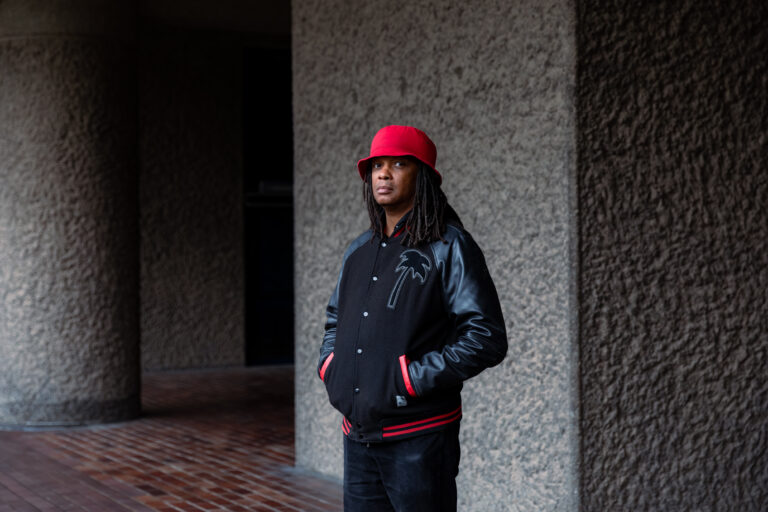
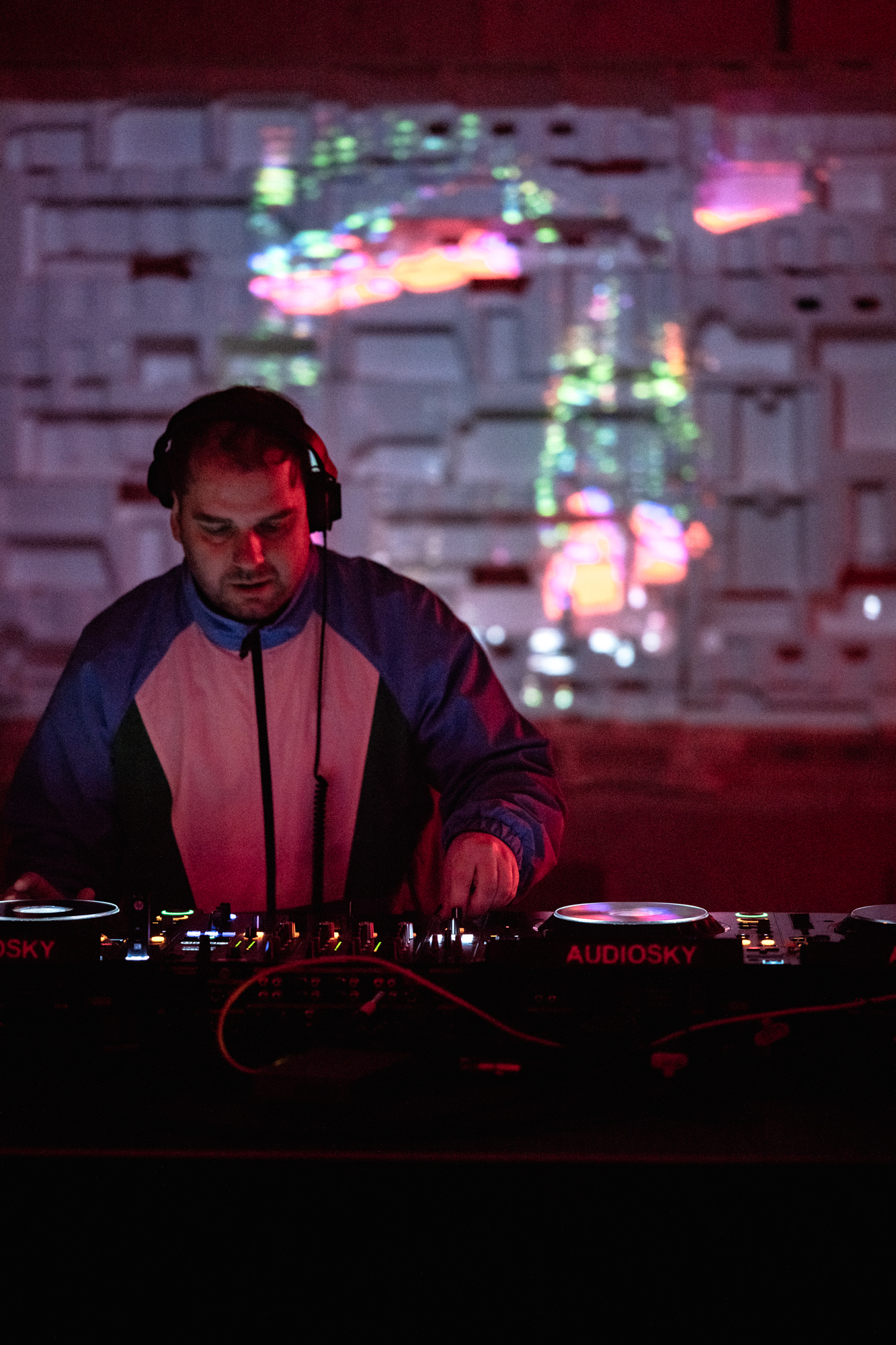
Enter Thing (Kristjan Jõgeva). An Estonian breakbeat prodigy, building a legacy a few can match.
How prolific? 700+ tracks released. And counting, on a weekly basis… Through labels like Blu Mar Ten Music and Repertoire. But also mainly his own imprints Dubthing Records and Depthwise Music, preferring autonomy to keep up with his huge output.
With such a volume of released music and maintained quality & consistency; one could say that Thing is cutting through the noise of the marketing sideshow. And pointing at what it was really about in the early days: (the love of) the music.
The way Thing expresses his undying love of the early atmospheric dub-influenced jungle through his tracks… it just beckons you to enter a time machine at the push of the play-button. Top-tier stuff. Something Flying Lotus publicly underlined in an interview.
And in an age where algorithms have become the pseudo-personalized filter of public attention – increasingly shaping how music is served, packaged and pushed, perhaps even to trivial proportions – this man embodies a nostalgic, but actually refreshing approach.
And yet, Thing also has to navigate the trenches of the social media overlords to get his music heard. Not without success though, as this is actually how his music appeared on my timeline. And inspired this interview, offering the opportunity to share his philosophy and approach. Enjoy.
The name “Thing” where did it come from?
My first girlfriend gave it to me. I was starting my producer career when I met her, and I asked her what name I should use. She told me ‘Thing’, because it is a universal name. It meant I could do whatever I wanted.
It is definitely a universal name!
Actually London Elektricity asked me a few years ago if he could use this name for a new record label. Just a fun random fact. But honestly, this name is the hardest name for search engines. Though it seems the work has paid off because it is the first result on Spotify now.
You are based in Tartu, Estonia, right?
Yeah, it’s the second biggest city, with approximately 100,000 people.
Let’s go back a little bit. How did you discover drum & bass?
There was a radio station called Radio 2, and a show called Vibration. One dj played this type of music there. I heard this show in 1998 or 1999, when I was 14 or 15, and I was completely hooked within two seconds.
What happened next? Did you start digging into it immediately?
I listened and recorded the radio show, walking around with my headphones and cassette player. I didn’t know any track titles; there were no samples, and often the radio host didn’t even know the track names. It was a weird time. When I finally got my first computer, I downloaded a program and started doing it myself.
The first ten years were complete shit, or maybe even longer. But I’m not normal, dude. I didn’t stop. I didn’t care. This was my favorite output to relieve stress.
Your tracks have a heavy dub influence: echoes, delays, and heavy sub-basses. Was that a natural evolution for you?
I don’t remember exactly when it happened or if it was a natural evolution. I just feel comfortable with this kind of sound selection. I don’t know how far back into my discography you listened, but I’ve started making completely different sounds, rhythms, and tempos recently.
Growing up, aside from that radio show, were there any local events in Estonia that inspired you?
I was listening to loads of BBC Radio, Essential Mixes, and things like that. The local scene was a little bit different, and I wasn’t really involved in that stuff. I was just doing my own thing, completely on my own, experimenting with different sounds. I’m from a really small place; a little village actually. There was nothing else to do except drink, do sports, or make music. Sport is not my thing.
You are running your own labels now. Was the reason for that to get your music out faster, or to have full control?
It was the easiest way. I sent music to loads of labels and they would tell me I have to wait six months or a year. Why should I wait? I can release them myself. Bigger record labels have huge lineups and need to choose the right time, so I thought I’d just start myself.
It is easier these days. I actually did no promotion when I started. My promotion was just releasing so much music that people noticed me. I released two or three albums in the first year. At this moment, I have approximately 715 released tracks. I have maybe 10,000 to 50,000 unreleased or unfinished tracks.
I have so many ideas. When I start the program, I make five ideas in 40 minutes. Then I might open some older files and finish a track I started eight years ago.
Looking back at your first releases compared to now, is there something from that time you still cherish?
I think the dub elements are still there. My first music was influenced by the DAW; it wasn’t strictly drum & bass or jungle. It was the same tempo I use now, but the rhythms and song structure were different. When I listen back to my first tracks, it sounds like a diary of my life: where I was at that moment versus where I am now. Life inspires me the most.
Is it a way for you to process emotions?
I think the best tracks are made when I am feeling the worst.
After so many releases, what keeps you coming back to it
It keeps me sane. I think that’s the best answer. The world is so hectic and everybody is doing their own thing. I think it’s the best way to express myself and feel good; it’s like meditation for me.
I saw you mentioning that you have two jobs on the side while doing music. How does that schedule look?
There is no routine. Well, there is a routine for making reels to upload to Facebook every few hours. But with music making, sometimes I don’t even want to open the program, because I’m overwhelmed with regular work stuff and life.
Making music and living in a capitalistic world are complete opposites. You need to wake up at seven or eight and start doing work, but sometimes I’m in a complete haze all day. When I come home to the quiet, that’s when I start thinking about what I should do with music.
You also released on Doc Scott’s label, 31 Recordings, which is the ultimate mark of respect. How did that connection happen
He contacted me. He wanted some tracks, I made them, and I sent them. He was doing a radio show or recording mixes on SoundCloud and we connected.
Has your setup evolved to include analog gear, or are you still fully digital?
I bought an Analog Rytm from Elektron, the Swedish company. I bought external gear and tried to make music with it, but it was too complicated for me. I really like to make music easily, and I find the computer and plugins are the best for that. If I don’t have an almost complete idea in 10 or 15 minutes, I start a new one.
That explains how you keep the production level so high
I think the best ideas come right when you open the program, not when you stare at the screen for a full hour. I think that is a waste of time.
Have you ever felt burned out by that high productivity
I’m not feeling burned out, but I am feeling like the algorithms don’t like me. This makes me feel a little bit sad. The algorithm decides basically everything. Unless you are Taylor Swift, you need to make a shitload of reels or ‘rage bait’ posts, before people even notice you.
Do the people at your work know that you’re a respected drum & bass producer?
Not really. I’m not talking about it much. We have different vibes there and I’m not telling them. I walk on the streets and nobody knows me. I actually like this anonymity. I don’t like the superstar stuff. I just want to live good with my music only. My final destination is to quit my job. I don’t even want to tour all over the world; I just want to make music at home.
I guess a lot of that freedom comes from having such a big back catalogue, where you can dig up something from eight years ago and give it a spin
That is maybe 1% of it. 99% is from the new tracks I make, just because I have so many ideas constantly.
Perfection is about being able to really translate what is in your head to sound right, but you cannot be perfect all the time. So when do you know a track is done?
For me, ‘perfectly imperfect’ is what the listener likes best. When I make a track and think it is not good enough, I release it anyway, and then people tell me it is so good. There is no correlation at all between what I am thinking and what listeners are thinking, because we are completely different.
That makes sense. Do you enjoy listening to music these days, or are you always analyzing it?
I think I have been analyzing more than listening since I was five years old. I am analyzing patterns and everything else in life.
About being a content creator: you say that these days making beats is apparently only 10 percent of the job. How come you think it is so little?
I think it actually is 10 percent. When I started uploading reels, I did a calculation and realized I was wasting more time on reels than making music. I make music fast, which is why I have more time for reels, but not every producer works that fast. It is not easy.
Given you release so much music, the actual content is the music itself
My content is actually quite easy. When I am waiting for a taxi in the morning, I just make a 10 second clip in the hallway. It does not take much time, but the hardest part is the routine of remembering to upload. I feel like more of a data analyst than a producer lately because I am constantly checking statistics for reach, but I am loving it because it is a new field for me.
Some people go all out with the content, but you keep it simple
I think every producer should make reels, because they work. I do not know why some do not, whether they fear the camera or their ego gets in the way. We only live once, so why not try different things?
You have a very big back catalog. What is your strategy for keeping everything in order so you can find something from six or seven years ago?
My music library and everything around it is well organized. I use keywords and a structured system, so it is really easy to search.
What about things like Patreon, sample packs, or production tutorials? Have you considered those?
No, because those videos take a lot of time and the market feels oversaturated. When I started, I did not watch tutorials; I just opened the program and clicked buttons to see what they did. I have done small sample packs on Bandcamp with old breaks that are “pay what you want.”
A lot of producers give one-on-one lessons now. Is that something you would consider?
I think it is the easiest way to make money, but I do not want to do it. I strongly believe in self-learning. That is when real progress starts, when people really want to learn by themselves.
Touching on the aesthetics of your releases, do you do your own artwork?
I use stock footage. It takes about 10 seconds. These days, when a track starts on Spotify, people do not even open their phones. I asked my followers on Instagram and Twitter if they actually watch the artwork, and the main answer was that they do not. If the music is good, the rest is not important. I also master and mix everything myself.
Do you pay attention to online comments or data when you make a track, and do you incorporate that feedback into the next one?
I watch the data from Spotify and Apple Music. Reading comments on Facebook and watching data on Spotify are completely different worlds. There are companies now that can read your data and tell you what to do. If a track is performing well, the theory is you should make something similar.
If the internet disappeared tomorrow and you could not upload to Bandcamp, would you still be writing music at this pace?
Yeah, I am constantly producing. I do not even release everything I make. I will never stop, even if the internet ends.
You have mentioned before that the mixdown is not the most important thing. Can you explain that?
The vibe is the most important thing. My philosophy is that done is better than perfect.
Do you believe modern drum and bass has become too clinical or over engineered?
It is a sad truth because everyone is just looking at visuals on a screen. I trust my ears more than the screen. I try not to be too technical with my approach.
What is your starting point when you produce? Are you telling a story or just meshing sounds?
I have a huge folder organized by key, and I just start putting things together based on how I feel. My workflow is pretty chaotic. I try to put emotions in there, like nostalgia, sadness, or euphoria. I just try to be authentic.
With tons of tracks released, do you ever worry about repeating yourself? How do you keep it fresh?
No one has told me my songs sound the same yet. It is possible to make similar stuff, but I think I am still doing different things. Again, done is better than perfect.
Do you go hunting for specific samples or vocals?
I use Splice, samples from YouTube, and my own sounds. We have so much software now to manipulate audio.
YouTube audio is often compressed. Does that cause problems, or do you engineer around it?
It does not have to be perfectly clean. If you want an organic feel, you can hide a ‘bad’ sound beneath good layers. I do a lot of equalizing, but I do not use compressors that much.
What would you say to a producer who spends three days working on a single snare drum?
It is pointless; you are wasting your potential. You are making music for listeners, not other producers. Listeners have no idea how much compression or EQ you used; they just care if it sounds good. It just wastes production time.
What does success mean to Thing right now? Is it reaching the next level or being able to live off the music?
I want to live off my music so I do not need a daytime job. I do not like waking up early for a routine job. That motivates me to make more and better music so I can use my best energy for what I love.
So there you have it, a big shout out to Thing for the talk. And for empathising on a sometimes overlooked, but timeless take on getting your music heard. If anything, plenty aspiring producers can draw inspiration from the fact that nurturing consistency and flow in the studio will stack up exponentially with time.