
Q1 has 2026 kicked off with a pivotal announcement.
Two prolific drum and bass labels join forces: Flexout Audio has acquired Sofa Sound Bristol.
Rest assured, this shift will not consolidate the independent brands into one entity, but rather bolster and fully make use of the synergy already present, long before this decision was made. As a means to combine the best of both worlds in terms of talent and cement a foundation for a more secure future where both labels thrive within their respective niche.
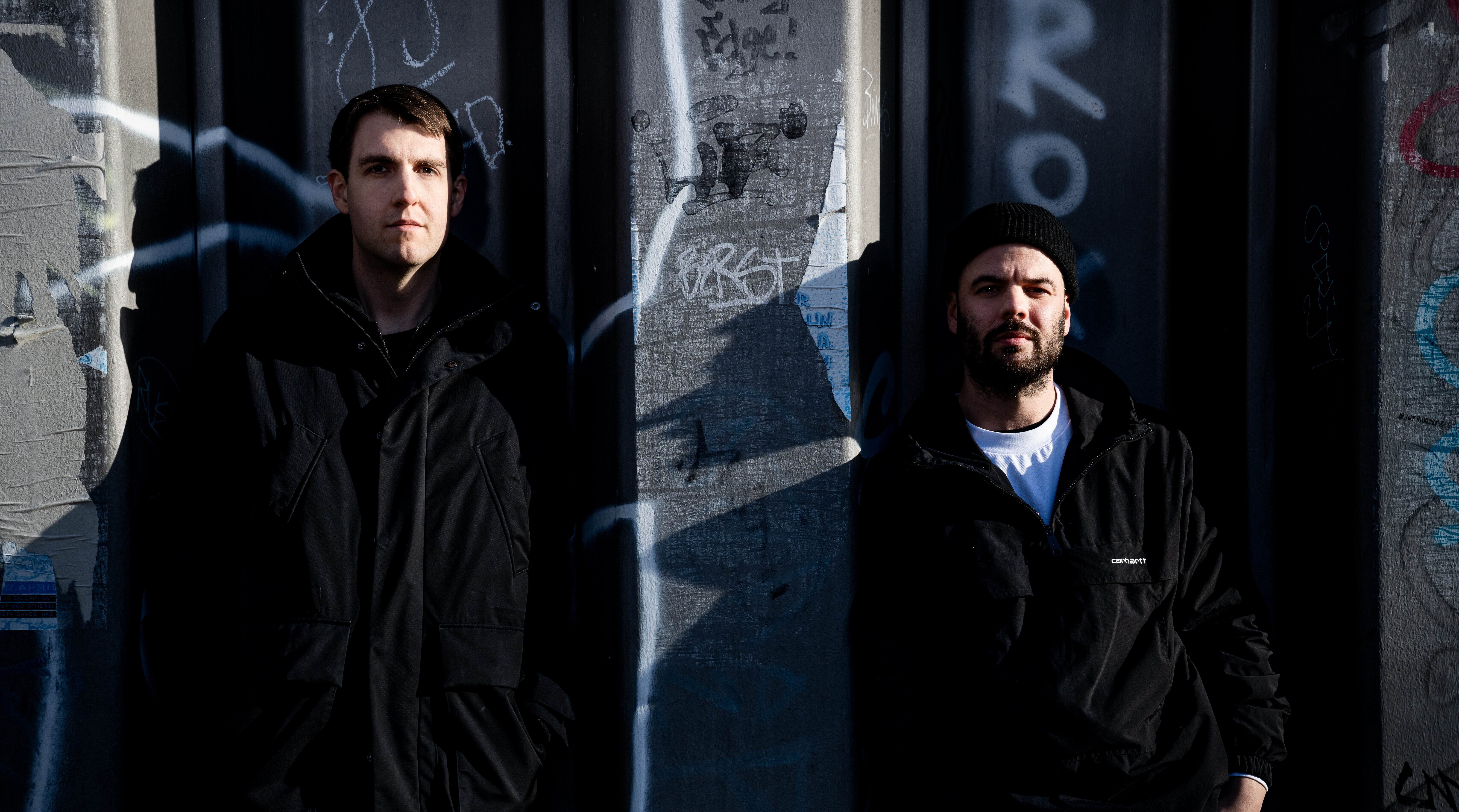
To give fans a more concise overview, we caught up with Tom Bassi, the founder of Flexout Audio and Marcel Bößendörfer, the operational manager at the label and investor.
What’s more: DLR, the founding father of Sofa Sound, will remain fully involved by overseeing the A&R (more on that below as well).
It’s safe to say it’s already the biggest news of the year so far. So how does it feel now the word is out?
Tom: It feels great. The reaction has been really, really positive. We’ve obviously been working on it in the background for quite some time, so we’re buzzing. It has opened up another world of what we can do with releases and events.
How long have you been working on this?
Tom: I think the first time we spoke to James was the beginning of the summer last year. We had the first few talks and then it took a while to get it over the line, for James to make the decision, and to start the process. It’s definitely been at least six months. We knew that we wanted to join forces, but to actually figure out how that works in reality took some time. It’s ended up being a really cool new team.
Marcel: Everyone’s got their new roles and can focus on their specific areas to make us a well-oiled machine. Also, we wanted to be aligned with how the labels will work. These are all things that need to be discussed before actually making the transaction, otherwise, you end up in a weird situation.
What was the specific moment of realisation that the labels would be stronger together?
Marcel: It was always in our mind to build something bigger than just one label.
Tom: Exactly. For full transparency, Marcel joined Flexout in November 2023, and we’ve been working together for a couple of years. Marcel, how would you see your approach to this whole project and vision?
Marcel: I’ve been a big drum & bass fan for more than 20 years, DJing since then. Drum & bass has always given me happy moments and I found a really nice community which compensated for my work-life balance. When I look at how the scene has developed, and the sound getting watered down to fit into commercial playlists, I wanted to give something back. I want to support the underground, authentic venues, labels, artists, and promoters wherever I can. I want to give the young kids the opportunity to enjoy the actual underground and what drum & bass actually is for me.
Tom: And experience what we were able to experience when we were younger. Our goal is that a 19-year-old kid today can walk into a dark room with a proper sound system and feel exactly what we felt; that true underground energy. We just want to make sure that door stays open for them. That’s our main mantra.
As for James and Sofa Sound, what made them the right partners for the space and the journey?
Marcel: For me, it was his passion for music and we both have the same opinions on what’s important: preserving this underground culture. I’ve known James for almost 16 years now; I booked him when he was still Octane & DLR and we’ve stayed in touch ever since. I consider us friends, so it was a logical next step.
We were both speaking about how challenging it’s been since COVID to make everything work financially. It is still a massive challenge. We felt we would all work well together because we’re all friends and we’ve all got different skill sets; we each bring something different to the party. That’s one of the most important things.
Marcel, from the operational perspective at Flexout, what synergies do you identify that could be scaled to the merger?
Marcel: It’s more in the back end of running a music label where you have the synergies. You have certain tasks that are the same for both labels when it comes down to royalty systems, distribution, contact with marketing, PR, and creating assets. While Sofa Sound has very specific aesthetics, we work together with the same design teams, and not for cutting costs but to optimize our team. It’s just making the workforce that we have now more skilled to be better in the future. Just for transparency, we kept most of the people that work for Sofa Sound and are bringing them into the whole team.
Looking at the artist roster, there’s definitely some overlap. Is this a thing for the future as well? Because a lot of people released on both labels, right?
Tom: It’s interesting because me and James do have a very similar taste, yet it’s different. There are going to be opportunities. We can do Flexout versus Sofa Sound events and releases, like we do with Vandal Records right now where you can cross-collab. But for me, what’s really important is that both labels have their own identity and their own artists. We’re not going to blur the boundaries. In fact, it’s probably going to go the opposite way. Where there might have been artists that have released on both labels in the past, maybe you’re better off with Sofa Sound and being a big part of that brand moving forward. Both labels have a very unique identity and sound, and this is something we want to keep and emphasise.
Marcel: Instead of fishing in the same pond, the pond got bigger, so to speak.
Marcel, what were the most challenging aspects during the planning stages of this fusion?
Marcel: The whole financial situation is always a big part of such a transaction; finding the numbers that both parties feel comfortable with. And then the whole strategy going forward needs to be talked about before actually doing the acquisition. In my other working life, I’ve made a few of those transactions and acquired companies, so this one went really naturally and smoothly because we were already pretty much aligned on everything.
Tom: I think the most complicated part was deciding the structure. You can’t really have a company that has too many chiefs. We spent a lot of time talking about how we can make the most of everyone’s skill sets. It ended up that Marcel and I are the owners and James is really important in the A&R department. He can now focus on the things that he actually needs to do.
Marcel: Yeah, not hassle with all of the business aspects and the things that are not fun running a music label. From the outside, it looks like it’s fun, but it’s actual work. There are many things that are not fun at all.
When it comes to distribution and merchandise operations, are you consolidating it all?
Marcel: The back ends eventually we should consolidate. But at the moment, you don’t change everything right away because this causes stress and additional work. The first months, we focus on optimising existing processes and establishing the workflows. Then, over the first 12 to 24 months, we might consolidate a few things. There are also contracts in place for both labels independently, so we need to wait for those to run out.
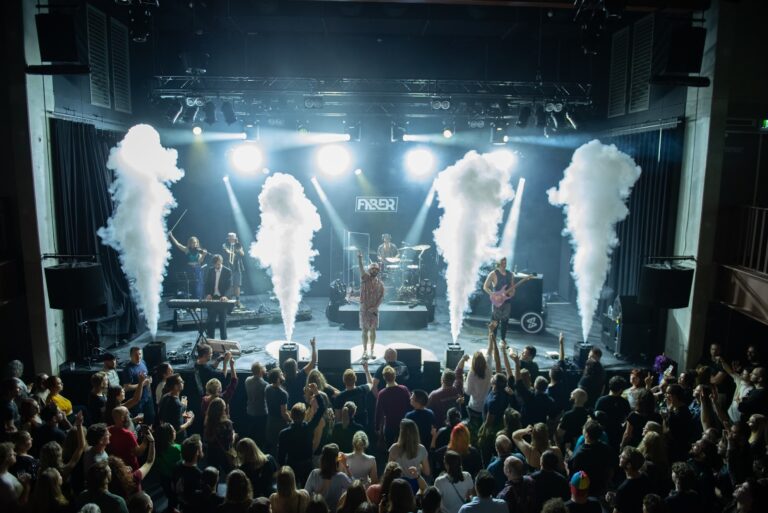
Tom: That also opens up questions about merchandise, for example. The way Sofa Sound approaches merchandise was different to Flexout. We want to make sure that we’re picking the best things of each world. The main reason we’re doing all of this is to release the best music, push the artists we believe in, and give a platform for artists that deserve it. We just announced our first Flexout versus Sofa Sound event at the Trinity Centre in Bristol on May 2nd.
The presence in Europe, it will really make your life easier. But are you also looking at other markets?
Marcel: Definitely. I feel like America and India, the scenes over there are growing massively. We’d love to be able to travel. It is in the backlog. But like I said, we focus on the most important things first: releasing the music and supporting our artists. Touring around the globe is definitely on our to-do list.
You already touched on visual identity. Obviously, Sofa Sound is known for Adam Menzies. Will he also be integrated in a broader creative strategy for Flexout?
Tom: Not really. Keeping the identities separate is such a big thing. Adam has such a distinctive style of artwork; it only makes sense for him to focus on the Sofa Sound aesthetics. With Flexout, we’ve always worked with Arkaik, who’s been a massive part of our visual identity. That’s definitely going to remain separate. Even though we could look at collaborative projects, we will keep Adam focusing on the Sofa Sound brand because it’s so unique. We don’t want to blur the Flexout brand with his illustrations.
So you’re making both labels more specific in their own respect when it comes to the sound. Would it also mean more room for experimental releases?
Tom: I’ve always felt like I personally know if something sounds like a Sofa Sound release. There’s room to explore and experiment with that. Maybe the Flexout sound is a little bit more varied. We probably are most famous for the minimal rollers, but we released a Charli Brix album, some 140/dubstep tunes. We’ve kind of explored the full spectrum of drum & bass. We try and keep it under this theme of deep, dark soul music.
Marcel: Exactly.
Tom: But even that can get pushed. We just signed Harley D, and his second EP is coming out in a few months. That’s borderline jump-up, blurring the boundaries between deep and dancefloor stuff. Flexout will always continue to go off on these tangents, while Sofa Sound is probably a little bit more refined and specific to that Bristol sound.
You plan to preserve the underground spirit of the labels. How do you weigh this while actually becoming a formidable industry player?
Tom: This is really where it comes down to ethics. Marcel came in as not only a director but an investor as well, and the main passion was not to make loads of money. It was to save the underground.
Marcel: But the money is vital. We’ll try and make it a financially viable business. But if we had to choose one priority, the answer is always: is it true to our mission statement? To preserve the underground culture and make sure it’s still going to be there for the young kids. We want to build underground brands, and eventually, it will become successful. Consistency is key.
Tom: Especially in our drum & bass scene, the audience is so discerning that if you’re doing things that aren’t authentic or for financial gain, or you’re jumping on a trend, I don’t think you’re going to have a long life. We’re not selling our souls just to release playlist drum & bass.
About the event at Trinity Centre in Bristol. Why this venue?
Tom: When you’ve got Bristol in the name of the record label, obviously it was an easy choice. It’s been quite a long time since Sofa Sound did an event at Trinity. It’s a really special building. The sound system is everything. We are going to be working alongside the Raze Sound System guys, bringing in loads of kit. It’s indoor, but it feels intimate. Over the two rooms, it’s a thousand capacity and it still manages to keep that underground feel. If it goes well, we hope to return there and do a couple of shows a year.
The sound has to be perfect. As visuals go, is there a plan already?
Tom: I’ve always said that the sound system is everything. I don’t like having massive spotlights on DJs with massive light shows. My favourite events are where we’ve just had a light box, a dark room, a low ceiling, and a sound system. The focus is on the music. No gimmicks. Less is more.
Marcel, what is the most surprising thing you’ve learned about the UK drum & bass scene since you’ve become an integral part of the management structure?
Marcel: That’s an interesting question. I’ve been promoting events for many years in my hometown, Karlsruhe in Germany, close to Mannheim where the German drum & bass culture started.
Those guys know how to dance and celebrate a little differently, while in the UK it’s a bit calmer. But at the same time, drum & bass here is just everywhere. There was one moment when I took an Uber ride and heard a McDonald’s commercial on the radio with drum & bass in the background. That is very unique and special to the UK. It’s just more present.
Tom: I think the good thing about our audience, with both Flexout and Sofa Sound, is it’s a little bit of an older audience. They’re there for the music. You can tell that the people really know their music; you can play an old tune and get a really good reaction.
Looking ahead release-wise in the upcoming months, can you share something?
Tom: Objectiv has a big project on Sofa Sound. Trex has a big project on Sofa Sound. With Minor Forms; we decided his music fitted Flexout more. TeeBee will be following up his album with an EP this year and Marcel’s own solo project KRAEK will be dropping more music on with Flexout, we’re also celebrating 15 years of Flexout this year.
We’re doing 15 tracks over the course of the year from 15 artists that we have worked with in the past or want to work with in the future. That project is really exciting for me as I’ve always loved putting together compilations since ‘Logarthimic’.
Any last things to add to conclude?
Tom: We are looking forward to the future. No merger intended, we want to keep the labels separate. We want to support the underground, keep it alive, and make it even stronger. We want to be really positive about the future of our little niche corner of drum & bass.
Marcel: Exactly. Sometimes it’s easy to dwell on the negativity, but there is so much great music and so many great artists. We’re really happy to be in a position where we can support that.
James wasn’t able to attend the initial call, but answered a few questions afterwards about taking on the A&R side of the business.
You have noted that your A&R role is to guide artists organically and build their confidence, so they see they are ‘absolutely sick at what they do’. With the fusion creating a much larger collective roster, how do you intend to scale that high level of personal, technical engagement with individual artists?
Working alongside artists to give them the confidence, time and guidance (if needed) is the best way of ensuring everyone is happy and we are all moving forward together. Breaking down new artistic boundaries as an artist can be difficult, sometimes this is done away from the influence of others, but also by having a few trusted people around you to help give confidence in those times when you’re pushing things artistically.
It’s not always essential to work closely with every artist, some people need more guidance than others and everyone’s at different stages in their career.
Regardless, having this new extended team gives us a new opportunity to help and guide when needed as well as keeping track of the artistic direction of the labels.
You are recognized for a ‘minimalist’ production approach, often limiting yourself to 50 channels in Ableton to focus on depth and texture. Will you be encouraging a similar technical ethos or specific production standards for artists for both labels to uphold the reputation for razor-sharp audio?
Limitations in a style of music like drum and bass is key to the original conventions of the music. For me personally this is the core to all music, even when the instrumentation is complex the idea should be translated in a simple form to the listener, as not to overwhelm (unless your goal is to challenge and overwhelm).
Even when challenging the listener, I still think it’s integral to find a balance so that the listener can listen to and digest the ideas that you’re trying to communicate, this is especially important with dance music, as the ravers can often be hearing a lot of new music in one set/night.
And this is definitely key for Sofa Sound and Flexout artists to keep the levels high, we have an amazingly skilled and creative bunch of artists on the labels so I have no doubt this will be the case moving forward.
In your new role, will you prioritize scouting raw debut talent, or will the focus shift toward developing long-term ‘destination’ artists who stay with the brand(s) for the duration of their careers?
It is important to have a blend of established, new artists, and everything in between, to keep things fresh and moving forward. We are keen to give a good focus to the artists who have worked so hard to get Sofa Sound to where it is now, whilst also having our ears to the ground to spot new talent.
It can take time and patience with all the artists to give them the space and encouragement to develop their music, so that it’s the best it can be and it’s personal to them. More so than ever, we don’t need to rush.
I feel like there is a big trend of rushing new artists through and not giving them time to develop. I can imagine this adds a lot of pressure onto someone who’s lacking in experience, and that sort of pressure can damage the future progression of their art. Like everything in life and art, it’s about balance and it’s nice to have the time and space to keep focus in this area, and ensure the best for everyone.
And that’s a wrap. A shout-out to all of those that help to maintain the outstanding quality at Flexout Audio and Sofa Sound as they move forward. The future indeed looks bright for the artists and fans.
Flexout Audio Bandcamp / Sofa Sound Bristol Bandcamp
Tickets for ‘Alternate presents Flexout Audio vs Sofa Sound’