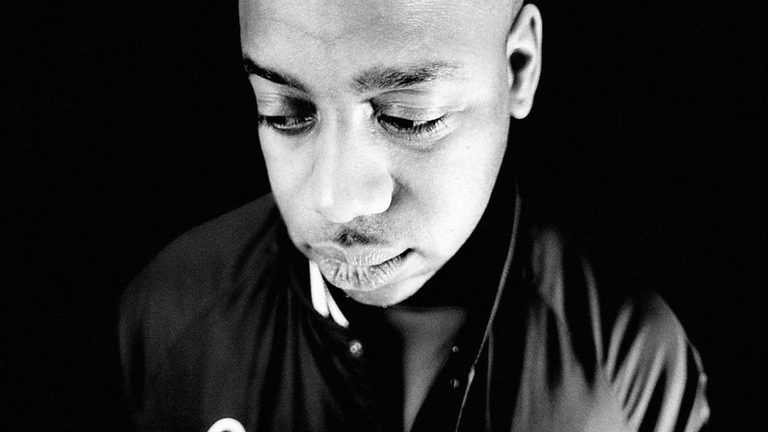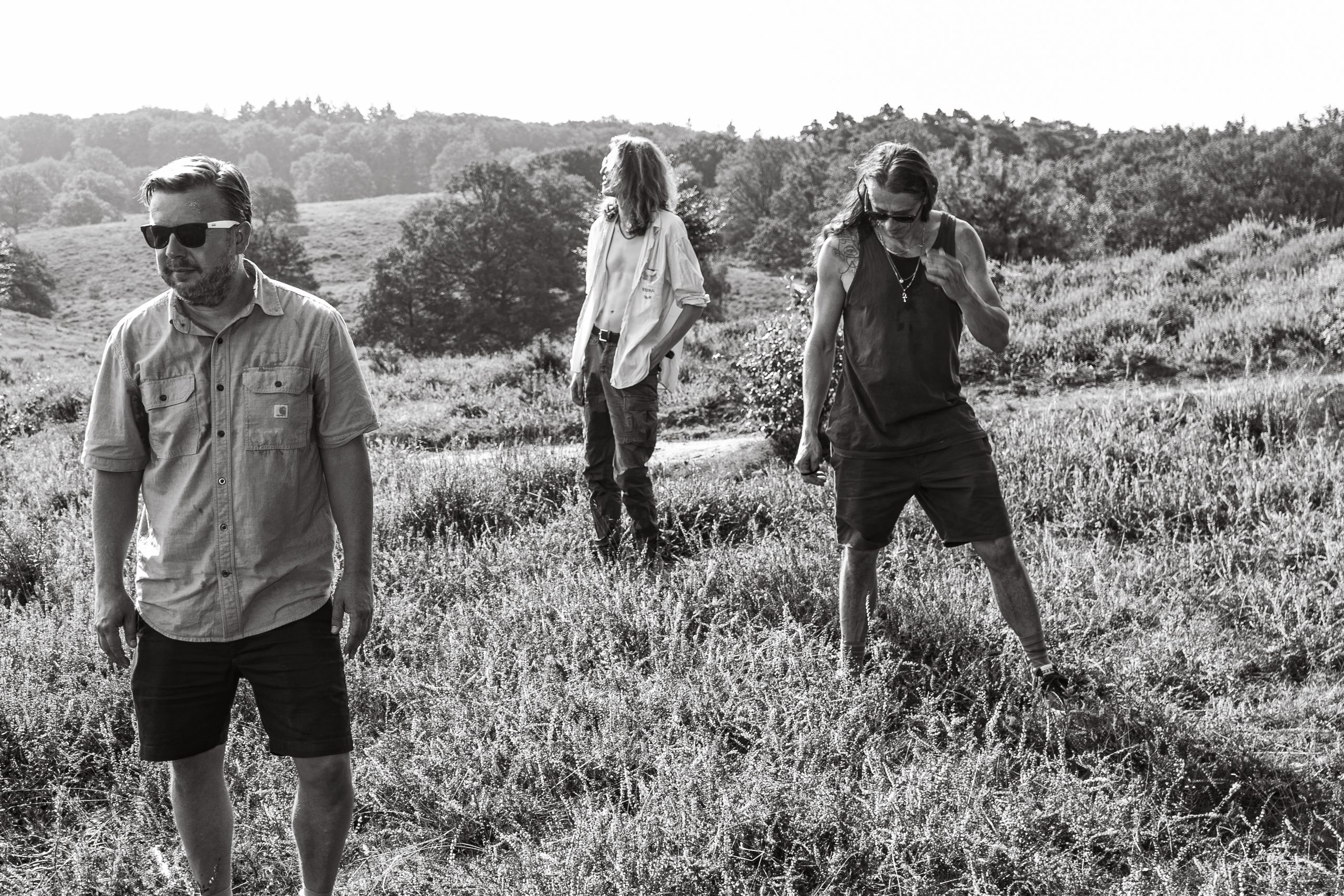
This wasn’t the original plan for this very conversation. Last year, I lost a dear friend. And the promise I made to him many years back, to feature his work on UKF someday, became highly unlikely to be fulfilled.
Hajo Krijger, by his very presence and dedication, was a creative force that commanded respect, even from seasoned artists. Whether it was through writing beats, doing live performances on his extensive collection of MIDI gear, Hajo’s linguistic giftedness, or when he picked up the mic… and let’s not forget the massive dedication to constantly write new material; you just knew this guy had found his purpose.
Everyone who came in contact with Hajo would agree: here is a highly talented and versatile musician, operating on another level and on a trajectory toward greatness.
But he was also an unapologetically authentic human being. A great and empathic listener, too. And a friend to count on, one who wouldn’t sugarcoat your bullshit for the sake of keeping peace.
Ever since our journalism studies together, back when Hajo decided to seriously start making music, I’ve seen him grow. And I wanted to support that.
Admittedly, our friendship somewhat faded throughout the last decade. Partially due to a fallout in 2021. But we made amends when our paths crossed at a mutual friend’s houseparty a few years later. A reconciliation that in hindsight goes beyond what words can express.
While he collaborated with numerous people in Tilburg and beyond, too many to mention here, his Magnum Opus in terms of bass music remains forming and nurturing KROON. A project together with Dutch beat-making royalty Kypski (Thomas Elbers) and Kubus (Bart van der Werken).
Their track Bentlye got picked up by VISION and appeared on the MISSION 03 compilation in May 2025. One could only guess at that point what would have been. Because about a month later Hajo passed away.
It could have meant the end of KROON. After all, Hajo proved to be the driving force behind the project. But thanks to the resilience of Kubus & Kypski, as well as the help of VISION, we are able to enjoy their work and still have this conversation and feature after all.
All The King’s Men EP is out now on VISION. A 7-track EP embodying the shared ‘genrefluid’ representation of bass music from the trio. I spoke with the remaining two members about their bittersweet journey towards the completion of this record.
Read on to see how they honoured Hajo and their work together by pushing through the loss, and seeing their creative vision through. Bless.
Gentlemen, first of all: my utmost respect and gratitude for achieving this. All The King’s Men is out on VISION. How does that feel?
Thomas: It’s a very special thing, of course. The fact that the project even came together over the past few years, and that we have managed to realize something so beautiful, is super cool. How we got to this point is quite bizarre, considering what happened with Hajo. That is something you really can’t make up.
We had come together with the three of us, but you just don’t imagine it going this way. I am very grateful to VISION that they wanted to do this, and not just release that one track. At the release of Bentlye, Hajo was still there, and he went absolutely crazy with joy. And now this entire EP, that’s not just anything. It feels a bit like it was actually meant to be this way.
I remember visiting Hajo more than two years ago. At that time, he already envisioned the next step would be an EP on Noisia’s label. Is this a true full circle moment for you, perhaps also in the grieving process?
T: Actually yes, it is indeed a bit full circle when you put it that way. The crazy thing is, I have multiple projects, and Bart does too of course, but we have never experienced anything this heavy within a group.
You still have to process it. We were sitting on all this music we had made with the three of us and decided to keep going, truly in honor of Hajo. It really is a piece of grief processing too, absolutely not a career move. Every moment that music is being played, like at Best Kept Secret Festival for example, is very special and personally feels like another piece of processing to me.
How is that for you, Bart?
Bart: The processing is different for me, it’s not really in the music. I genuinely see it as two separate things. Hajo as a person was just someone I got along with really well, and the music is a beautiful by-product of that. Every now and then he still comes up, those moments where you just can’t imagine that he’s no longer here. The music is beautiful, but rationally I mostly think: he would have absolutely loved this.
Initially, it wasn’t certain if you would continue with the project. Was there a specific moment when you decided to do it anyway?
T: We already had that music in such an advanced stage, so it would be a shame to not do anything with it. If the two of us make music, it has a completely different vibe than when we did it with the three of us. But that music still has a spirit, and it’s just really cool to still release it.
I hear Hajo very much in the tracks. When I prepare our tracks for a DJ set, I really hear his personality in them. That is sometimes quite heavy and confronting, but when I play it, it gives me a lot of fulfillment. I never have a bad feeling after a show.
Is that also what kept you motivated on the harder days?
T: Bart and I are both just creative people, we like making things. As long as we think it’s cool, we will keep creating. This release is a really good boost, but in the end, we just make music, no matter what is going on. Hajo actually brought us together, which otherwise might not have happened so quickly.
How was the dynamic with Hajo in the studio?
B: We just complemented each other, that was the special thing. When you go into the studio with someone, you very quickly have to deal with too many captains on one ship, but that was not the case here at all. For me, the most important thing is that I like a good vibe and having a good time. If nice music comes out of that, it’s a great by-product.
This EP is the accumulation of your work. I could hear something of Hajo in the swing of Klatser, for example. Are there any other specific examples with a Hajo stamp?
T: With Klatser, I believe the beat came from me, and Hajo did something with the solo keys. We often brought in ideas that we had made on our own, but we always considered it a group effort. Attika, for example, is actually just Bart. Refund, on the other hand, is Hajo all the way.
B: Yes, that’s right.
T: Sometimes I did a very small edit, but then I left it almost exactly as Bart or Hajo had sent it to us. Bentlye is quite a synergy of the three of us. We intentionally didn’t attach any share percentages to it. We don’t get into that, the main point was that it was a KROON track.
How about other tracks on the EP?
T: Dead Before You Know It, for example, came from live sessions where Hajo would pull something out that we made, and he could just trigger it all at once.
Bad Day originated from a session at the W2 Studios in Den Bosch. We had recorded all kinds of synthesizers there and were messing around with vintage gear. When I listened back to those sessions recently, I heard certain little sounds from that studio session back in Bad Day. Hajo just extracted them, he was really good at that.
It sounds like your flow was very organic and more focused on jamming. How did that normally go when you got together?
T: First we would just chat for a bit, have a drink, and at a certain point we would walk to the studio. Then we plugged everything in and were locked into the jam. What we actually never did was discuss what we were going to make. I found that very refreshing. Bart hit the record button, and then we just went for it. You only make choices afterwards. That process went very organically.
Your dynamic together, has it changed since the loss of Hajo?
T: We support each other. Such a grieving process is different for everyone, and I can’t assume that Bart is going through the same thing as me. But we do understand each other. If I feel terrible about it sometimes, I tell Bart as well.
Last weekend you were on stage at VISION in Groningen, Thomas. How did that feel now that the EP is finished?
T: It was super fun with the people from VISION. Jaap de Vries, Nik Roos, and Thijs de Vlieger were there too, because Ring Noord was playing. The intensity of all sets was bizarre. The crowd was very eager and open to everything, so I could go as crazy as I wanted to go.
Normally I can keep a bit of distance from what I’m doing on stage, but the story of our origin and Hajo made this one extra intense for me. By the end of the set, I was completely drained. I just hammered it for an hour straight.
I believe that ideas and creativity essentially live through us. In a sense, Hajo’s creative essence lives on through this record. Do you still hear him in that sense?
T: Absolutely. You really hear him in it. You really hear his typical melody lines and shuffle-like beats in those productions. In a certain way, he really lives on through that.
Was the title All The King’s Men a conscious creative choice that connects to that?
T: I came up with that, it’s actually a piece from the Humpty Dumpty nursery rhyme. He sat on a wall and had a great fall. “All the king’s horses and all the king’s men” couldn’t put Humpty together again. That rhyme is linked to the title and the concept of this EP, where you can naturally associate Humpty Dumpty with Hajo.
Besides, the word ‘king’ is in All The King’s Men, which has a link to KROON, but for me, it doesn’t necessarily just mean a royal crown. ‘Kronos’ stands for time and clock in Greek. So KROON can have multiple meanings.
How did the contact with VISION unfold to release this 7-tracker?
T: A few years ago I was walking around at ADE. Hajo was there too for a side project for Sony Music, and Jaap from VISION was also there. I managed to introduce Hajo to Jaap, and we mentioned: we have this music and we are still looking for a label.
That was a bit of testing the waters of course, but only much later did it become clear that Bentlye was selected for the MISSION 03 compilation. That served as a sort of stepping stone for us. After that, we sent the rest of the roughly twenty tracks to them, and eventually, these seven tracks came out of that.
Your creative background might not have a direct one-to-one overlap with this EP. What was it like for you, Bart, to work on this?
B: It was certainly special to be able to look over the fence a bit. I do solo stuff, not for VISION; I would normally never see something like that happen. But I really like releasing something with VISION for once. They obviously have a very clean sound, which normally isn’t my thing at all.
I don’t concern myself much with perfecting everything; I’m more focused on jamming and creating. Mainly just making a lot of things. So initially I was like: is this really going to work? Thomas is kind of the guy behind it who arranges that stuff though, he just dares to contact people.
T: That’s true, but that’s also because I often find it a shame when things really just sit on the shelf. If we’ve made cool things, and it’s finished, the worst thing I can imagine is that it stays on a hard drive for the next twenty years and nothing happens with it.
That’s the reason why I do it. Hajo held VISION in very high regard, and so did I. It was more of a dream, like: if that could ever work out, it would be absolutely sick. I knew VISION was broadening out from just drum & bass, I saw the crazy detours they were taking.
We had tried another label before that, Hospital Records, and also Deep Medi by Mala. He was very enthusiastic about the record, but came back with an extensive answer that in terms of tempo, it wasn’t quite in the corner where Deep Medi operates. The same was true for Hospital Records.
Siriusmo, the German electronica wizard, vouched for us at Modeselektor, he was quite thrilled about our record. But in the end they declined as well. Eventually, we figured it out with VISION, also because it would be easier to communicate with a Dutch label. It was quite a search though.
The live performance aspect, is that also a thing for KROON in the future?
T: Our goal is to play live. We do play live as a duo sometimes, where we improvise almost everything with our electronic instruments and modulars. When I am on my own, it’s more of a hybrid cross-pollination between a DJ set and live elements. In November we are opening for Weval, the Dutch electronic act.
In the MEZZ, Breda, right?
T: Yes, in the MEZZ. Bart and I will be doing that together on November 27.
The EP is out now, of course. How do you view the future of KROON? Is it letting it sink in for a bit, or everything goes and no pressure?
B: We still have music lying around anyway, and music is still going back and forth. We don’t work with deadlines, but we’ll see how it goes. If the creative juices are flowing, we will make use of that.
T: Making things is just the highest priority for us. If a beautiful release like this comes out of it, that’s wonderful and a kind of cherry on top. But releasing on major labels isn’t necessarily the most important thing. We have long continued making new things. As soon as you’re no longer doing it for fun, you’ll hear it, and it feels like you’re working on a career path. I’ve been in those kinds of processes in the past; the schedule was full, but it didn’t feel okay because you have to cut corners.
How do you maintain that balance then, between letting it happen organically versus working with deadlines in an industry driven by fast content?
T: You’ll have to find a precarious balance. Do what you enjoy. A release always involves planning, but we are in control ourselves and nobody tells us what to do. The music was already finished, and only then did we start shopping it around. That is very different from having to finish a track under stress. Twenty years ago, I used to just sit in the studio producing non-stop all day. If you’re young and have that creative energy without fear, you just have to go hard.
B: I hear the younger generation gets pushed quite a bit by influencers and coaches who tell them they have to post on social media every day, or else you lose your reach.
T: True, I’ve worked in music education, including at the Rockacademie in Tilburg. There I saw eager DJs and producers getting completely consumed by social media, only making content for posts. I’ve struggled with it myself, but I actually think everyone should just try to make the best music they have in them.
Don’t get distracted by that FOMO. If your music is so strong that it completely bears your signature, then you have struck gold. That is what it’s all about, not whether you made the algorithm happy that day. That will make you unhappy.
B: Everyone has a different plan. Some people work very purposefully within the framework of a genre and create sound design that sounds exactly like other artists. Then you can schedule making an x amount of drum loops this week.
But I prefer going into the studio purely to make music based on a vibe. Sometimes a 120 BPM track comes out, sometimes 84 BPM. You might be less productive, but to get into that state, I really put my phone away. No distractions, no checking comments, just focusing for a few hours and being in the moment.
What do you notice with the talents who still manage to stand out in this crowded market?
T: With those people, I see that they don’t let themselves be driven crazy by the pressure to be visible everywhere. The ones who stand out manage to find a way not to get distracted and focus fiercely on developing their own sound.
Is there anything else to mention about the artistic message of KROON, apart from honoring Hajo?
T: The closest thing to that is actually what it says in our bio: pursuing a sort of ultimate freedom in creativity and fun. Staying true to yourself and creating a situation where you have complete freedom to make what you want.
B: That’s why I also find it special that VISION chose this, because the EP is quite all over the place. We’re not thinking inside one box. I like letting myself be carried by the current, but you have to feel very comfortable with each other for that.
T: Maybe we claimed that freedom for ourselves with KROON. If we had the mindset from the beginning to release on VISION at all costs, it one hundred percent wouldn’t have worked. KROON truly stands for that artistic freedom, fun, and authenticity.
That is a beautiful way to put it. What do you think Hajo would have said about it now the EP is out?
T: We might not have explicitly said it yet, but he really was the massive driving force and founder. He really kept Bart and me on our toes: “Hey guys, we need to put our heads together about the branding and the track selection.”
He took it incredibly seriously and immediately set the bar sky-high, something he did not just with KROON, but in everything in his life. If he were here right now, I think he would find this release absolutely fantastic. One hundred percent. Occasionally, when a final decision is made in the project, I still say to myself: “Hey Hajo, here we go. This one’s for you.”