
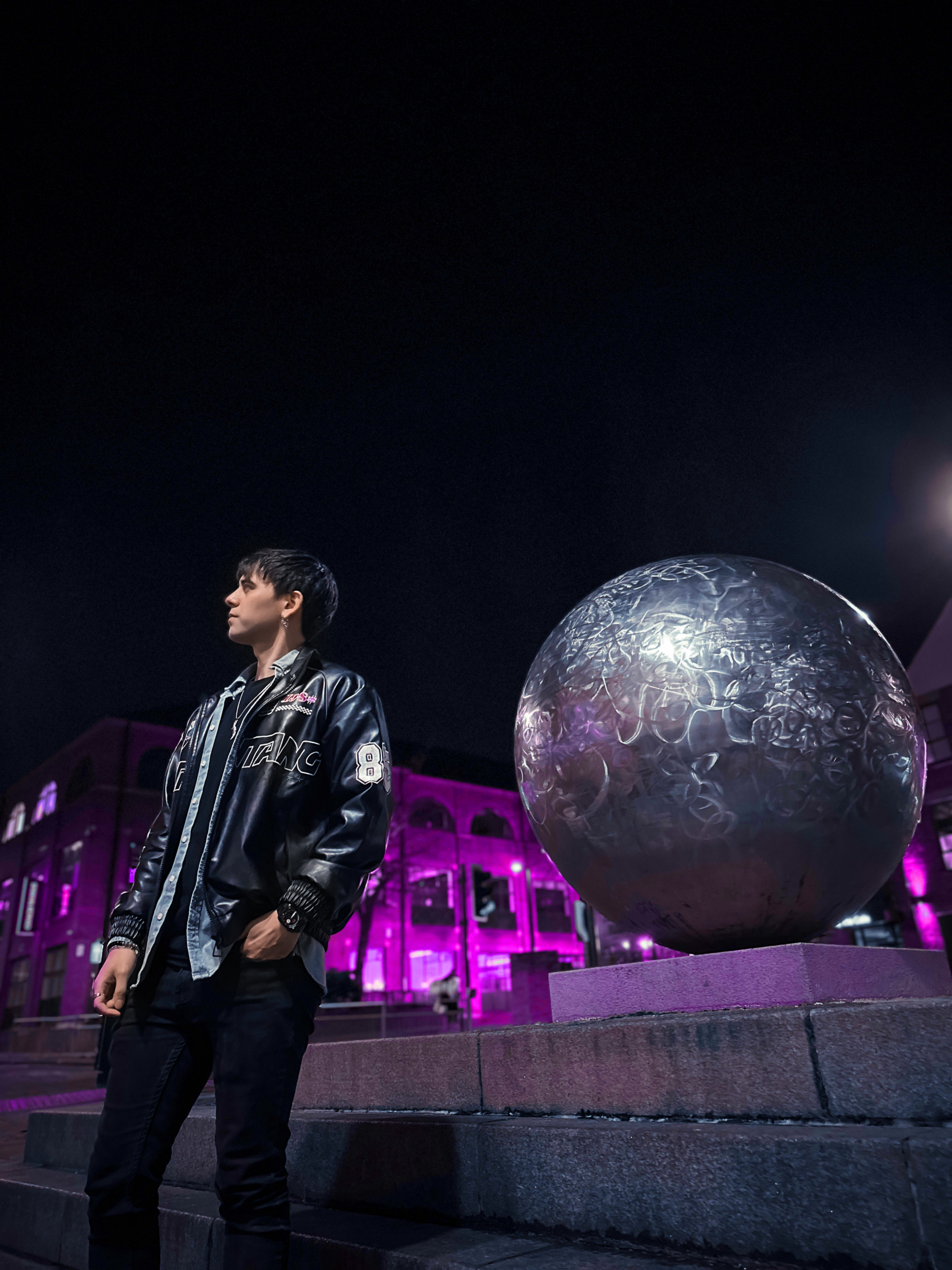
From the humble beginnings of making music on a PS2 to scoring bangers for massive multiplatform titles like Rocket League, Rameses B (Rameses Kevin Booth) has been shaping the liquid and bass landscape thanks to his sonic prowess for well over two decades.
With no fewer than 200 releases across benchmark labels like Monstercat and Liquicity, his music has carved out lasting memories for multiple generations of listeners.
Yet the evolution of his craft has never stalled. The Leeds-based producer and DJ continues to push a sound that is as refined as it is immersive; an authentically hypnotic escape from the weight of daily life. Very few can match his versatility in terms of mashing together styles beyond the conventional genre boundaries.
Or how about gaining massive traction recently through a completely different format? To be precise: his viral shorts; remixing obscene, yet contagiously funny vocal samples from the wild world web, and popular [read: meme] culture. An approach that, to the surprise of many who know him from way back, has paved the way for them to rediscover his catalogue.
With the above in mind it has been a long time coming for a UKF interview. Rameses B’s latest release on Monstercat called Midnight Drift, together with the prolific vocalist Veela, is out now.
What’s more: Laura Brehm, another established vocal artist he worked together with, will join them both on an upcoming Liquicity release.
So without further ado, over to Rameses B sharing his wisdom and passion in the exclusive interview below, enjoy!
How do you pronounce your stage name, and why did you choose it?
It’s pronounced ‘Ram-uh-sees’. A lot of people don’t know how to pronounce it, and I probably should have chosen a proper stage name, but I used my real name because I like to be my genuine self when I make tunes. I’ve always said my music is like a diary or a journal to my life, so every song has its meaning. The “B” is literally just the first letter of my last name, even though people like to try to guess what it stands for.
How did you first get hooked on music production?
One of my friends from school gave me a game called Music Generator 2 for the PS2. I was messing around with that during the days of DJ Rankin and got hooked on making beats. I realized I was addicted to making music. It’s gone full circle now; I studied at uni and college but never needed to use the degrees because I just focused on music. I get hyper-focused on what I do, and now I make songs that have gone into games like Rocket League.
What keeps you coming back to production after all these years?
I remember making music back at school and seeing the smiles on people’s faces when I’d sample their voices into a song. Generally, a lot of people want to make a positive impact in the world during their life. For me, getting DMs from people saying I’ve saved their lives or made a huge, positive impact on them is what drives me. I just love music, and it makes me feel good that it makes other people feel good.
After opening project files for over two decades, what is the primary feeling you chase in the studio today compared to when you started?
It has always been more of a euphoric sound. I primarily like to put a vibe into my music that makes you feel good, cozy inside, and full of love. At the same time, I go through phases where I want to go hard and make something that makes you want to pump in the gym. That has not really changed much.
You’re bringing back the classic liquid sound alongside vocalists Veela and Laura Brehm. What sparked this revival?
We’re bringing it back because I’ve missed making and listening to liquid. I don’t think there’s enough of it around right now. Veela and Laura Brehm actually contacted me with the idea that the three of us should make a song together. We’ve been bouncing ideas for a whole year now while working on other projects. I have a track with Veela coming out on Monstercat on the 23rd, and the bigger collaboration with both Veela and Laura Brehm is recently finished and has been sent over to Liquicity.
How are you updating that nostalgic liquid sound for 2026?
It’s the old style that people recognize me for, but now with much clearer production and everything I’ve learned over the years to really bring it to life. I can apply a lot of new musical arrangements and technical skills that I didn’t use back then, like sidechaining, which I only learned about and implemented around 2016.
Back then, the synths weren’t crispy enough for my ears. I have a much better understanding of sound and frequencies right now, so I’m better able to balance it all to work as one unit. I used to just use volume automation to dip the audio, while these days I have tools that allow me to do more advanced masking techniques such as dynamically ducking only the frequencies of synths that clash with the vocals.
You’ve also been experimenting with genres outside of D&B, like Angelcore and Synthwave. How do those translate?
I’ve always been one to mash different genres together with drum and bass. Angelcore, or witch House, is quite unique because it’s heavily reverbed with a dark atmosphere, and it works really well with drum and bass if you can balance the reverb right. Synthwave also works quite well with the driving “chug bass” that a lot of drum and bass songs have. I like to experiment with new genres when they come out just to see how it turns out. I tried Brazilian funk, but it didn’t work for me, which is probably a good thing. UK Garage, however, works really well because the genres feel quite related.
We were talking about UKG earlier. Do you see it fitting into drum and bass?
I feel like they came from each other, like how garage used to be played at 145 BPM and sped up. UKG is coming back up, and while I have yet to experiment with it, I love the sound. One of my first gigs when I was 16 involved playing four by four bassline music, which is basically what UKG is now, just more refined. I want to go full circle and make some tunes with it.
You have been making a name for yourself by sampling weird, viral snippets online. Is this just a fun creative outlet for you?
You are spot on, I am just doing it for a laugh. It only takes an hour or so to make the song and the video, and it is essentially what I used to do as a kid when learning music. A lot of people who used to listen to me have actually rediscovered my music through these videos. I keep a backlog of videos with remix potential, and I want to do a Kitchen Gun parody next.
From a technical standpoint, how do you work with those highly compressed viral samples?
I just EQ it. It does not have to be technically perfect because people are going to listen through their phones anyway. I actually have a plugin in my project that projects the sound onto my phone, so I can hear the mix on my phone as I am producing it.
With micro genres coming and going at a crazy pace, how do you discover new music today?
Nowadays it is all on Instagram or TikTok, and as an artist, you have to be on there to keep up. I discover a lot of music through that, but the problem is it is getting infested with AI music. To me, these people are scam artists because they are not actually making the song but are getting millions of views, literally stealing from other people.
Suno AI recently got exposed for training on YouTube without permission. Did that affect you?
I heard about that, and two hundred of my tracks were used for training without my knowledge. I actually came across some liquid drum and bass AI mixes on YouTube that had arpeggiated melodies sounding really similar to the stuff I usually make. If you are an avid listener or a producer, you can absolutely tell it is AI, but the average person cannot. It is going to get more difficult to discern what is real and what is not.
What is your top tip for capturing that elusive flow state in the studio?
I highly recommend getting a project preset set up for how you want to work. Ever since I created a project setup, I can just open it up and start creating without having to worry about the logistical side of creating groups and channels. If you don’t have that set up, it’s going to bottleneck you and stop you from wanting to create because you waste time setting things up when you just want to play.
With so many releases, do you ever hit a creative plateau or feel there is a stylistic mountain you haven’t conquered?
I do not think I will ever get bored of making music. I go through phases where I take a really long break for two or three weeks, but then I come back wanting to make a specific sound. There are always new ideas flowing, and listening to other music always keeps me inspired to try new things.
You put out 27 full releases and 50 short form pieces last year. How do you keep that fire burning without burning out?
I know I have pushed too hard when I start to get stressed, and since stress is not good for creativity, I push back and take a break. However, I also get a bit depressed if I do not create for a while. Working creatively brings that good feeling and sense of accomplishment back. People really underestimate how much they can actually do in a year.
Your catalogue often features philosophical elements. Is that a reflection of your personal journey?
Yeah, I’ve always been into philosophy since I was a kid. I think deeply about life, space, physics, science, and what we want in our lives as human beings. When you put that into music, a lot of people connect with it. You attract like-minded people based on what they’re listening to, and I find that quite magnificent.
How do you handle external expectations while maintaining your creative independence?
I’ve gone through a lot of experimentation in my career. I understand the expectations people have and I try to meet them, but then I go through stages where it feels too stressful and I just want to go back to being authentically myself. It’s not a cycle, but more of an upward spiral. I learn new techniques to improve on what people expect, become better at it, but do it in a way where I can remain creatively free to make what I want.
With over two decades in the scene, how do you maintain a healthy work-life balance?
Life balance is really important because you can easily just keep working and pushing yourself for no reason. As time goes by, you realize that time and experiences are important, and experiences are what drive you as a human to create. That is what people resonate with. My anchors are my friends and going out to watch other people play. Even if I’m not playing a show, I’ll go just to hang out because being part of the circle is very cozy.
Despite your success and viral posts, you seem to keep your ego completely in check. How do you stay grounded?
I still just feel like a normal guy making tunes. I don’t feel like I’m a big shot, and a lot of people around me don’t either, which is nice. Even though these posts go viral, I feel like anyone can get a post to go viral if they wanted to. I just like having fun with music, hanging out with nice people, and being friends with them. It’s been a very long journey of stepping stones, and you learn what works and what doesn’t over time.
When traditional metrics like streams and festival plays no longer define the end goal, how do you measure if a track is a success?
Just time. A track can be played a lot in the first few weeks and then trail off, but the ones that stand the test of time are the real successes. Real classics are the ones people come back to because they give them a certain feeling.
Your remix of Robert Miles’ Children is quite timeless. How did you approach that?
I was worried about covering that because it resonates with so many people and I did not want to ruin a classic tune, but I think it turned out quite well. I just followed the same structure and remade it as drum and bass using my own synths, with absolutely no samples.
You have been doing tutorials and breaking down project files. How fulfilling is mentoring the next wave of producers?
I am not the best teacher, and it takes a lot to explain how I do things. However, I get sent a lot of demos and I try to reply to as many as I can, because when I was young I would have loved to get input from my idols. It is very rewarding when people are inspired to create the kind of stuff you do.
Are there any common traps you see new bedroom producers falling into?
Honestly, the new wave of producers understand quite a lot and have much better tools nowadays to do what they want easily. There are so many tutorials they can follow as a starting point, but I think reverse engineering and doing remixes is an incredibly useful way to learn. When I was a kid, I was amazed by how just changing the bass notes could completely change a melody.
What is your single best piece of advice for a producer hunting for their own signature sound?
Do not try too hard to find your own sound, it will just happen. When I started, I spent a lot of time trying to recreate sounds I liked from other artists, and it ended up becoming my own sound anyway. The way you produce will end up becoming you, so do not worry too much about trying to be original when you probably already are.
If a young artist asked you today whether they should sign an exclusive label deal or stay independent, what would you say?
I have never signed exclusively because I want to keep my creative freedom and release when I want. It is absolutely easier to stay independent today with distributors like DistroKid and CD Baby. Labels do have things to offer, like sync deals, but I still release non exclusively. When I first started, I signed music with a label and never saw a penny in royalties. I would advise young artists to think a bit more and wait it out instead of just rushing to get their music out there.
That said, the labels I’ve consistently released independently with have been an integral part of my career. They’ve helped my music reach more people, given me valuable feedback to improve my craft, and provided opportunities to perform at their events. The relationships I’ve built along the way are priceless, and as those circles continue to overlap, the music scene feels more and more like one big tribe where we’re all connected. I’m all here for it.
And that’s all folks. Much love to Rameses B for making the time to have a chat and giving fans a different perspective. Be sure to show support by following his socials and playing those belters!
Follow Rameses B: linktr.ee