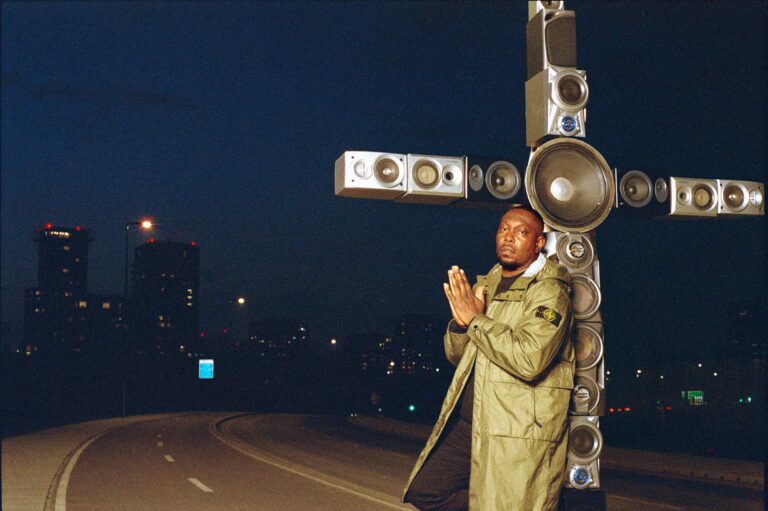

In recent years, large-scale dance music events have often been criticised as cynical, corporate money-making machines that price out true heads. The narrative is familiar: book the biggest names, charge premium prices, push loyal fans to the sidelines, maximise profits, and move on to the next market. While this predicament is being dealt with, one little conversation with Ritesh Patel, aka Rit LOCUS, offers a refreshing antidote. Alongside his brother Jigar Patel, Ritesh has spent the best part of the last two and half decades injecting genuine humanity and passion back into the global dance music scene through their boundary-pushing LOCUS brand.
Ritesh is someone who cut his teeth during the golden era of jungle and drum & bass in the late 90s in Bristol and London, before turning into a visionary promoter whose goal became to showcase the very best DJs and producers in our scene..
Across multiple continents, they have cultivated thriving drum & bass communities while delivering lineups that many never imagined would be possible in those regions. More importantly, they’ve done it by putting people first.
The LOCUS philosophy hinges on three distinct pillars: hosting massive, unprecedented drum & bass lineups in regions starved for the sound, staging these experiences in some of the most breathtaking destinations on Earth, and orchestrating historic, bucket-list reunions.
Whether it was bringing Kemal and Rob Data aka Konflict after nearly two decades apart or orchestrating the long-awaited return of Stakka & Skynet for their first performance together in over 25 years, LOCUS has built a reputation for making the seemingly impossible happen.
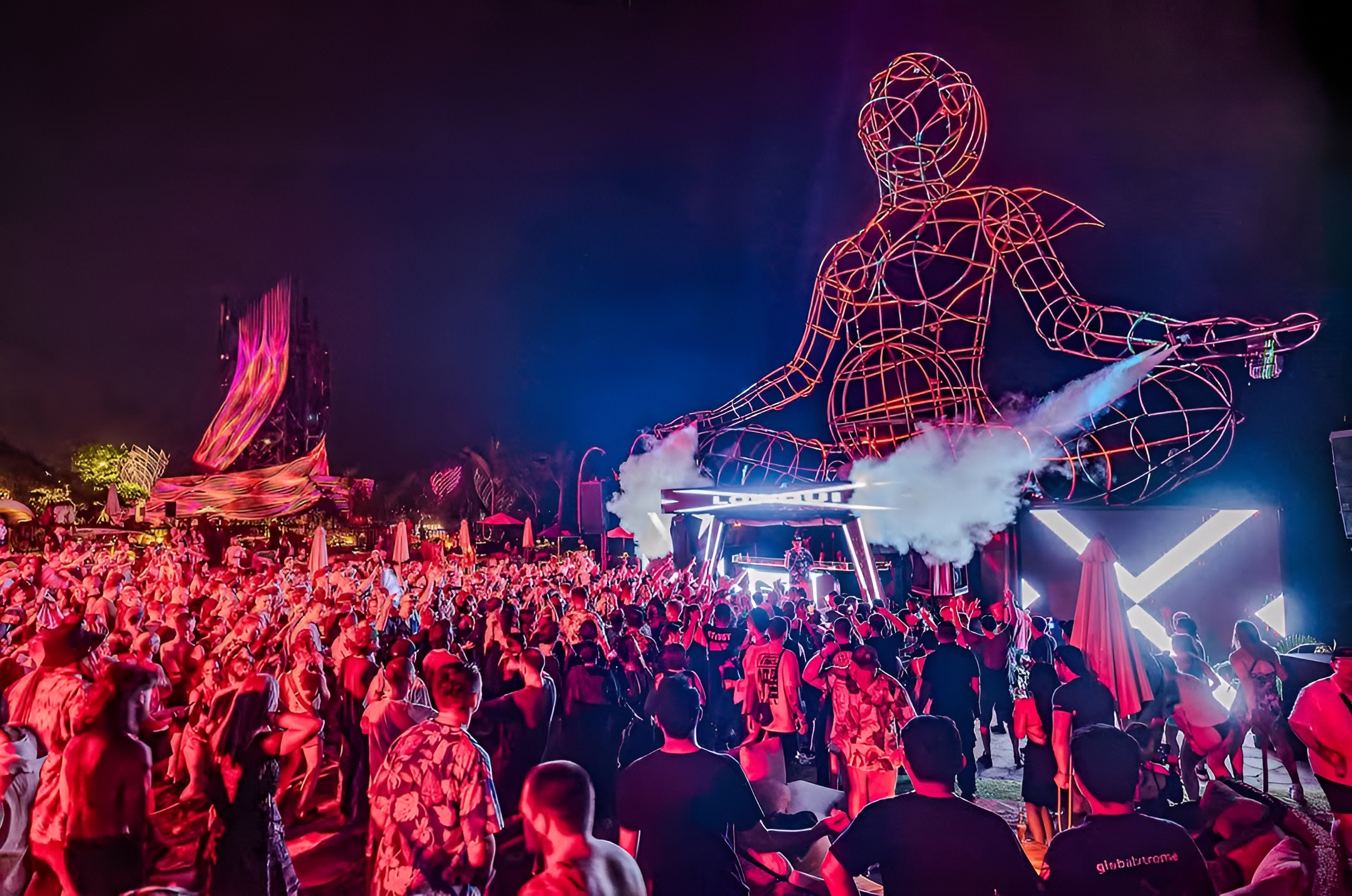
This ambitious journey of global expansion by Ritesh and Jigar began with a bold leap across the Atlantic to Tulum, Mexico, which played host to three wildly successful editions of LOCUS Tulum from 2022 to 2024. In the same year, they doubled down on that ambition by bringing the concept to Asia with LOCUS Bali.
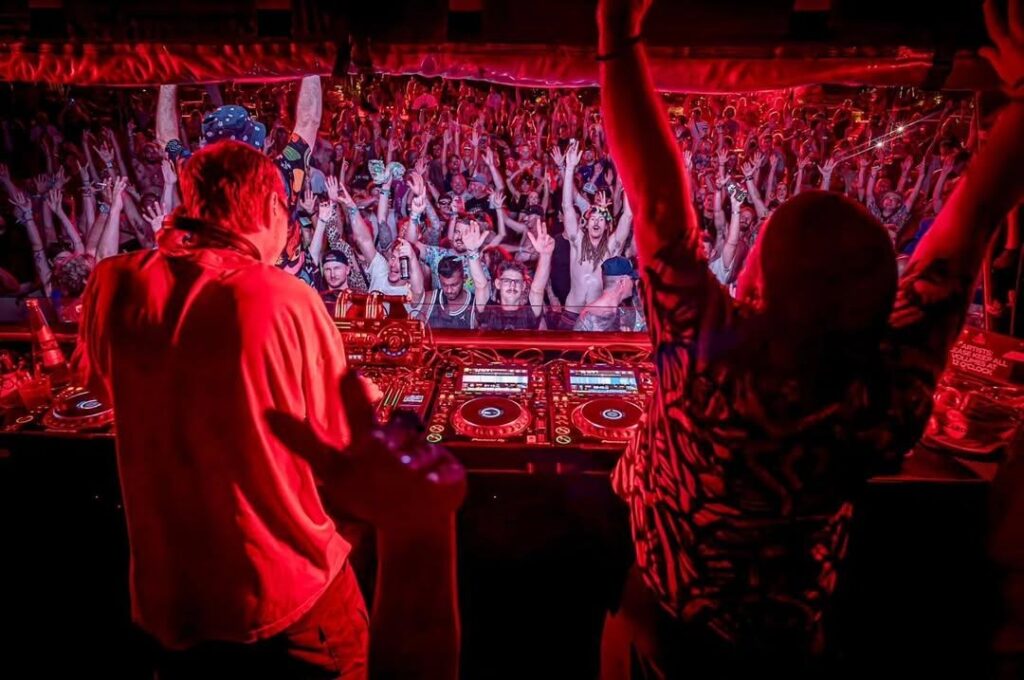
Three editions later, LOCUS Bali has become a place where a strong community comes together, driven by their love for the drum & bass underground across Asia and leading to stories that will resonate for years to come.
True to form, Rit and Jigar are continuing to push boundaries, even flying Fabio & Grooverider’s Outlook Orchestra all the way from the UK to Bali. It is precisely this taste for the unthinkable, executed with utmost grace and a community-first mindset, and yet another example of their willingness to dream bigger than most.
Just before the third edition of LOCUS, we sat down with Rit to discuss the origins of the brand, its evolution from Bristol to Tulum and Bali, the challenges of taking drum & bass into new territories, and the community that has become the foundation of everything LOCUS represents.
Let’s go all the way back. What was the moment that led to the inception of LOCUS as an idea, and what inspired you to start something that reflected the sound and culture you connected with?
It started when I went to university in Bristol. The house I lived in was right in the middle of the university gardens, surrounded by forests and trees, and one of my housemates had turntables with him. About three months after moving in, I got introduced to drum & bass. At first, I didn’t even like drum & bass, but then I went to my first rave; it was a True Playaz night, and everything changed ever since then.
Not long after that, we threw a huge house party and around 300–400 people turned up. We ended up doing two more that year, and I became really interested in the marketing side of it. I loved the idea of promoting something I genuinely cared about and bringing the right people together. Then, I told my housemate that we should try throwing an event at a real club.
We approached a few venues, and one offered us a Wednesday night. Then we went to Trinity, which was a legendary Bristol venue known for hosting major concerts. We were only 19 at the time, and somehow theyoffered us a Saturday night slot. We couldn’t believe it.
I called a booking agency called Unique Artists and basically said, ‘You don’t know me, but we want to throw a drum & bass event in Bristol. Who’s available?’ They gave me a list of artists, and I immediately said I wanted Andy C, DJ Hype, Bad Company and Optical.
They probably thought we were insane because, back then, Bristol lineups usually had one major headliner and a few smaller names underneath. But I wanted a stacked lineup for our very first show. We went ahead and booked it, and there was even a moment where Andy C had accidentally been double-booked for a show in Newcastle on the same night. He only realised after DJ Die texted him saying, ‘See you in Bristol.’ Thankfully, he still made it to our event, everyone showed up, and we packed the club within the first 45 minutes.
We live streamed the event as well. I used a dial up connection to send the audio in real time to a server, and we were actually streaming the audio live in 2000.
The spectrum must have been wide back then considering how drum & bass as a whole was flourishing from all fronts. Did you know what kind of sound that you want to sort of carry in that moment?
No, not really, because my housemate was the expert. I’d only been into drum & bass for about a year, and when I booked that first lineup, it had only been nine months since I’d ever attended my first drum & bass rave.
But once I discovered it, it completely took over my life. I was driving up to London every week, going to gigs across different cities, and immersing myself in the culture as much as possible. Eventually, I realised I wanted to start throwing my own events.
A lot of my early education came from my housemate. He would go to Metalheadz nights every Sunday and was heavily into nights like Swerve which was run by Fabio. He introduced me to producers, labels and the deeper side of the culture. He was obsessed with Renegade Hardware and introduced me to artists like Konflict. I learned a huge amount from him because he’d already spent years buying records and going to raves. It was a very purist education in drum & bass.
…and I think that really shows in the artists you brought to Bristol early on; acts like Noisia, Calibre and DJ Flight. Who are some of the artists you were responsible for bringing to Bristol for the very first time?
In Bristol, we brought Noisia, DJ Flight, Calibre, Calyx, Klute, John B and Pendulum to the city for the first time. Pendulum was a huge one because I brought them over before ‘Hold Your Colour’ came out, before the first album even dropped. There were so many others too; Break, definitely Kemal, and a lot more artists who later became major names in drum & bass.
That’s an incredible list of drum & bass pioneers, especially considering Bristol’s importance to the drum & bass culture. But after that first decade, how did LOCUS as a concept evolve through the 2010s? What did the natural progression of the idea look like during that period?
By the 2010s, I was living in Australia and working on tours that were coming through the country. We teamed up with a promoter called Haunted Science and started doing shows together there.
Then in 2013, I decided to go full-time with Ticket Fairy with Jigar, which meant stepping away from promoting events. At that point, it became clear that I couldn’t properly run two businesses that both required constant investment, energy and attention. So, I stopped throwing events in 2013 and shifted my full focus to building Ticket Fairy.
So, was that the point where LOCUS went into a complete hiatus before eventually returning with Locus Tulum?
And during that gap, what were some of the biggest personal learnings for you? Ofcourse, the sound and the scene evolved massively over the years, but what did that period teach you about Locus and about yourself as a promoter and curator?
Working on Ticket Fairy gave me a chance to see how all kinds of events operate, especially from the backend. Around 2014, SUNANDBASS became one of our clients, which kept me deeply connected to the drum & bass scene even though I wasn’t actively promoting events myself.
With SUNANDBASS, a lot of people in the scene were telling them, ‘You should work with Rit because he actually comes from the culture and understands drum & bass.’ I’m trying to remember exactly who introduced us; it might have been dBridge. But there were definitely a few people encouraging them to move over to a platform run by someone genuinely connected to the scene.
What that period really gave me was perspective. Instead of being caught up in the day-to-day pressures of promoting events, I had a front-row seat to how festivals and brands all over the world were being built, marketed, and sustained. I was able to see what worked, what didn’t. It taught me that a successful event is about creating a culture, a sense of belonging, and an experience people want to return to year after year.
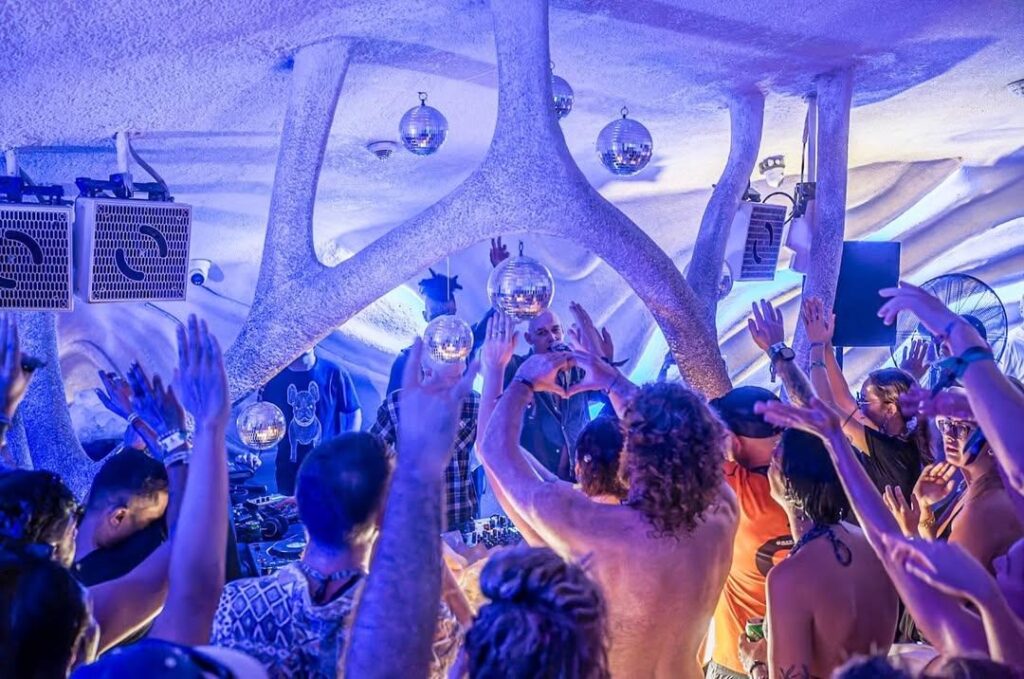
Now I want to jump back to LOCUS. We’re now in the third decade of the brand, with multiple editions of LOCUS Tulum behind you and the third edition of Locus Bali underway. Looking back, what was the landscape like when you first decided to launch LOCUS Tulum and LOCUS Bali? What was your mindset at the time?
We had launched Ticket Fairy in Tulum in 2021, and I was living there part-time at the time. Being there, living on the beach, I started noticing the parallels with Europe, where destination drum & bass festivals had already become a huge part of the culture. Drum & bass already had a proven festival template in Europe, but nothing like that existed anywhere across North or South America.
That’s when I realised there was an opportunity to create something completely new for that part of the world. But Tulum was entirely dominated by house and techno, so convincing venues wasn’t easy. I spent nearly a year pitching the idea, explaining what drum & bass was as a genre and playing them tracks that felt more accessible. Track like ‘LK’ by DJ Marky or some High Contrast tunes; just to help them understand the emotional and musical range within the sound.
Eventually, I asked them to trust me enough to hand over the venue for three or four days and let us build something that already existed in Europe, but had never really been done for drum & bass anywhere in the Americas.
Was that also the moment when you realised LOCUS could grow beyond the UK and European club circuit, and evolve into something much more global?
We’d already done events in the UK, Australia and even New York, so taking LOCUS internationally had always been part of the vision. It never felt like Tulum was the first time it was stepping outside the UK, because by then we had already hosted LOCUS events across three different countries.
Now I want to talk about the lineups. When you first launched LOCUS Tulum, it still felt like a relatively new concept, especially coming out of the COVID period, and in some ways, it felt like you were testing the waters. What was the thought process behind curating that very first lineup?
The thought process was actually very simple: I wanted to create the best drum & bass lineup possible. There wasn’t a strategy of playing it safe or easing people into the concept. If we were going to do this, I wanted it to be something truly special from day one.
The lineup ended up being so ambitious that a lot of people genuinely thought it was fake when it was announced. People looked at the names and assumed there was no way all of those artists could be appearing at the same festival in Tulum, Mexico. In a strange way, that reaction was a compliment because it showed just how unprecedented it was.
For me, the goal was to showcase every corner of drum & bass in one place. No matter what your vibe is, there had to be something that spoke to you. I wanted people to look at the lineup and feel like it was a celebration of the entire culture, not just one particular sound.
Ultimately, the question I kept asking myself was: what would make this festival truly extraordinary? The first LOCUS Tulum lineup was the answer to that question.
One thing people now associate with LOCUS is your ability to bring back legendary acts that many thought they’d never see again; from Konflict to Stakka & Skynet, and now more iconic names. What is it about these reunions that appeals to you, and could you talk us through the journey of bringing Stakka & Skynet back together?
For Tulum, I reached out to Skynet and asked him a simple question: “In theory, would you ever consider doing a Stakka & Skynet reunion set?” We already had a precedent because we’d reunited Konflict before, so the idea wasn’t completely out of the blue.
He was open to it, but there was one problem; he didn’t have Stakka’s contact details. He’d emailed him in the past without getting a response, and there wasn’t really a clear way to get in touch.
Then a completely random chain of events unfolded. I post a lot of videos of myself making breakfast, and one day Dom & Roland messaged me saying, “Your bacon looks terrible. Come over and I’ll show you how to make a proper breakfast.” So I went to his house, and he invited Simon from 2 Bad Mice and DJ Crystl along as well.
During breakfast, I mentioned that I was trying to reunite Stakka & Skynet. Simon immediately said, “I might know someone who can help.” He put me in touch with DB from Breakbeat Science in New York, who happened to be friends with Stakka. DB reached out, and eventually Stakka agreed to have a conversation with me.
I told him straight away that I was a huge fan. After our chat, he was comfortable with me passing his current number to Skynet. I did that, and about six months later I followed up with Skynet. This time he said, “Okay, now we’re talking.” From there, the reunion finally came together.
In total, the process took around two and a half years. It was really just persistence. As a fan, these were artists who had a huge impact on me in the late ’90s and early 2000s, and I simply wasn’t willing to give up on making it happen.
Bringing back legendary artists and curating these unique moments is something that excites fans of drum & bass, but what continues to excite you personally? After nearly three decades in the scene; as a promoter, festival curator, and fan. What still drives you?
It’s really simple: I’m still a raver who wants to hear the music I love.
At the end of the day, that hasn’t changed. I still get excited about the same things that excited me when I first discovered drum & bass. If there’s an artist I want to see, a sound I think deserves more attention, or a moment I think fans should experience, then I want to help make it happen. Everything I do with LOCUS comes from that place first and foremost, as a fan of the music.
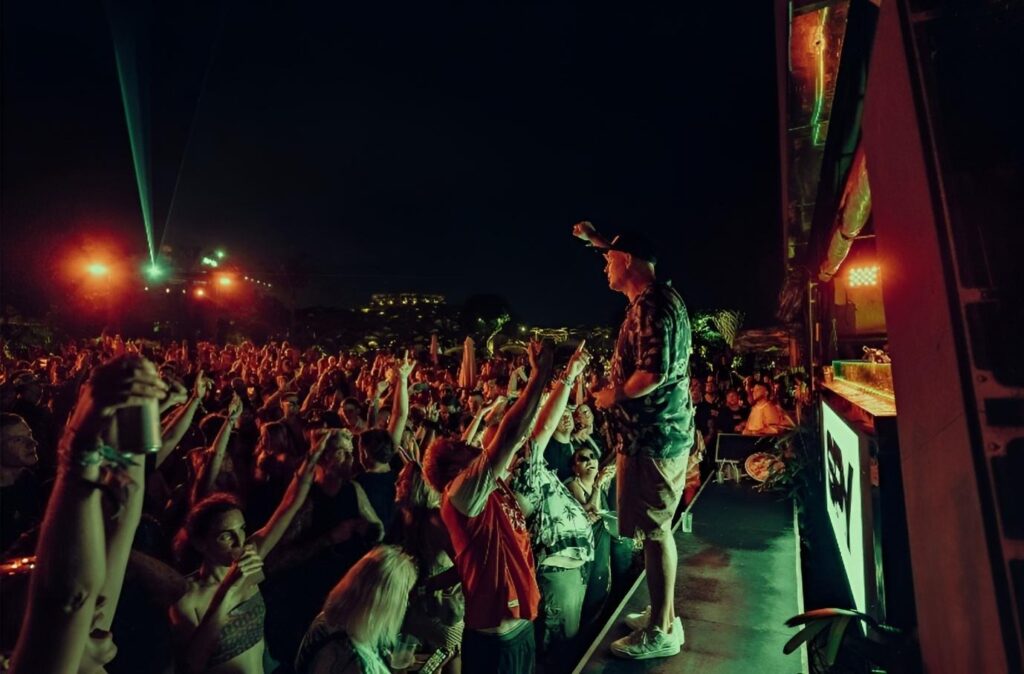
What made Bali the right home for LOCUS in Asia? There were plenty of potential destinations across the region, yet Bali felt like a natural extension of what you’d already built in Tulum. Looking back, what was the thinking behind that decision, and what did it feel like after the first edition proved that the concept could work?
The initial decision was actually driven by Ticket Fairy. There was an opportunity for us in Bali, and that eventually evolved into conversations about bringing LOCUS there.
At that point, LOCUS Tulum had already grown into a five-day festival, but you can’t launch a brand-new event at that scale straight away. The first edition of Locus Bali was about building trust and seeing how the community responded.
What was interesting is that while speaking to people at the festival, I kept asking why some of their friends hadn’t come. The answer was often the same: they thought it looked fake. The lineup, the location, the concept; it all seemed too ambitious to be real.
Once again, in a strange way, that was a positive sign. It showed that we were attempting something people hadn’t really seen before in the region. Once the first edition happened and people saw it was real, that trust started to build, which then gave us the confidence to expand the experience further in the years that have followed.
One of the most remarkable things about LOCUS today is the loyalty of its community. We’re now heading into the third edition in Bali, and every year you see people travelling from all over the world to be there. For many attendees, it’s almost like a tradition, and a reunion of a community. How does it feel knowing that something you’ve built has become so meaningful to so many people?
It’s the best thing in the world because, if you think about the crowd, they’re coming for music and community. In the current state of the music industry, a lot of it is just like being seen somewhere, or being cool, or you can post on Instagram, or you’re buying a table, or, you know, like, the purity is gone from many events, right? And the fact that people are coming, especially this year, when times have been hard just to pay rent and bills, to travel to our little festival, makes me feel really proud. I am happy that people trust that they’re going to make friends for life. They’re going to hear music that they’re never going to hear anywhere else, that even the same artist is going to play a completely different set at LOCUS as they would do somewhere else.
Now that another LOCUS Festival is in the books, what stands out most to you about this year’s edition? Looking back, did it meet the expectations you had for the festival and the community that has formed around it?
What stands out most is seeing just how much trust has been built around LOCUS over the last few years. We’ve now delivered multiple successful editions, and what was once an ambitious idea has become something people genuinely believe in and plan their lives around.
Last year was a perfect example. We had a volcano erupt nearby, flights were disrupted, and yet artists still made the journey. Even more remarkably, attendees rebooked cancelled flights at considerable personal expense because they didn’t want to miss the festival. Experiences like that create a bond between a festival and its community that goes far beyond the lineup itself.
This year, I felt the results of that trust everywhere. People arrived knowing they were going to have a great experience, which meant they were more open to discovery. They came to see artists they already loved, but many of them left talking about acts they hadn’t known before the festival. That’s always been one of the core ideas behind LOCUS: creating those unexpected moments where someone stumbles upon a set that completely changes their perspective.
Looking back, that’s what I’m most proud of. Seeing people connect with new artists, form new friendships, and fully immerse themselves in the experience.
LOCUS has now become a destination event for drum & bass fans across the region. Beyond the strong support from Australia, you’re seeing people travel from all over Asia to be part of the experience. How have you found the Asian drum & bass scene, and what role do you think festivals like Locus play in bringing those communities together?
The Asian scene is really made up of lots of individual pockets rather than one large, unified scene. The UK is unique because it’s a relatively small country with an incredibly high concentration of drum & bass fans, artists and events. That’s difficult to replicate anywhere else in the world.
Outside of the UK, most scenes are much more spread out geographically. Perth is probably one of the few places that has a concentration of drum & bass culture on that scale, and maybe somewhere like Los Angeles as well. That’s why events like Locus are important—they create a place where all of these different communities can come together and celebrate the music in one location.