
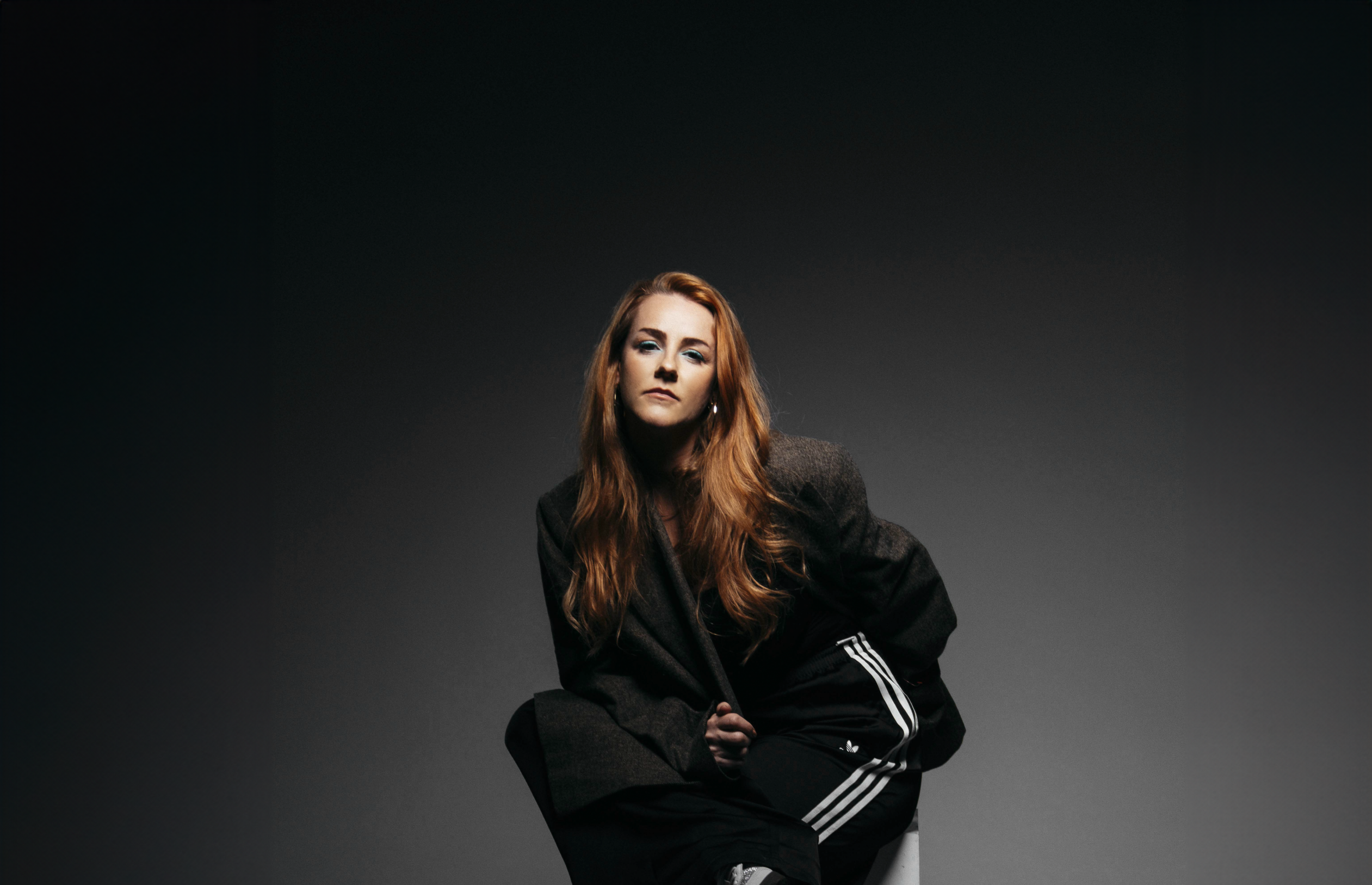
SOLAH is one of those people who makes you want to root for them.
Spend ten minutes talking to her and you’ll understand why. She’s warm, humble, endlessly thoughtful and, beneath all of that, far more determined than she probably lets on. Over the last decade she’s devoted an extraordinary amount of her life to drum & bass, steadily building a catalogue of music she can genuinely stand behind.
Along the way she made some bold calls, most notably putting her own name front and centre at a time when vocalists were still fighting to be recognised as artists in their own right. It wasn’t universally understood, but it helped push a conversation that the scene needed to have.
With Forever, her second album on Hospital Records, there’s a sense of balance that runs through everything. The record is dedicated to her partner, following her debut album’s dedication to her son, and captures an artist learning how to fit music around life rather than the other way round. After years of dedicating herself to the craft, Forever feels like the sound of that dedication finding its way home.
Hi! How are you?
Yeah, pretty good. I’m probably feeling that sense of relief that most artists get when you have finished and delivered a project. I’ve started to get feedback and I’m like, “Okay, it’s all been worthwhile.” It’s feeling nice at the moment.
What have you been up to? Lots of promo?
Just starting that really. You’re my first interview. I’ve got a couple more filtering in. We’ve got a BBC Radio 1 Dance mix on the horizon which is another new milestone. We’ve done a couple of D&B, Charlie Tee, mixes in the past. But this one is a different show. It’s new territory possibly.
A wider audience as well…
A different audience is always good, isn’t it? Especially as D&B feels like it’s growing, and revealing different parts of the genre. So you can grow with it rather than just being around for one part of your life, where that more dance floor vibe suits your life. And then after you stop going to the club so much, then you’ve got the next bit. That you can listen to in the lounge or in the car. It’s good for that side of D&B to be getting out there commercially.
How will that mix work? Will you mix it?
I used to work with a female DJ in Brighton called Emma B and we sort of figured out the best sound and stuff together. She was my DJ and she created the sets and I had quite a lot of input which she always took onboard. She left to have a baby and start a family.
My other half has always been a DJ and he used to produce drum and bass so it was natural for him to step in and help me in the short term. I found that it just helped so much having someone in my home to rehearse with and back and forth.
Then I learned how to create my own set, which was really valuable for me. Whilst I don’t DJ, I’m very connected to the tracks and I’ve got a bit more input on when I’d like it to drop or whatever.
Now it’s moved a bit more away from that again to Ben, my other half, doing more of the track selection because he knows what I like. It’s been a slow evolution, but it feels like it works with our family. We are choosing the right kind of music for each other.
Looking back on some of the old UKF interviews and your breakout was 10 years ago! How does it feel?
Yeah with Tantrum Desire. I forgot to celebrate that last year. We can celebrate that this year.
Gosh! Well, my evolution as an artist is evolving again. But it does make you think, how many hours have I sat staring at a computer screen doing this?
I used to do it, through the night when I was a part-time student and working at Apple and stuff and it has been a devotion of my life to making music. It took so long to get a cut that I actually ended up releasing. It’s rewarding to look back. All that time I spent hasn’t gone to waste.
You’ve worked with so many different people in those 10 years, across the full spectrum…
Although, I haven’t really been in the commercial side. Not for want of trying, but it just doesn’t seem to be where I belong, which now, at this age, I’m OK with. I love to look back on the music I’ve released and think, “Yeah, I’m really proud of that.” And I still like it.
Some commercial tracks last forever, but if something’s got a bit more soul rather than just a commercial hit, they can stick around for longer…
Yeah…. we all hark back to that soulful sound. But now I guess I have done more commercial types of tracks, but not dance floor fillers. To be honest, Tantum Desire was probably the closest to that.
You’re on Shane Codd’s Get Out of My Head. That’s a pretty big song…
I find it hard to call that my own because it was a sample pack. There was that era a few years ago where it was these two sample packs, me and my friend, and she got millions of cuts and is now fully engulfed in that world, whereas mine remains just “Get Out My Head.” And I’m still in touch with Shane. We talk about once a year, a really nice lad. He’s very sweet.
Christmas Card Vibes… Let’s talk about being the first female vocalist signed to Hospital. How was that?
It’s a bit surreal to be honest. It feels like a title that almost doesn’t belong to me because your day-to-day doesn’t feel any different but then I’ve got that amazing tagline. That was the beginning of a massive relaunch and without Hospital I wouldn’t have done two albums worth of music. So, I’m incredibly grateful that they picked me.
When you said they picked you, how did that come about?
I think that they had in mind something that they wanted to achieve. They wanted to push females and vocalists to the forefront a bit more. They thought about what they wanted, what style and so on and then just reached out to Badger my manager.
They’re pretty hands off when it comes to creativity. I sometimes have to tell them to be a bit more hands-on because I’m quite a needy artist, I’m not incredibly decisive and I still doubt myself all the time about things like direction, style, sound, sometimes lyrics. I kind of want that validation.
If it wasn’t good, a label of that magnitude would probably have something to say…
Exactly. I’ve come to realise that about myself, and Badge is a great sounding board. If I’m like “I need you” he’s there straight away. Same with Hospital’s label manager Lally.
It’s great that more vocalists are seen as artists in their own right these days… Have you felt the difference over the years?
I remember having this longing to get in the industry and I couldn’t really see what I was doing currently, there in it. There wasn’t a lot of full voice singing. I remember 10 years ago being like, there’s a space for that. And now it does feel like there has been a tidal wave in the last five to six years.
It’s great because it’s the stuff I’d love to listen to, and it’s been proven that it works and people want it and that vocalists have a value. It’s great seeing them all over Instagram doing their own thing.
Do you think there was a moment or a shift or did it happen quite slowly and naturally?
Through my lens, it felt like a massive shift when I started doing it. I remember I was the one of the first to have my name without featured DJs, which was a deliberate decision. The decision was an experiment to see how it would work in D&B. In pop you will get a vocalist without the producer, can we replicate that here? Let’s see if we can launch a vocalist as an artist. Not diminishing what producers and writers bring to it but seeing how a vocalist can become an artist in their own right.
We did that on the first album. I think that had mixed responses. It was quite jarring to a lot of people. Again it wasn’t to diminish the producer, it was just to make a point of lifting the vocalist for that wave of change. Now I have seen so many other vocalists having just their name there and it’s great.
How did the producers that you worked with take it when you first said, “This is how we’re going to do it.”
Mixed. For some, it meant that they felt like they gained maybe a little less from the release, therefore they needed something different from the contract. Some just didn’t care at all. But all of them contributed to it in their own right. I do struggle with this as a principle so we’ve gone back to featuring them on this album deliberately.
Whilst I backed the idea, having been someone that sometimes wasn’t featured or knowing that vocalists aren’t, I do sit on the side naturally of- name as many people who want to be credited as you can. That feels good and right but I don’t regret what we did before I just think it’s something that people don’t didn’t necessarily understand but I see it now all the time
There are reasons for and against it for sure. And especially if you did it on one album, established yourself as an artist in your own right and now can shine the light back on other people…
Having been doing it for 10 years or whatever it was, it was a huge change from being featured myself and having all these names to just one. That does elevate. It was good.
I did feel like I had to explain it quite a bit. More to the DJs just to make sure they understood that it’s not that I don’t see the exceptional value in what they’re doing, the hours it takes to create a song are vastly more than creating a topline usually.
We are here to talk about the album. How long’s it been in the works?
As soon as the first album was wrapped up, I didn’t stop writing at the same speed. So, some of the songs could be as old as the first album, even before the release of the first one, but not many. I think maybe three years.
In that time things move into the album slot and things get kicked out. At some point I had this realisation about my sound. I started with the Critical side of things, that underground, moody, soulful, sound I still felt really attached to. But found that I was releasing and getting maybe more traction with the summery liquid tracks that were really great to sing and really enjoyable. So, I felt like a bit of a split personality. I wanted to represent that on the album- that big summery first half and then the more deep second half, but I couldn’t figure out how I could mesh the two. So, that’s why the album is split into two chunks.
When the vinyl comes it will be very much like light and dark.
Did you feel pressure after the success of the first album to have the same reception to this work?
I wanted it to be even better. I think that realisation of where my style was and embracing it a bit more meant that I more confidently went for it. I’m just belting it out for the first half and it’s really fun for me and I thought this will be all right. People won’t hate this. Things have been accepted well over the years. Whereas like yeah, the second half is a bit more like what producers have asked me to create over the years, I still love that.
But yeah, there is pressure but I think it’s pressure to improve, not stay the same. To grow as an artist.
Talking about the different types of tracks, is it always the same creative process? Do you start with the track? Do you start with the lyrics? Is it dependent on who you’re working with?
It changes track to track. Sometimes you can write a whole song in 10 minutes because it flows out of you, but then the next time you’ll do the same thing and then listen back like a day later and it just isn’t the right vibe for the track.
That’s why I like having someone to bounce stuff off of because it’s quite easy to sing those big vocals over the wrong style track and then it doesn’t feel right.
So it changes from track to track. I might sing it all in 10 minutes or I might do literally a week’s worth of different top lines because I know something’s in there but I can’t find it. Like chipping away at it. It’s quite frustrating when it’s like that I’ll be honest and it does make you doubt yourself but you’ll get it in the end you’re like okay fine.
I would say I maybe struggle more with the deeper stuff because I have to hold back a little bit and just chill out finding a groove rather than finding a hook. It’s different.
Do the producers ever say “I need you to hold it back. I need a bit more room for the mix” ?
You know what they don’t? I wish they would. I’m very much always like “tell me anything you need, whatever you think.” And it will either be cool which is great or it will fizzle out. I think producers need to be more gently direct with what a track needs sometimes. That could be why it took me a long time to break through. I had to figure it out on my own without as much input perhaps as might have helped me.
Every singer will say it. There’s just a million tracks that you didn’t get before you get the one.
We spoke about the light and the dark so there’s the theme creatively, but was there a lyrical theme?
When I realised I wanted to embrace the big summery tunes a bit more, I can’t remember what was going on in the world, but I really felt like I just wanted happiness and singing these songs. But I don’t think there’s a lyrical theme. Other than the whole album is called Forever and that track being about my other half Ben aka Aim High.
I dedicated the first one to Jesse, my little boy. I’ll dedicate the second one to Ben and ‘Forever’ is about our relationship. So, I guess that’s shaped a little bit of it.
Let’s talk about dedicating albums and tracks. It’s a really lovely thing to do. You don’t see it enough really these days. Pulling out the album artwork of a CD and seeing the dedications.
It might be an obvious question, but why do you do it and what do you get out of it?
Well, maybe it’s showing my age. I still think of an album in my head as like your favourite album from your youth. With all the artwork and pullouts and bits you used to read. And I guess that it’s been made more possible again because of vinyl. So it became more important to think about how it would look with a track list like that first disc being that flavour and that being that one and then opening it all up.
And I think the dedication means it becomes something material. It becomes more possible to dedicate it rather than just these digital invisible things. I love that about it. It’s so rewarding to get that product at the end.
When you’re creating, when you’re pursuing something with a busy family you do take time from them. Whether it’s that you haven’t been able to pick them up from school that day or they have to do a little bit more after school club because you’re in the studio. So it becomes like a bit more of a family project. I think it’s important to thank those people that are giving you that time to do it.
It’s nice. I’ve got King on the wall, I WILL have Forever on the wall, and it’s their bits of the wall.
We were talking a little bit about collaborating. How did they come about, are they all chats with mates or writers camps?
I think I’m very fortunate that because of King and having Hospital there, more people are willing to work with me. Doors have opened, which is an amazing feeling after so long of banging on the
doors.
This album it’s mostly remote. Because of my having to make sure I’m going in the right direction rather than always trusting my gut instinct, I do feel calmer in my own environment trying different directions.
However, ‘Lovesick’ was written on a writing camp. That was in Romania with Quite Lucky. They’re a Romanian D&B collective and they put us all up in the countryside and me, Hugh Hardie, Makoto and Azotix had to write a track and that’s what came out with.
That’s so cool. Who are Quite Lucky?
They’ve teamed up with Hospital to create projects from writing camps. They put you up in these lovely villa type communities. It was almost like a wedding venue.
We’re all flown out. I was only there for one day, but I wrote three songs and this was one of them and then luckily I managed to keep it for myself.
The song with Hoax started off with a completely different instrumental that he sent to me via email and I wrote that top line and years later I said “Are you still up for doing this?” He came back with a completely different backing and then we were like, “Oh, this is good.” So we met up in person to do the rest of it.
But mostly it’s remote. I think like 90% of it. That suits me to have those anxious moments alone when I’m questioning myself.
What have you got coming up in terms of live?
There’s Croatia for HOTB. Then there’s a couple more Hospital 30 events. And I’ve just returned from Brazil doing DJ Marky’s birthday in Brazil. Happy birthday, DJ Marky.
I bet they love you over there. That country loves drum and bass with a good soul.
Yeah. And they love Marky and he has his own night, doesn’t he? I don’t know if it’s his own venue, but it’s like a place that he always plays.
We were on for an hour and a half. It was three Days in Brazil and back. I’m really looking forward to the flights to be honest because I was saying actually when you’re a parent, you finally get to relax.
You can watch films, read books. Glorious.
 READ
READ